
ASPC PATIENT EDUCATION · UPDATED 29 OCTOBER 2026
At a glance
Pregnancy is a period of major physiological, hormonal, cardiovascular, respiratory, and musculoskeletal change. Physiotherapy during pregnancy—often called antenatal physiotherapy—uses individualized exercise, education, movement strategies, and symptom-management techniques to support physical function and wellbeing throughout pregnancy. It does not replace routine antenatal care; rather, it complements obstetric care when the pregnant person and fetus have been appropriately assessed (American College of Obstetricians and Gynecologists [ACOG], 2020; World Health Organization [WHO], 2020).
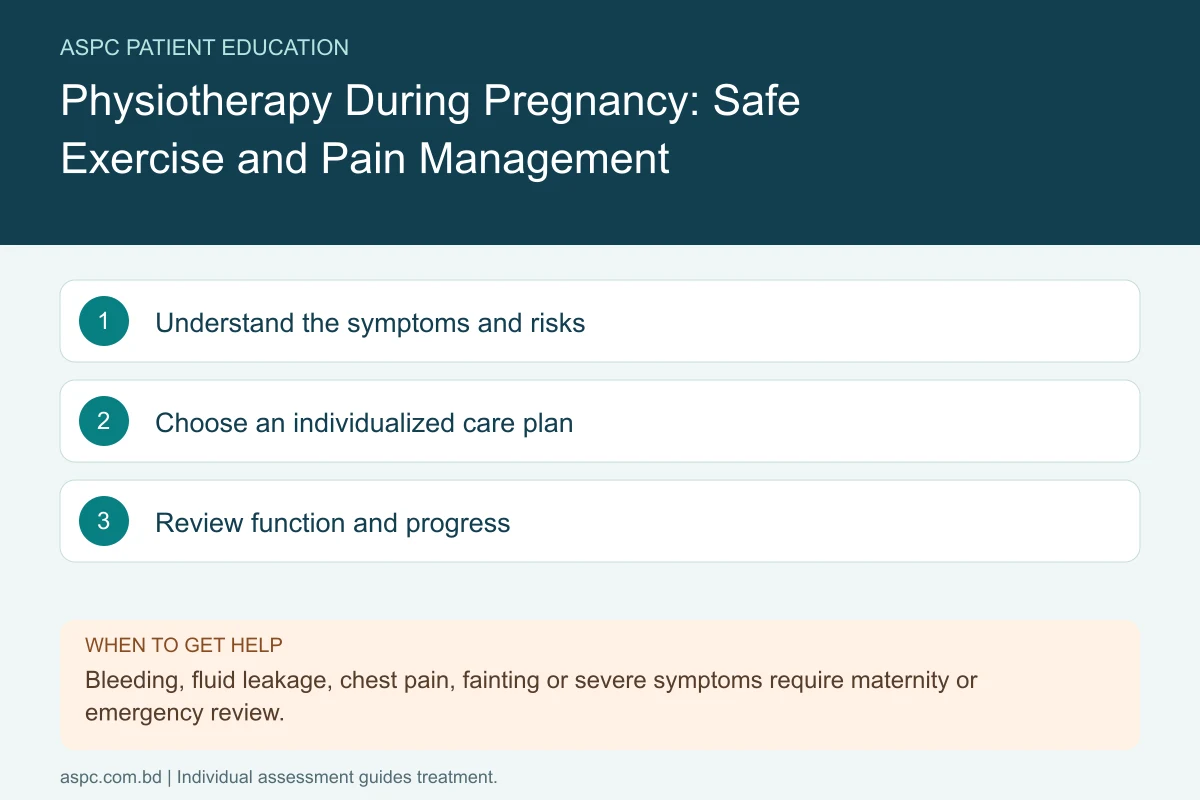
When to get help: Bleeding, fluid leakage, chest pain, fainting or severe symptoms require maternity or emergency review.
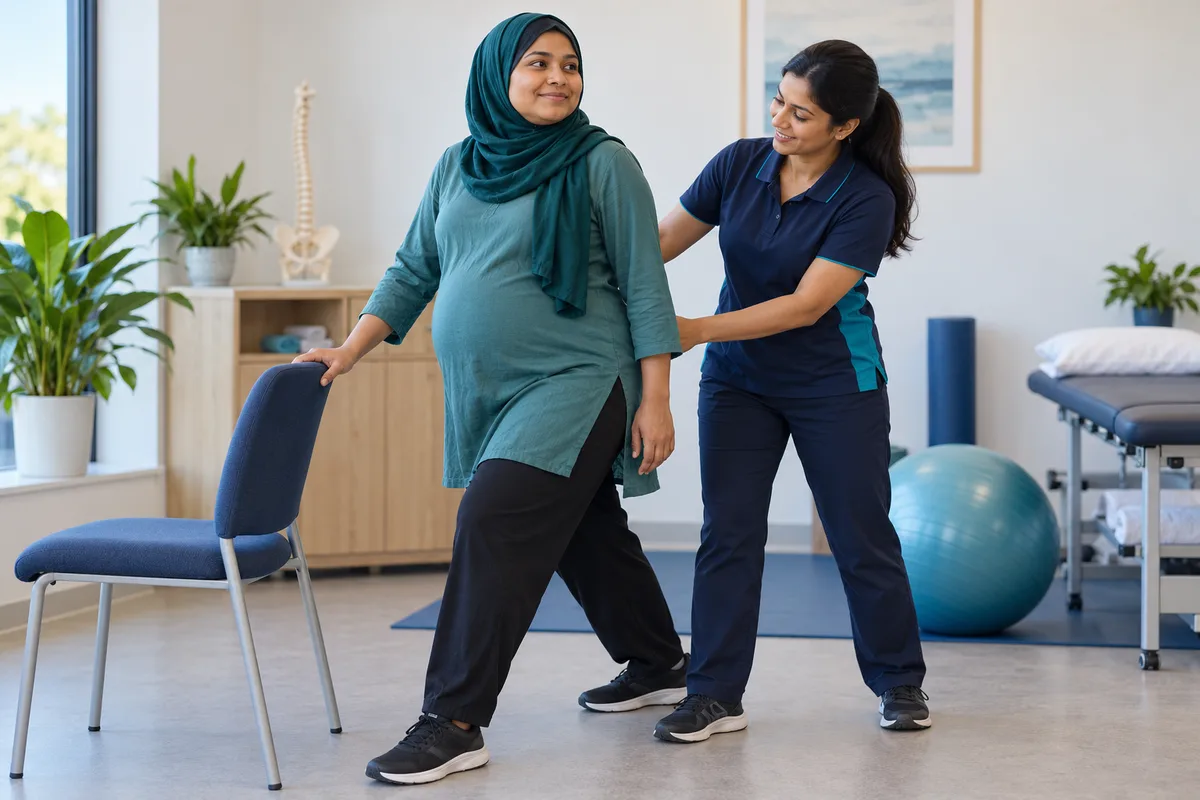
The featured image is AI-generated and does not depict an actual patient. General information; care should follow an individual assessment.
In this guide
- What Is Pregnancy Period Physiotherapy?
- What Happens to the Body During Pregnancy?
- Why Is Physiotherapy Important During Pregnancy?
- Potential Benefits of Pregnancy Physiotherapy
- Common Reasons to Seek Pregnancy Physiotherapy
- Pregnancy Symptoms: What Should You Look For?
- Warning Signs That Require Medical Review
- How Pregnancy Physiotherapy Assessment Is Performed
- Pregnancy Physiotherapy Treatment Options
- Safe Exercise During Pregnancy: Practical Guidance
- Activities That Usually Need Avoidance or Modification
- Example of a Gentle Pregnancy Exercise Session
- Low-Back Pain and Pelvic Girdle Pain During Pregnancy
- Contributing Factors
- Physiotherapy Management
- Pelvic-Floor Physiotherapy During Pregnancy
- Common Pelvic-Floor Concerns
- Key Physiotherapy Principles
- Pregnancy Physiotherapy by Trimester
- Posture, Daily Activities, and Ergonomics During Pregnancy
- Ankle Structure: Muscles and Ligament Attachments
- Major Muscles Acting on the Ankle and Foot
- Major Ankle Ligaments and Their Attachments
- When Should Exercise Be Avoided or Reviewed by the Maternity Team?
- How to Measure Progress
- Frequently Asked Questions About Pregnancy Physiotherapy
- Is physiotherapy safe during pregnancy?
- Can exercise harm the baby?
- How much exercise should I do?
- Can physiotherapy help pregnancy-related back pain?
- Should everyone do pelvic-floor exercises?
- Is ankle swelling normal during pregnancy?
- When can I return to exercise after childbirth?
- Final Takeaway
- Why Choose ASPC for Pregnancy Physiotherapy?
- ASPC vs. Other Physiotherapy Services
- What Should Patients Look For?
- Final Takeaway
- Common questions
- References
Pregnancy is a period of major physiological, hormonal, cardiovascular, respiratory, and musculoskeletal change. Physiotherapy during pregnancy—often called antenatal physiotherapy—uses individualized exercise, education, movement strategies, and symptom-management techniques to support physical function and wellbeing throughout pregnancy. It does not replace routine antenatal care; rather, it complements obstetric care when the pregnant person and fetus have been appropriately assessed (American College of Obstetricians and Gynecologists [ACOG], 2020; World Health Organization [WHO], 2020).
For most people with an uncomplicated pregnancy, regular moderate-intensity physical activity is safe and beneficial. A physiotherapist can help adapt exercise to gestational age, prior activity level, symptoms, balance, and medical history. Common goals include maintaining aerobic capacity and strength, reducing the impact of back or pelvic girdle pain, improving posture and movement confidence, supporting pelvic-floor function, and preparing for birth and postpartum recovery (ACOG, 2020; Mottola et al., 2018).
This guide discusses pregnancy-related body changes, indications for physiotherapy, assessment, safe exercise prescription, management of musculoskeletal symptoms, pelvic-floor training, warning signs, and postpartum considerations. A separate ankle anatomy section is also included as requested, describing key muscles and ligament attachments relevant to lower-limb function.
What Is Pregnancy Period Physiotherapy?
Pregnancy period physiotherapy is a branch of physiotherapy that supports movement, physical activity, symptom control, and functional adaptation during pregnancy. It may be provided by a physiotherapist with appropriate training in pelvic health, musculoskeletal care, and antenatal exercise. The program should be individualized and coordinated with the maternity-care team whenever medical or obstetric risk factors are present.
Depending on the person’s needs, care may include:
- Education about normal pregnancy-related changes and safe activity
- Individualized aerobic and resistance exercise
- Pelvic-floor muscle assessment and training when appropriate
- Posture, lifting, sleeping, and work-position advice
- Management of low-back pain and pelvic girdle pain
- Breathing, relaxation, and mobility strategies
- Balance and lower-limb conditioning
- Preparation for labour positions and postpartum activity
Physiotherapy is not intended to guarantee a particular birth outcome or prevent every pregnancy complication. Its role is to support safe activity and function, manage symptoms, and help people make informed decisions alongside their obstetric clinician.
What Happens to the Body During Pregnancy?
Pregnancy produces progressive changes that can influence exercise tolerance and musculoskeletal loading. These changes vary between individuals and across trimesters; they should inform, but not automatically restrict, physical activity.
1. Changes in Body Mass and Centre of Gravity
As the uterus and body mass increase, the centre of gravity shifts and balance demands may change. Some people adopt altered trunk and pelvic positions, while prolonged standing, walking, or lifting may become more uncomfortable.
2. Hormonal and Connective-Tissue Changes
Pregnancy-related hormonal changes influence connective tissues and joint mechanics. These changes do not mean that all joints become unstable, but symptoms and movement tolerance may differ. Stretching should therefore be controlled rather than forced.
3. Cardiovascular and Respiratory Adaptation
Blood volume, cardiac output, and ventilation change during pregnancy. Exercise intensity is often best monitored with the talk test or perceived exertion rather than relying solely on a fixed heart-rate target (ACOG, 2020).
4. Abdominal Wall and Pelvic-Floor Loading
The growing uterus places increasing demands on the abdominal wall and pelvic floor. Some pregnant people experience urinary leakage, pelvic pressure, or abdominal wall separation; these symptoms deserve individualized assessment rather than a one-size-fits-all exercise prescription.
5. Changes in Foot and Ankle Loading
Weight gain, swelling, altered balance, and changes in activity can affect foot comfort and ankle demands. New unilateral calf pain or swelling should not be treated as ordinary pregnancy discomfort because it may indicate venous thrombosis and requires urgent medical assessment.
Why Is Physiotherapy Important During Pregnancy?
For pregnant people without contraindications, physical activity is associated with important health benefits. Guidelines commonly recommend at least 150 minutes of moderate-intensity aerobic activity per week, spread across the week, with appropriate strengthening activity. People who were inactive before pregnancy should begin gradually, and those with complications need individualized advice from their maternity team (WHO, 2020; ACOG, 2020).
Potential Benefits of Pregnancy Physiotherapy
- Maintaining or improving cardiovascular fitness and general physical capacity
- Supporting healthy gestational weight gain
- Reducing the risk of gestational diabetes and hypertensive disorders when exercise is appropriate
- Maintaining strength, mobility, and functional independence
- Helping manage low-back pain and pelvic girdle pain
- Supporting pelvic-floor awareness and function
- Improving confidence with daily activities and movement
- Preparing for a gradual, individualized return to activity after birth
Benefits depend on the person’s health, the type and dose of activity, adherence, and clinical context. Physiotherapy should not be presented as a substitute for prenatal screening, medication when indicated, or obstetric treatment.
Common Reasons to Seek Pregnancy Physiotherapy
Antenatal physiotherapy may be useful when a pregnant person experiences symptoms or functional difficulties such as:
- Low-back pain or discomfort with prolonged sitting or standing
- Pelvic girdle pain around the pubic symphysis, buttocks, or sacroiliac region
- Difficulty walking, climbing stairs, turning in bed, or getting dressed
- Urinary leakage or difficulty coordinating pelvic-floor contraction and relaxation
- Reduced activity tolerance or uncertainty about safe exercise
- Neck, shoulder, or upper-back discomfort related to posture or work demands
- Foot discomfort, balance concerns, or difficulty adapting exercise as pregnancy progresses
Symptoms that are severe, rapidly worsening, associated with trauma, or accompanied by systemic or obstetric warning signs require medical evaluation before routine physiotherapy proceeds.
Pregnancy Symptoms: What Should You Look For?
Common symptoms include fatigue, mild breathlessness with exertion, back discomfort, pelvic pressure, changes in balance, and swelling of both feet or ankles later in pregnancy. The presence, intensity, and meaning of a symptom depend on the full clinical picture.
Warning Signs That Require Medical Review
- Vaginal bleeding or fluid leakage
- Regular painful uterine contractions or severe abdominal pain
- Chest pain, fainting, or shortness of breath before exertion
- Severe or persistent headache, visual disturbance, or sudden marked swelling
- Calf pain or unilateral leg swelling
- Dizziness that does not settle, or muscle weakness affecting balance
- Reduced fetal movement once a usual movement pattern has been established
- Any symptom that the maternity team has identified as requiring urgent review
Stop exercise if a warning sign occurs and contact the maternity-care team or emergency services according to severity. This list is not exhaustive; individualized medical advice takes priority (ACOG, 2020).
How Pregnancy Physiotherapy Assessment Is Performed
A physiotherapy assessment begins with screening for medical and obstetric contraindications, clarification of the person’s goals, and review of symptoms and activity history. The physiotherapist should obtain appropriate consent, protect privacy, and communicate with the maternity team when needed.
1. Subjective Assessment
- Gestational age, pregnancy history, delivery history, and relevant medical conditions
- Current symptoms, onset, aggravating and easing factors, and functional impact
- Usual activity level, exercise history, work demands, and home responsibilities
- Pelvic-floor symptoms, bowel or bladder concerns, and relevant pain history
- Medication, restrictions, and advice already given by the obstetric clinician
2. Objective Assessment
- Observation of posture, gait, balance, and functional movement
- Comfortable range of movement and relevant strength testing
- Assessment of functional tasks such as sit-to-stand, stair use, or bed mobility
- Breathing pattern, exercise tolerance, and symptom response
- Pelvic-floor assessment only when indicated, within professional scope, with informed consent
3. Outcome Measures and Goal Setting
Use suitable, repeatable measures to monitor pain, activity limitation, walking tolerance, exercise participation, and patient-defined goals. The same measures should be repeated when clinically appropriate to evaluate progress. Internal pelvic examination is not automatically required and should only be undertaken by appropriately trained clinicians with informed consent and a clear indication.
Pregnancy Physiotherapy Treatment Options
Treatment should be individualized to the trimester, symptoms, obstetric history, fitness level, personal preference, and clinician advice. No single exercise program is suitable for every pregnancy.
1. Aerobic Exercise
Walking, stationary cycling, swimming, and water-based exercise may be appropriate for many people with uncomplicated pregnancies. Aim for moderate intensity that allows conversation, and progress gradually. People with balance concerns may prefer supported or stationary options.
2. Strength and Resistance Training
Light-to-moderate resistance exercise can help maintain strength and functional capacity. Exercises may include supported sit-to-stand, wall push-ups, elastic-band rows, and appropriately modified hip and trunk exercises. Avoid breath-holding, maximal lifts, and techniques that provoke pain, dizziness, pelvic pressure, or other symptoms.
3. Mobility and Flexibility
Gentle, comfortable mobility exercises can help maintain movement and reduce stiffness. Avoid aggressive end-range stretching or forcing a joint because pregnancy-related tissue changes and individual symptoms vary.
4. Pelvic-Floor Muscle Training
Pelvic-floor muscle training can be useful for prevention and management of urinary incontinence for many pregnant people. Training should include correct contraction and complete relaxation; people who have pelvic pain, difficulty relaxing, or worsening symptoms may need specialist pelvic-health assessment. Do not repeatedly practise by stopping urine flow.
5. Back and Pelvic Girdle Pain Management
Management may include education, pacing, individualized exercise, comfortable movement strategies, and selected manual techniques when appropriate. Evidence supports exercise as one component of care, but no single intervention works for everyone. Severe pain, neurological symptoms, fever, trauma, or obstetric concerns require medical review.
6. Breathing, Relaxation, and Birth Preparation
Relaxed breathing, positions of comfort, movement options, and strategies for changing position may support coping and confidence. These approaches should complement, not replace, maternity education and clinical care.
7. Foot and Ankle Symptom Management
For bilateral dependent swelling or foot discomfort, advice may include regular gentle movement, avoiding prolonged static positions, comfortable footwear, and elevating the legs when resting if comfortable. Compression garments should be used only when appropriate and after clinical advice where indicated. New unilateral swelling, warmth, redness, or calf pain needs urgent assessment rather than massage or exercise.
Safe Exercise During Pregnancy: Practical Guidance
For most uncomplicated pregnancies, moderate-intensity activity is encouraged. A commonly used public-health target is at least 150 minutes per week of moderate aerobic activity. This is a general target, not a requirement to reach immediately or a prescription for people with contraindications (WHO, 2020; ACOG, 2020).
| Component | Practical approach | Clinical considerations |
|---|---|---|
| Frequency | Spread activity across the week; avoid long periods of inactivity. | Start gradually if previously inactive. |
| Intensity | Use the talk test or perceived exertion; moderate activity should still allow conversation. | Adjust for symptoms, heat, fatigue, and medical advice. |
| Duration | Build toward guideline targets as tolerated; shorter bouts can be accumulated. | Do not push through warning signs or marked discomfort. |
| Type | Walking, stationary cycling, water exercise, and adapted resistance training may be suitable. | Avoid activities with high risk of falls, collision, or abdominal trauma. |
| Environment | Stay hydrated, wear comfortable clothing, and avoid excessive heat. | Modify in hot/humid conditions or if feeling unwell. |
| Position | Use comfortable positions and modify prolonged flat-on-back exercise later in pregnancy. | Stop or change position if dizzy, nauseated, or faint. |
Activities That Usually Need Avoidance or Modification
- Contact sports and activities with a high risk of abdominal impact
- Activities with a substantial risk of falling, especially as balance changes
- Scuba diving during pregnancy
- Hot environments that may cause overheating
- Exercises that cause pain, pelvic heaviness, leaking, dizziness, or other concerning symptoms
The appropriate restrictions depend on the activity and the person’s medical and obstetric context. Routine bed rest is not recommended as a general strategy to prevent preterm birth; activity restriction should be prescribed only for a specific clinical reason by the treating team (ACOG, 2020).
Example of a Gentle Pregnancy Exercise Session
The following is an educational example for a person with an uncomplicated pregnancy who has been cleared for activity. It is not a personal prescription; adapt it to symptoms and advice from the maternity team.
| Part | Example | Suggested dose |
|---|---|---|
| Warm-up | Easy walking or marching while supported | 5 minutes |
| Aerobic activity | Comfortable walking or stationary cycling | 10–20 minutes at talk-test intensity |
| Strength | Supported sit-to-stand, wall push-up, elastic-band row | 1–2 sets of 8–12 comfortable repetitions |
| Pelvic floor | Gentle contraction followed by full relaxation, if appropriate | Individualized; avoid straining |
| Cool-down | Slow walking and relaxed breathing | 3–5 minutes |
Reduce the duration or intensity if fatigue or discomfort rises. Stop and seek advice for any warning sign. People with high-risk pregnancies, significant pelvic pain, cardiovascular or respiratory disease, or other relevant conditions require individualized clinical guidance before following an exercise plan.
Low-Back Pain and Pelvic Girdle Pain During Pregnancy
Low-back pain and pelvic girdle pain are common musculoskeletal complaints during pregnancy, but they are not interchangeable diagnoses. Pelvic girdle pain may be felt around the pubic symphysis, sacroiliac region, or buttocks and can make walking, stairs, turning in bed, and single-leg tasks difficult.
Contributing Factors
- Changes in load and movement demands as pregnancy progresses
- Reduced tolerance for prolonged static postures or repetitive tasks
- Prior history of back or pelvic pain
- Sleep disruption, fatigue, and reduced physical activity
- Individual variation in strength, coordination, and pain sensitivity
Physiotherapy Management
- Explain the condition and provide reassurance without dismissing symptoms
- Use pacing and alternate demanding tasks with comfortable movement
- Adapt lifting, carrying, sleeping, and work strategies
- Prescribe individualized trunk, hip, and general conditioning exercises
- Consider a support belt for selected patients after assessment and trial
- Monitor symptoms and refer for medical review when red flags or atypical features are present
Manual therapy may be considered as an adjunct in selected cases, but it should not be presented as a stand-alone cure. The program should prioritize safe function, self-management, and gradual activity rather than repeated painful treatment.
Pelvic-Floor Physiotherapy During Pregnancy
The pelvic floor supports pelvic organs and contributes to continence, sexual function, and pressure management. Pregnancy and childbirth can alter pelvic-floor demands. Assessment should consider both strength and the ability to relax, coordinate, and respond to pressure.
Common Pelvic-Floor Concerns
- Urinary leakage with coughing, sneezing, lifting, or exercise
- Urgency or difficulty controlling bladder symptoms
- Pelvic heaviness or pressure
- Difficulty coordinating pelvic-floor contraction and relaxation
- Pelvic pain or pain during intimate activity
Key Physiotherapy Principles
- Teach correct contraction without breath-holding or excessive abdominal bracing
- Include full relaxation between contractions
- Progress dosage according to technique and symptoms
- Address constipation, lifting strategies, and pressure management where relevant
- Refer to a pelvic-health physiotherapist for persistent symptoms, pain, or uncertainty about technique
Pelvic-floor training is not simply repeated maximal squeezing. A person with an overactive or painful pelvic floor may need relaxation, coordination, and symptom-specific care rather than strengthening alone.
Pregnancy Physiotherapy by Trimester
| Stage | Common focus | Possible physiotherapy adaptations |
|---|---|---|
| First trimester | Establish safe activity habits; manage fatigue or nausea; review prior exercise. | Begin gradually, maintain hydration, and adapt to symptoms. |
| Second trimester | Maintain strength and aerobic capacity as body shape and balance change. | Modify prone or supine positions when uncomfortable; use support and balance precautions. |
| Third trimester | Comfort, functional mobility, pacing, pelvic symptoms, and birth preparation. | Use supported positions, shorter bouts, comfortable mobility, and task-specific strategies. |
Trimester labels are not substitutes for individual assessment. Some people tolerate familiar exercise throughout pregnancy; others need substantial modification. Any obstetric complication or new warning sign changes the clinical decision-making process.
Posture, Daily Activities, and Ergonomics During Pregnancy
There is no single ideal posture that must be maintained throughout the day. Regularly changing position, using comfortable supports, and adjusting tasks to symptoms are often more useful than holding a rigid posture.
- Use a stable chair with back support and keep frequently used items within easy reach
- Take brief movement breaks during prolonged sitting or standing
- Keep loads close to the body and avoid twisting while lifting
- Use assistance for heavy or awkward loads, especially when balance is affected
- Wear supportive, comfortable footwear and use handrails on stairs when needed
- Choose comfortable side-lying or supported resting positions; use pillows as helpful
- Adapt work duties if repetitive lifting, prolonged standing, or fatigue aggravates symptoms
Ankle Structure: Muscles and Ligament Attachments
The ankle complex includes the distal tibia and fibula, talus, and associated joints and soft tissues. The talocrural joint primarily permits dorsiflexion and plantarflexion, while the subtalar and midfoot joints contribute to inversion, eversion, and adaptation to the ground. This anatomy section is included as requested and is relevant to lower-limb function, balance, gait, and the assessment of ankle symptoms during pregnancy.
Major Muscles Acting on the Ankle and Foot
| Muscle / group | Proximal attachment (origin) | Distal attachment (insertion) | Main action / relevance |
|---|---|---|---|
| Tibialis anterior | Lateral condyle and upper lateral tibia; interosseous membrane | Medial cuneiform and base of first metatarsal | Dorsiflexion and inversion; assists foot clearance during gait. |
| Extensor hallucis longus | Middle anterior fibula and interosseous membrane | Base of distal phalanx of great toe | Extends great toe and assists dorsiflexion. |
| Extensor digitorum longus | Lateral tibial condyle, anterior fibula, interosseous membrane | Middle and distal phalanges of toes 2–5 via extensor expansions | Extends toes and assists dorsiflexion. |
| Fibularis (peroneus) longus | Head and upper lateral fibula | Base of first metatarsal and medial cuneiform (plantar surface) | Eversion and weak plantarflexion; supports transverse arch. |
| Fibularis brevis | Lower lateral fibula | Tuberosity at base of fifth metatarsal | Eversion and weak plantarflexion; dynamic lateral ankle support. |
| Gastrocnemius | Medial and lateral femoral condyles | Posterior calcaneus through calcaneal (Achilles) tendon | Plantarflexion; assists knee flexion. |
| Soleus | Posterior proximal fibula and soleal line of tibia | Posterior calcaneus through calcaneal tendon | Plantarflexion and postural control during standing. |
| Tibialis posterior | Posterior tibia and fibula; interosseous membrane | Primarily navicular tuberosity, with expansions to midfoot bones | Inversion and plantarflexion; supports medial longitudinal arch. |
| Flexor hallucis longus | Posterior lower fibula and interosseous membrane | Base of distal phalanx of great toe | Flexes great toe; important in push-off. |
| Flexor digitorum longus | Posterior tibia | Bases of distal phalanges of toes 2–5 | Flexes lateral four toes and assists toe-off. |
| Extensor digitorum brevis / extensor hallucis brevis | Dorsal calcaneus | Extensor tendons of toes 2–4 / base of proximal phalanx of great toe | Assists toe extension. |
| Intrinsic plantar muscles | Multiple origins on tarsal and metatarsal bones and plantar fascia | Phalanges, extensor expansions, and adjacent tendons | Toe control and dynamic support of foot arches. |
Major Ankle Ligaments and Their Attachments
| Ligament | Attachment | Primary role |
|---|---|---|
| Anterior talofibular ligament (ATFL) | Anterior margin of lateral malleolus (fibula) to lateral talus | Resists anterior talar translation; commonly injured in inversion sprain. |
| Calcaneofibular ligament (CFL) | Tip of lateral malleolus to lateral calcaneus | Supports lateral ankle and subtalar joints; resists inversion. |
| Posterior talofibular ligament (PTFL) | Malleolar fossa of fibula to posterior talus | Strong lateral ligament; limits posterior talar displacement. |
| Deltoid ligament complex | Medial malleolus to talus, calcaneus, and navicular via superficial/deep components | Resists excessive eversion and supports medial ankle. |
| Anterior inferior tibiofibular ligament (AITFL) | Anterolateral distal tibia to anterior distal fibula | Helps maintain distal tibiofibular mortise; syndesmotic stability. |
| Posterior inferior tibiofibular ligament (PITFL) | Posterior distal tibia to posterior distal fibula | Supports distal tibiofibular syndesmosis. |
| Interosseous tibiofibular ligament / membrane | Adjacent surfaces of distal tibia and fibula | Contributes to syndesmotic stability and load transfer. |
| Spring ligament (plantar calcaneonavicular) | Sustentaculum tali of calcaneus to plantar navicular | Supports talar head and medial longitudinal arch. |
| Long plantar ligament | Plantar calcaneus to cuboid and bases of lateral metatarsals | Supports lateral longitudinal arch and calcaneocuboid region. |
| Short plantar ligament (plantar calcaneocuboid) | Anterior plantar calcaneus to plantar cuboid | Supports calcaneocuboid joint. |
Attachment descriptions are simplified educational summaries; individual bands and insertional expansions vary. Ankle examination should consider the mechanism of injury, swelling, tenderness, weight-bearing ability, and the possibility of fracture or syndesmotic injury. Pregnancy-related swelling must not be assumed to explain new unilateral calf or ankle symptoms.
When Should Exercise Be Avoided or Reviewed by the Maternity Team?
A pregnant person should receive obstetric assessment before beginning or continuing an exercise program if they have a medical or obstetric condition that may alter exercise safety. Examples of potential contraindications or situations requiring specialist review include significant cardiopulmonary disease, severe anemia, uncontrolled hypertension, preeclampsia, persistent bleeding, ruptured membranes, preterm labour, cervical insufficiency, or other conditions identified by the treating obstetric clinician. This list is not exhaustive; clinical guidance should be based on current recommendations and the individual pregnancy.
Do not independently prescribe bed rest or blanket activity restriction. Where activity modification is required, the maternity team should explain the reason, the degree of restriction, and when the plan will be reviewed.
How to Measure Progress
Progress should be judged by meaningful functional changes rather than by the number of exercises completed. Depending on the clinical problem, outcomes may include:
- Pain intensity and interference with daily activities
- Walking tolerance and confidence with balance
- Ability to perform work, household, and self-care tasks
- Pelvic-floor symptoms and quality of contraction/relaxation when relevant
- Exercise frequency, perceived exertion, and symptom response
- Patient-defined goals and confidence in self-management
Review the plan periodically and adjust it as gestational age, symptoms, and medical advice change. A worsening symptom pattern should prompt reassessment rather than automatic progression.
Frequently Asked Questions About Pregnancy Physiotherapy
Is physiotherapy safe during pregnancy?
For most people with uncomplicated pregnancies, appropriately prescribed physiotherapy and exercise are safe and beneficial. Medical or obstetric complications require individualized clearance and modification (ACOG, 2020; WHO, 2020).
Can exercise harm the baby?
Evidence and major guidelines support physical activity in uncomplicated pregnancy when appropriately adapted. However, no program can be guaranteed safe for every pregnancy; follow medical advice and stop if warning signs occur.
How much exercise should I do?
A common guideline target is at least 150 minutes of moderate-intensity aerobic activity each week, spread across the week. Start gradually if inactive and adjust for symptoms, health status, and clinical advice.
It may help through education, individualized exercise, activity modification, and selected adjunctive strategies. The best approach depends on the pain pattern and functional limitations, and red flags must be screened.
Should everyone do pelvic-floor exercises?
Many people can benefit from pelvic-floor muscle training, but technique matters. Pain, difficulty relaxing, or worsening pressure symptoms should prompt assessment by a qualified pelvic-health clinician.
Is ankle swelling normal during pregnancy?
Bilateral mild swelling can occur during pregnancy, but sudden swelling, especially with headache or visual symptoms, needs urgent medical advice. One-sided calf or leg swelling, pain, warmth, or redness requires urgent assessment for possible thrombosis.
When can I return to exercise after childbirth?
Return depends on birth mode, healing, symptoms, complications, and personal recovery. Resume gradually when medically safe, and seek assessment for persistent pain, urinary or bowel symptoms, pelvic heaviness, wound concerns, or exercise-related leakage.
Final Takeaway
Pregnancy period physiotherapy supports safe movement, physical activity, symptom management, and preparation for postpartum recovery. For most uncomplicated pregnancies, regular moderate-intensity activity is encouraged, but exercise must be adapted to individual health, symptoms, and obstetric advice. A sound program combines screening, education, aerobic and resistance exercise, pelvic-floor care when appropriate, and ongoing reassessment. Warning signs must never be dismissed as routine pregnancy discomfort.
Why Choose ASPC for Pregnancy Physiotherapy?
When selecting a physiotherapy service during pregnancy, patients should prioritize appropriate clinical assessment, clear communication with maternity-care professionals, individual exercise planning, and timely referral when symptoms fall outside physiotherapy scope. A service should avoid universal promises and should not recommend painful techniques, unsupported treatments, or activity restrictions without a clear clinical rationale.
1. Assessment Before Treatment
A careful first visit should review gestational age, symptoms, medical and obstetric history, current activity, and any restrictions from the maternity team. This supports appropriate triage and helps identify when medical review is needed before treatment.
2. Individualized Exercise and Functional Rehabilitation
Exercise should be selected according to the patient's goals and response. Depending on the assessment, this may include walking or stationary cycling, adapted resistance training, mobility work, balance strategies, pelvic-floor education, and activity modification.
3. Patient Education and Self-Management
Clear explanations about safe activity, pacing, warning signs, and home strategies help patients participate actively in care. Treatment should support autonomy and informed decision-making rather than creating dependence on repeated passive treatment.
4. Coordinated Care and Appropriate Referral
Pregnancy-related physiotherapy is safest when the clinician recognizes the limits of their role and coordinates with obstetric services when necessary. Urgent warning signs, suspected thrombosis, significant bleeding, fluid leakage, or cardiopulmonary symptoms require medical care, not routine physiotherapy.
ASPC vs. Other Physiotherapy Services
It would not be appropriate to claim that any one physiotherapy center is universally best for every pregnant patient without independent comparative evidence. Patients should compare services on clinician qualifications, pregnancy-specific experience, screening and referral pathways, informed consent, privacy, individualized exercise prescription, and transparent communication.
What Should Patients Look For?
- A clinician with appropriate pregnancy or pelvic-health training for the presenting problem
- Screening for obstetric warning signs and clear referral pathways
- Individualized, evidence-informed exercise and education
- Respectful consent, privacy, and patient preferences
- Progress monitoring and a plan that adapts as pregnancy progresses
Final Takeaway
The aim of pregnancy physiotherapy is to help each patient remain as active and comfortable as is medically appropriate, maintain function, manage musculoskeletal symptoms, and prepare for recovery after birth. Care should be evidence-informed, individualized, and coordinated with maternity services. The ankle muscle and ligament attachment section provides additional anatomical context for lower-limb function but does not replace a clinical examination.
After delivery: a different recovery plan
After childbirth, wound healing, delivery mode, abdominal and pelvic-floor symptoms and medical complications change the rehabilitation plan. Gentle movement, supported feeding positions and return to daily tasks should fit individual recovery. Persistent leakage, heaviness, pain or functional difficulty deserves assessment. See the postpartum physiotherapy guide for the full postnatal pathway.
Common questions
Can I exercise during pregnancy?
For many uncomplicated pregnancies, appropriate activity is encouraged. Complications or concerning symptoms require advice from the maternity team and an adapted plan.
Is postpartum rehabilitation the same?
Antenatal and postpartum care have different priorities. After birth, healing, delivery mode, pelvic-floor symptoms and medical restrictions guide progression.
Assessment and rehabilitation in Dhaka
ASPC Manipulation Therapy provides physiotherapy and rehabilitation in Dhaka. Contact the centre to discuss the service, clinician, appointment arrangements and current fees relevant to your needs. Medical emergencies and suspected infectious illness require the appropriate medical pathway.
Discuss an assessment with ASPC
Related patient guides
- Postpartum Physiotherapy: Pelvic Floor, Strength and Recovery
- Exercise and Weight Loss: Physiotherapy, Strength and Nutrition
Related assessment and rehabilitation guides
References and clinical guidance
Research findings apply to the populations and interventions studied. Editorial source checking is not independent clinical peer review.
- Primary condition-specific guidance
- Physical Activity and Exercise During Pregnancy and the Postpartum Period (2020). Obstetrics & Gynecology
- World Health Organization. (2020). WHO guidelines on physical activity and sedentary behaviour. World Health Organization. https://www.who.int/publications/i/item/9789240015128
- 2019 Canadian guideline for physical activity throughout pregnancy (2018). British Journal of Sports Medicine
- Prenatal exercise for the prevention of gestational diabetes mellitus and hypertensive disorders of pregnancy: a systematic review and meta-analysis (2018). British Journal of Sports Medicine
- Pelvic floor muscle training for preventing and treating urinary and faecal incontinence in antenatal and postnatal women (2020). Cochrane Database of Systematic Reviews
- European guidelines for the diagnosis and treatment of pelvic girdle pain (2008). European Spine Journal
- Royal College of Obstetricians and Gynaecologists. (2015). Exercise in pregnancy (Scientific Impact Paper No. 27). RCOG. https://www.rcog.org.uk/
- Moore, K. L., Dalley, A. F., & Agur, A. M. R. (2018). Clinically oriented anatomy (8th ed.). Wolters Kluwer.
- Standring, S. (Ed.). (2021). Gray’s anatomy: The anatomical basis of clinical practice (42nd ed.). Elsevier.
- Neumann, D. A. (2017). Kinesiology of the musculoskeletal system: Foundations for rehabilitation (3rd ed.). Elsevier.
Editorial update: 29 October 2026. Medical information disclaimer.


