
ASPC PATIENT EDUCATION · UPDATED 29 OCTOBER 2026
At a glance
Geriatric physiotherapy supports mobility, strength, balance and everyday independence in older adults. An individualized plan considers health conditions, falls, current function, personal goals and the home environment.
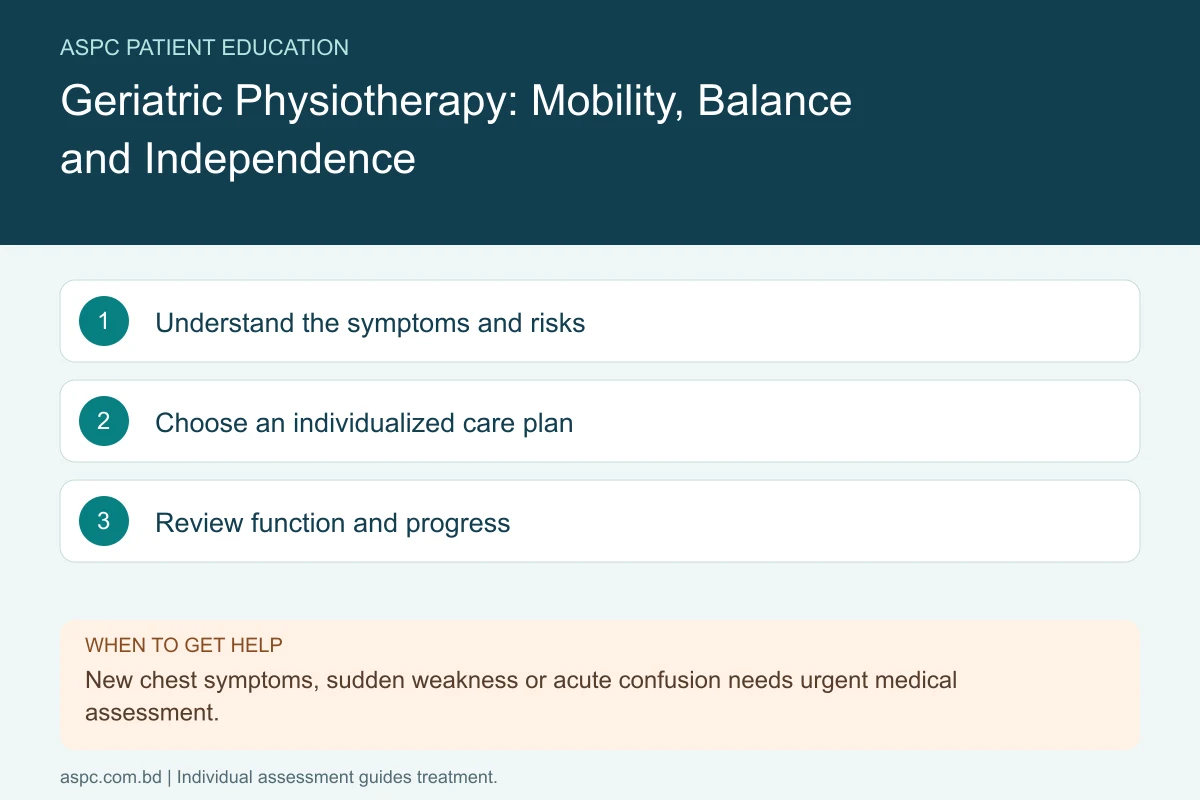
When to get help: New chest symptoms, sudden weakness or acute confusion needs urgent medical assessment.
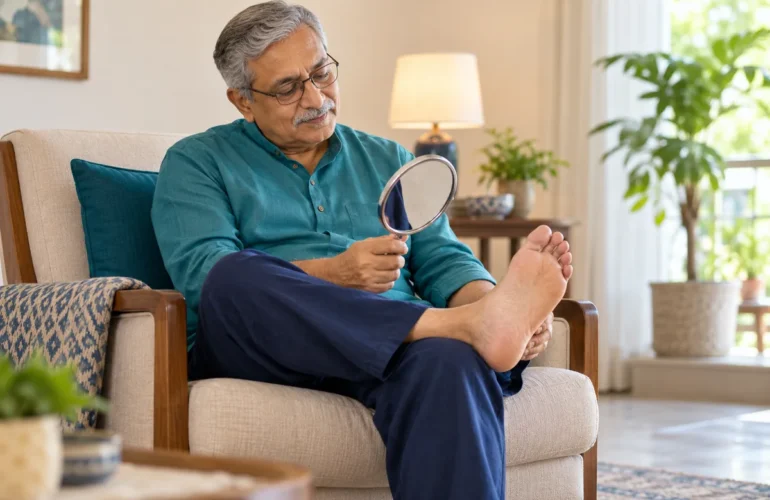
The featured image is AI-generated and does not depict an actual patient. General information; care should follow an individual assessment.
In this guide
- What Is Geriatric Physiotherapy?
- How Common Is It? Ageing, Function and Epidemiology
- Causes and Risk Factors
- Symptoms and Functional Problems
- Common Functional Changes and Recovery
- Assessment and Treatment: Individualized Geriatric Physiotherapy
- Nutrition and Daily Tips
- Other Conditions and When to Get Help
- Geriatric Physiotherapy in Practice: Person-Centred Rehabilitation
- Final Takeaway
- Common questions
- References
| STRENGTHProgressive resistanceand functional practice | BALANCEGait, balance andfall-prevention training | INDEPENDENCEDaily activities,confidence and participation |
|---|
Geriatric physiotherapy is a specialized area of physiotherapy focused on maintaining and restoring mobility, physical capacity, safety and participation among older adults. Ageing may be accompanied by reduced muscle strength, balance impairment, joint pain, slower gait and chronic conditions, but these changes are not inevitable to the same degree in every person. Individualized exercise, functional training, education and appropriate assistive strategies can help older adults remain active and independent (World Health Organization [WHO], 2020; Izquierdo et al., 2021).
The main aim is not simply to treat a diagnosis; it is to help a person move safely, perform meaningful daily activities and participate in family and community life. Effective care considers medical conditions, cognition, mood, home environment, personal goals and the support available to the older person. Exercise should be adapted to ability and risk, with progression and reassessment rather than a one-size-fits-all programme (WHO, 2020; National Institute for Health and Care Excellence [NICE], 2022).
What Is Geriatric Physiotherapy?
Geriatric physiotherapy is the assessment and management of age-related or age-associated impairments in movement and physical function. It may support people living with frailty, osteoarthritis, osteoporosis, stroke, Parkinson’s disease, cardiopulmonary conditions, balance problems, falls, post-operative limitations or deconditioning after illness. It combines clinical reasoning with person-centred goals, exercise prescription, task-specific practice, education and coordination with the wider healthcare team (American Physical Therapy Association [APTA], n.d.; WHO, 2020).
Older adults are highly diverse: chronological age alone does not describe strength, reserve, cognition or independence. Assessment therefore considers baseline function, comorbidities, symptoms, medication effects, sensory status, cognition and what matters most to the individual. A programme may aim to improve walking speed in one person, safe transfers in another, and confidence with community activity in a third (Izquierdo et al., 2021).
How Common Is It? Ageing, Function and Epidemiology
Population ageing is increasing the number of people who may benefit from rehabilitation and strategies that preserve intrinsic capacity. The WHO reports that by 2030 one in six people worldwide will be aged 60 years or older, and the number of people aged 60 years and over is expected to reach 2.1 billion by 2050. The need for accessible, integrated and person-centred services is therefore a major public-health priority (WHO, 2022).
Functional limitation is not an inevitable consequence of growing older. However, multimorbidity, reduced physical activity, frailty, falls, pain and acute illness can interact and contribute to loss of independence. Physiotherapy may be appropriate across the continuum—from prevention and community exercise to rehabilitation after hospitalisation and support for people with complex long-term conditions (WHO, 2020; NICE, 2025).
| Population or issue | Useful evidence / clinical meaning |
|---|---|
| People aged 60 years and older | Projected to represent about one in six people globally by 2030 (WHO, 2022). |
| Global population aged 60+ by 2050 | Expected to reach approximately 2.1 billion (WHO, 2022). |
| Falls in older adults | A major cause of injury and loss of independence; risk assessment and tailored balance/functional exercise are important (WHO, 2021; Sherrington et al., 2019). |
| Frailty and deconditioning | Can reduce reserve and tolerance for activity; intervention should be individualized and progressed according to response (WHO, 2020; Izquierdo et al., 2021). |
Table 1. Selected demographic and functional considerations relevant to geriatric physiotherapy.
The WHO estimates that falls are the second leading cause of unintentional injury deaths worldwide, and adults older than 60 years experience the greatest number of fatal falls. These global figures are not a prediction for an individual patient; personal risk depends on factors such as previous falls, gait and balance, vision, medication, environment and underlying illness (WHO, 2021).
Causes and Risk Factors
Functional decline in older age is usually multifactorial. A period of bed rest, infection, surgery or hospitalisation may accelerate deconditioning, while chronic disease, pain, fear of falling and environmental barriers may limit activity. Identifying modifiable contributors is essential because age alone is not a sufficient explanation for a new decline in mobility (WHO, 2020; NICE, 2025).
Reduced muscle strength and power: age-associated changes, inactivity and illness can reduce the capacity to rise from a chair, climb steps or recover balance. Progressive resistance and task-specific practice can address these limitations when clinically appropriate (Izquierdo et al., 2021).
Balance and gait impairment: changes in sensory input, lower-limb strength, reaction time or neurological function can affect stability. A history of falls, unsteadiness or difficulty walking warrants a structured assessment and individualized intervention (NICE, 2025; WHO, 2021).
Chronic musculoskeletal conditions: osteoarthritis, osteoporosis, spinal pain and joint stiffness may restrict movement or reduce willingness to exercise. The plan should balance symptom management with safe activity and functional goals (WHO, 2020).
Neurological and cardiopulmonary disease: stroke, Parkinson’s disease, peripheral neuropathy, chronic lung disease and cardiovascular disease may affect coordination, endurance, strength or exercise tolerance. Monitoring and condition-specific precautions may be needed.
Frailty, malnutrition and inactivity: reduced physiological reserve can make recovery from minor illness slower. Exercise, nutrition review and coordinated care may be needed; physiotherapy alone does not address every contributor (WHO, 2020; Izquierdo et al., 2021).
Medication, vision and environment: sedating or blood-pressure-lowering medicines, impaired vision, poor lighting, loose rugs and unsuitable footwear may increase falls risk. Medication review and environmental modification should involve appropriate clinicians and caregivers.
Not every older adult has these risk factors, and the presence of one does not guarantee disability. A person-centred assessment should identify the interaction of health conditions, physical capacity, goals and surroundings rather than assuming decline is unavoidable (WHO, 2020).
Symptoms and Functional Problems
Older adults may present with pain, weakness, reduced endurance or a gradual change in daily activity. Consider physiotherapy assessment when any of the following are present (NICE, 2025; WHO, 2020):
Difficulty standing up from a chair, getting into bed or transferring safely
Slower walking, reduced walking distance or new dependence on an assistive device
Unsteadiness, fear of falling, recurrent falls or difficulty turning
Reduced ability to climb stairs, bathe, dress, shop or participate in usual activities
Reduced strength or endurance after hospitalisation, surgery or prolonged inactivity
Pain or stiffness that limits movement, sleep or meaningful activity
Reduced confidence, activity avoidance or concern from family about safety
A sudden loss of function should not automatically be attributed to ageing. New confusion, sudden weakness, facial droop, speech difficulty, chest pain, severe breathlessness, fainting, a suspected fracture or inability to bear weight after a fall requires urgent medical assessment. Physiotherapy should proceed within the person’s medical stability and the scope of the treating clinician.
Common Functional Changes and Recovery
1. Reduced strength and transfer ability
The person may need extra effort or assistance to rise from a chair, get out of bed or climb stairs. Treatment commonly emphasizes progressive strengthening, repeated functional practice and appropriate use of armrests or assistive devices (Izquierdo et al., 2021).
2. Balance, gait and falls concerns
Walking may become slower or less stable, particularly during turning, dual-task activity or walking on uneven surfaces. Training may combine challenging but safe balance tasks, gait practice, lower-limb strengthening and review of environmental risks (Sherrington et al., 2019; NICE, 2025).
3. Reduced endurance and participation
Illness, inactivity or cardiopulmonary limitations may reduce walking tolerance and participation in community life. A graded aerobic programme and meaningful activity goals can improve capacity when prescribed at an appropriate level and monitored for symptoms (WHO, 2020; Izquierdo et al., 2021).
There is no single recovery timeline. Progress depends on baseline function, diagnosis, severity of illness, frailty, cognition, nutrition, pain, environmental support and consistency of practice. Improvement may be gradual, and for progressive conditions the goal may be to maintain function, reduce complications and support safe participation rather than restore every previous ability (WHO, 2020; NICE, 2025).
Assessment and Treatment: Individualized Geriatric Physiotherapy
Management begins with a careful history and physical examination, followed by goals agreed with the older adult. The physiotherapist should consider medical stability, current symptoms, prior falls, mobility, daily activities, cognition and communication needs, medication-related concerns, home layout and available support. Validated measures may help establish a baseline and monitor change, but no single test replaces clinical judgement (NICE, 2025; WHO, 2020).
How physiotherapy assesses mobility and function
A comprehensive assessment can include the following, selected according to the person’s presentation and setting:
History and priorities: ask about the person’s goals, usual activity, recent changes, falls and near-falls, pain, dizziness, fatigue, continence, sleep, medical history and the tasks they most want to regain.
Functional mobility: observe bed mobility, sit-to-stand, transfers, walking, turning and stair negotiation where safe. The Timed Up and Go, gait speed, 30-second chair stand or Short Physical Performance Battery may be useful when appropriate to the population and setting.
Strength, balance and endurance: assess lower-limb strength, postural control, walking tolerance and exercise response. Use guarding, a suitable aid and rest breaks where indicated.
Pain, joints and neurological status: examine range of motion, movement quality, sensation, coordination and relevant neurological signs. New or unexplained symptoms may require referral.
Falls and environmental review: review fall history, footwear, vision concerns, assistive devices, lighting, steps and household obstacles. Medication and vision issues should be referred to the relevant healthcare professional.
Cognition, communication and participation: adapt instructions and learning strategies to hearing, vision, language and cognitive needs; involve family or carers with the person’s consent.
How assessment guides management
Goal-led plan: select outcomes meaningful to the individual, such as walking to the bathroom, rising independently from a chair or safely attending community activities.
Progressive strengthening: use resistance exercises and functional movements with gradual progression based on ability, symptoms, technique and medical considerations (Izquierdo et al., 2021).
Balance and gait training: practise progressively challenging balance, stepping, turning and walking tasks in a safe environment. Exercise programmes that challenge balance and functional tasks can reduce falls in community-dwelling older adults (Sherrington et al., 2019).
Aerobic and mobility exercise: build walking, cycling or other tolerated activity gradually, with monitoring for unusual breathlessness, chest symptoms, dizziness or excessive fatigue.
Task-specific rehabilitation: rehearse transfers, stairs, reaching, dressing-related movements and other activities relevant to the person’s daily routine.
Education and self-management: explain safe activity, pacing, home exercise, appropriate assistive-device use and when to seek medical advice. Include caregivers when useful and consented to.
Regular reassessment: repeat relevant functional measures and revise the programme as strength, confidence, symptoms and goals change.
Exercise selection and intensity must be individualized. Recent acute illness, unstable cardiovascular symptoms, severe osteoporosis, significant cognitive impairment, high falls risk or complex multimorbidity may require modification, closer monitoring or medical review before progression. Pain or fatigue should be interpreted in context rather than used as the only measure of whether exercise is appropriate (WHO, 2020; NICE, 2025).
An evidence note: exercise is an important component of healthy ageing and falls prevention, but the response varies by setting and programme. Evidence for a particular intervention should not be presented as proof that every patient will improve or that one treatment method is best for all older adults (Sherrington et al., 2019; WHO, 2020).
Nutrition and Daily Tips
Adequate nutrition and hydration support general health and the ability to participate in rehabilitation. Older adults with poor appetite, unintentional weight loss, swallowing difficulty or suspected malnutrition may need assessment by a physician and dietitian. Protein and energy needs should be individualized to health status, kidney function, dietary preferences and local food availability; supplements should not be prescribed automatically (WHO, 2020).
Practical daily strategies include:
Break up long periods of sitting with safe movement when possible.
Follow a regular, individually prescribed strengthening, balance and walking programme.
Use prescribed walking aids correctly and keep frequently used items within safe reach.
Keep pathways well lit and free from loose rugs, clutter and trailing cables.
Choose stable, well-fitting footwear and arrange vision or hearing review when needed.
Rise slowly if prone to dizziness, and report recurrent dizziness or falls to a clinician.
Maintain social contact and meaningful activity to support confidence and participation.
Other Conditions and When to Get Help
Mobility problems may be caused by musculoskeletal, neurological, cardiovascular, respiratory, vestibular, sensory or medication-related factors. A physiotherapist can identify when the presentation is outside routine rehabilitation and coordinate referral. Seek prompt medical review if there is:
A sudden change in walking, balance, strength, speech or alertness
Chest pain, fainting, severe or new breathlessness, or symptoms during exercise
A fall with suspected fracture, severe pain, head injury or inability to bear weight
New one-sided weakness, new numbness or rapidly worsening neurological symptoms
Repeated unexplained falls, new confusion or rapid deterioration in daily function
Persistent fever, unexplained weight loss or severe pain that is not behaving as expected
Emergency symptoms require urgent local emergency care. Exercise should be stopped and the person assessed if concerning symptoms develop during a session. A safe rehabilitation plan depends on communication between the older adult, physiotherapist, physician and other relevant professionals.
Geriatric Physiotherapy in Practice: Person-Centred Rehabilitation
A high-quality geriatric physiotherapy service combines an initial functional assessment, shared goals, an individualized intervention plan, education and regular reassessment. Care may be delivered in outpatient clinics, hospitals, rehabilitation units, community settings or at home. The most suitable setting depends on mobility, medical stability, transport, caregiver support and the tasks the person needs to practise.
Treatment commonly includes progressive exercise, functional and gait training, balance practice, advice on assistive devices, falls-risk reduction and coordination with other clinicians. The physiotherapist should explain expected benefits and limitations, agree on a manageable home programme and adapt communication to the person’s needs. Institutional claims about service volume or outcomes should be interpreted as provider-reported unless independently evaluated.
No single clinic or protocol is best for every older adult. When choosing a service, look for qualified clinicians, a clear assessment, goals that reflect the person’s priorities, appropriate safety monitoring, a plan for home or community practice and documented reassessment. Family involvement can be valuable but should respect the older person’s preferences, privacy and autonomy (WHO, 2020; NICE, 2025).
Final Takeaway
Geriatric physiotherapy helps older adults maintain or regain strength, balance, mobility and independence through individualized, goal-led rehabilitation. Ageing is highly variable, and functional decline should not be dismissed as inevitable. A thorough assessment, progressive strengthening, balance and gait training, task-specific practice, education and attention to the person’s health and environment can support safer movement and meaningful participation. Regular reassessment and collaboration with the wider healthcare team are essential, especially when frailty or multiple health conditions are present. New or severe symptoms require medical assessment. The goal is not simply to improve a test score, but to help the older adult do what matters to them as safely and independently as possible (WHO, 2020; Izquierdo et al., 2021; NICE, 2025).
Common questions
Is falling an inevitable part of ageing?
Falls deserve assessment. Strength, balance, medicines, vision, blood pressure and the home environment may all contribute. An individualized plan can address relevant risks.
Should exercise stop with older age?
Appropriate activity can support function at older ages. Exercise should be adapted to health, current ability, symptoms and personal goals.
Assessment and rehabilitation in Dhaka
ASPC Manipulation Therapy provides physiotherapy and rehabilitation in Dhaka. Contact the centre to discuss the service, clinician, appointment arrangements and current fees relevant to your needs. Medical emergencies and suspected infectious illness require the appropriate medical pathway.
Discuss an assessment with ASPC
Related patient guides
- Parkinson’s Disease: Physiotherapy, Movement and Daily Function
- How Physiotherapy Can Help: Recovery, Function and Independence
- Stroke Risk Factors: Prevention and Emergency Warning Signs
References and clinical guidance
Research findings apply to the populations and interventions studied. Editorial source checking is not independent clinical peer review.
- Primary condition-specific guidance
- American Physical Therapy Association. (n.d.). Geriatrics. https://www.choosept.com/specialties/geriatrics
- International Exercise Recommendations in Older Adults (ICFSR): Expert Consensus Guidelines (2021). The Journal of nutrition, health and aging
- National Institute for Health and Care Excellence. (2025). Falls: Assessment and prevention in older people and in people 50 and over at higher risk (NICE Guideline NG249). https://www.nice.org.uk/guidance/ng249
- Exercise for preventing falls in older people living in the community (2019). Cochrane Database of Systematic Reviews
- World Health Organization. (2020). Decade of healthy ageing: Baseline report. https://www.who.int/publications/i/item/9789240017900
- World Health Organization. (2021, April 26). Falls. https://www.who.int/news-room/fact-sheets/detail/falls
- World Health Organization. (2022, October 1). Ageing and health. https://www.who.int/news-room/fact-sheets/detail/ageing-and-health
Editorial update: 29 October 2026. Medical information disclaimer.