

The featured image and supporting patient illustrations are AI-generated and do not depict actual patients.
ASPC Patient Education · Updated 26 October 2026
At a glance
Frozen shoulder causes persistent shoulder pain and loss of movement. Care usually combines a clinical assessment, symptom control and gradual, stage-appropriate movement; recovery can take months or longer.
General patient information. Diagnosis and treatment should be individualized by a qualified healthcare professional.
Get help promptly: Severe sudden pain, injury or chest symptoms need medical assessment.
In this guide
- What Is Frozen Shoulder?
- Causes and Risk Factors
- Symptoms and Pain Location
- The Three Stages and Recovery Time
- Stage 1: Freezing Stage
- Stage 2: Frozen Stage
- Stage 3: Thawing Stage
- Clinical assessment and rehabilitation
- What the assessment includes
- How the care plan is chosen
- Nutrition and Daily Tips
- Other Conditions and When to Get Help
- Symptoms began after trauma, or you have weakness or neurological symptoms
- Final Takeaway
- Common questions
- Sources and further reading
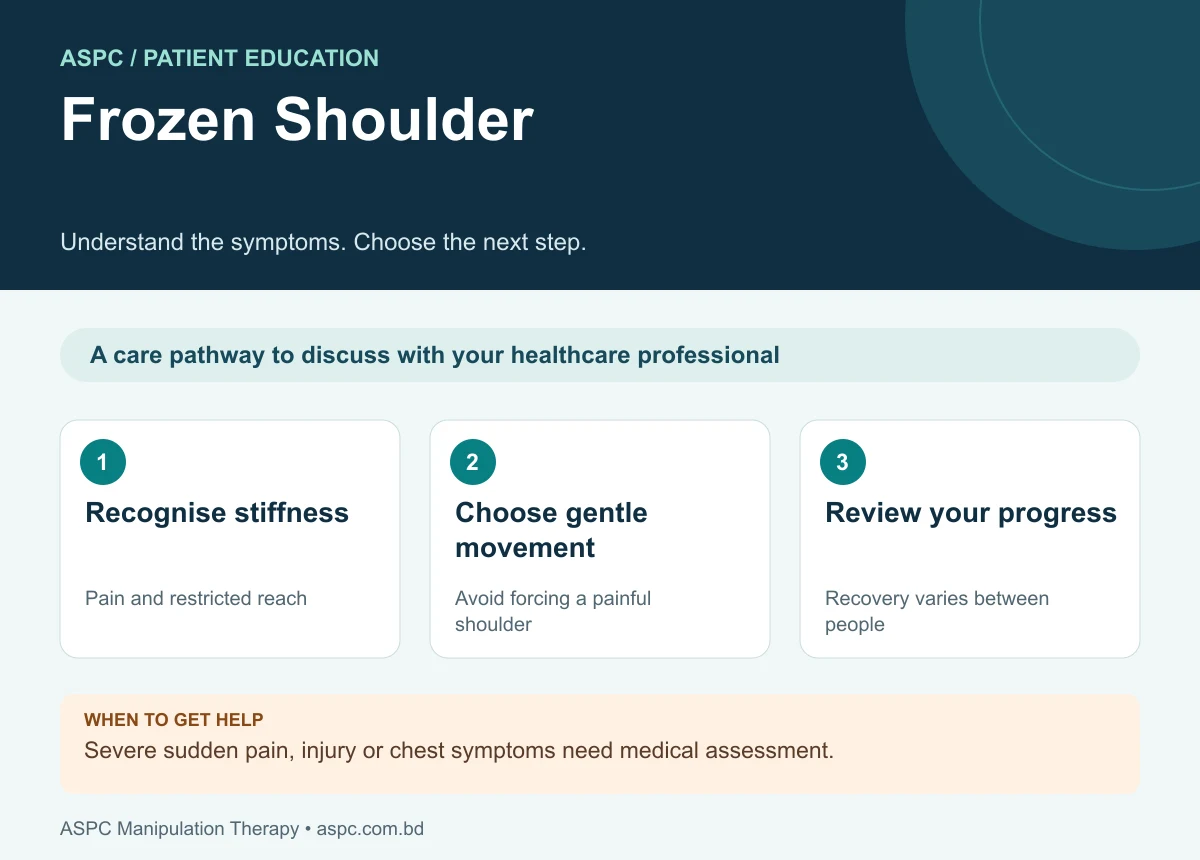
- Recognise stiffness: Pain and restricted reach.
- Choose gentle movement: Avoid forcing a painful shoulder.
- Review your progress: Recovery varies between people.
Frozen shoulder, medically known as adhesive capsulitis, is a painful condition that causes progressive stiffness and restricted movement of the shoulder joint. Dressing, reaching overhead, combing your hair or sleeping on the affected side can all become difficult.
It usually develops gradually and can last for months or longer. The encouraging news is that, with a proper structural assessment, individualized physiotherapy and attention to underlying health conditions, most people regain significant movement and function.
What Is Frozen Shoulder?
The shoulder is a highly mobile joint wrapped in a capsule of connective tissue. In frozen shoulder, this capsule becomes inflamed, thickened and progressively tighter, which reduces the space available for movement. Two structures are especially involved: the rotator interval and the coracohumeral ligament. When they thicken and shorten, external rotation (turning the arm outward) is restricted, which is why combing hair or reaching behind the head becomes so hard.
The result is pain, progressive stiffness and reduced range of motion. Unlike many other shoulder problems, the restriction is usually present even when someone else moves your arm for you. Frozen shoulder can affect one shoulder, or both at different times.
Causes and Risk Factors
Sometimes no cause is found (primary or idiopathic frozen shoulder). In other cases it follows another problem that limits shoulder movement (secondary frozen shoulder). Frozen shoulder is best understood as multifactorial, shaped by age, metabolic health, systemic disease and local shoulder factors.
- Diabetes: diabetes is associated with a higher risk of frozen shoulder. Shoulder rehabilitation and diabetes management should be coordinated.
- Thyroid disease: thyroid disorders have been associated with frozen shoulder. An association does not mean that everyone with a thyroid disorder will develop shoulder stiffness.
- Prolonged immobilization: keeping the shoulder still after injury, surgery or fracture may contribute to stiffness.
- Previous shoulder problems: rotator cuff injury, surgery or prolonged pain can reduce movement. Having had frozen shoulder once also raises the chance of the opposite shoulder being affected later.
- Neurological conditions: shoulder stiffness and frozen shoulder have been reported in Parkinson’s disease, and stroke is also linked to shoulder stiffness.
- Age and sex: most common in middle age, slightly more in women.
Not everyone with these risk factors develops frozen shoulder, and many cases have no identifiable cause. Still, people with diabetes, thyroid disease or recent immobilization deserve closer assessment when shoulder pain and stiffness appear.
Symptoms and Pain Location
Pain and stiffness are the hallmarks. Consider professional assessment if you notice:
- Persistent aching that increases when you move the arm
- Progressive loss of movement, not just pain
- Difficulty reaching overhead or behind your back (for example, fastening clothes)
- Night pain or pain when lying on the affected side
- Growing difficulty with dressing, bathing and grooming
Pain is usually felt at the front or side of the shoulder and upper arm, and may extend to the shoulder blade, upper back, neck or occasionally the chest.
Chest pain warning: never assume chest pain is caused by frozen shoulder. If it is sudden, severe or pressure-like, or comes with shortness of breath, sweating, nausea, dizziness or pain spreading to the jaw or arm, seek urgent medical care.
Does it cause “saggy arms”? Not directly. However, prolonged pain and disuse can weaken the muscles of the shoulder and upper arm, making the arm look less toned. Gradual rehabilitation, not forcing painful movements, helps rebuild strength.
The Three Stages and Recovery Time
Stage 1: Freezing Stage
pain gradually increases and movement begins to decrease; night pain is common. Lasts weeks to months.
Stage 2: Frozen Stage
pain may ease for some people, but stiffness dominates and movement is significantly restricted. Lasts several months.
Stage 3: Thawing Stage
movement gradually returns as pain and stiffness decrease. Lasts several months.
There is no single timeline. Recovery depends on severity, how early treatment starts, diabetes or thyroid dysfunction, previous injury or surgery, and how consistently you follow your program. Many people recover substantially or almost fully, although some keep residual stiffness. The goal is not only less pain but restored movement, strength, confidence and function.
Clinical assessment and rehabilitation

What the assessment includes
- History and staging: identifying whether the shoulder is freezing, frozen or thawing, and screening for diabetes, thyroid disease, previous injury, surgery or immobilization that may be contributing.
- Structural examination: comparing contractile structures (muscle and tendon) with non-contractile structures (capsule and ligament), and measuring active and passive range of motion; loss of passive external rotation is the characteristic finding.
- Differential diagnosis: distinguishing frozen shoulder from rotator cuff disorders, arthritis, neck-related pain and nerve conditions, with referral for imaging or medical review when the picture is unclear.
How the care plan is chosen
- Diagnosis-led plan: treatment is chosen from the structural findings and matched to the stage of the condition, rather than applying one fixed protocol to every shoulder.
- Manual and manipulation therapy: ASPC delivers individualized care primarily through hands-on manual and manipulation-based therapy, supported by patient education and functional rehabilitation, with intensity adjusted to how irritable the shoulder is.
- Regular reassessment: the structural examination is repeated so the plan can change as pain settles and movement returns.
- Co-management of underlying conditions: diabetes and thyroid disease should be managed with a physician, and pain-relief medication should be chosen with medical guidance.
- Medical and surgical options when needed: corticosteroid injection, hydrodilatation, or, in severe cases that fail conservative care, manipulation under anesthesia or arthroscopic capsular release are decisions for a specialist physician. Most people do not need surgery.
Nutrition and Daily Tips
No food cures frozen shoulder, but a balanced diet supports tissue repair and general health. Include protein (fish, eggs, chicken, dairy, beans, lentils), plenty of fruits and vegetables, healthy fats and enough fluids, and limit highly processed, high-sugar foods. Vitamin D and calcium needs should be individualized. If you have diabetes, get tailored dietary advice.
Also keep the shoulder moving within a comfortable range, avoid prolonged immobilization unless instructed, follow your home program consistently, manage diabetes or thyroid disease with your healthcare team, and pay attention to sleep position.
Other Conditions and When to Get Help
Not every painful, stiff shoulder is frozen shoulder. Rotator cuff disorders, arthritis, tendinopathy, instability, bursitis, cervical spine problems and nerve conditions can look similar, which is why clinical assessment matters. See a doctor or physiotherapist if:
- Pain persists or worsens, or movement keeps decreasing
- Night pain significantly disturbs sleep
Symptoms began after trauma, or you have weakness or neurological symptoms.
- Self-care at home is not helping
- You have unexplained chest pain (seek urgent care)
Final Takeaway
Frozen shoulder is more than ordinary shoulder pain: it combines pain, stiffness and progressive loss of movement that can disrupt everyday life. Recovery is usually best served by an accurate structural diagnosis followed by a gradual, stage-matched management plan, together with good control of conditions such as diabetes and thyroid disease, rather than forcing the shoulder. An individualized rehabilitation plan should be reviewed against changes in symptoms and function. If shoulder pain or stiffness is persistent, worsening or interfering with daily life, seek assessment from a qualified healthcare professional. The goal is not just less pain, but restored movement, strength, confidence and normal shoulder function.
Supporting recovery at home
Keep the shoulder moving within a comfortable range instead of completely avoiding its use. A clinician may suggest gentle assisted reaching or pendulum movements and later strengthening, adjusted to pain irritability and stage. Repeatedly forcing a very painful shoulder is not a shortcut to recovery.
For sleep, avoid direct pressure on the painful shoulder and try supporting the arm with a pillow if this helps. Break difficult tasks into smaller steps and review the plan if pain or function worsens. There is no guaranteed quick recovery time, and persisting stiffness may need medical treatment alongside rehabilitation.
Common questions
Does diabetes increase frozen shoulder risk?
Diabetes is associated with a higher risk of frozen shoulder. Diabetes care and shoulder rehabilitation should be coordinated; shoulder stiffness is not enough to diagnose diabetes.
Does menopause cause frozen shoulder?
Frozen shoulder is common in middle age, including around menopause, but age overlap does not prove that hormonal changes are the cause. Persistent pain and stiffness need an assessment rather than an assumption about hormones.
How long does recovery take?
Recovery can take months or years and varies with severity and other health conditions. Reassessment helps adjust movement, pain management and specialist referral when needed.
Assessment and rehabilitation in Dhaka
ASPC Manipulation Therapy provides physiotherapy assessment and rehabilitation in Dhaka. An appointment can help clarify your symptoms, current movement and strength, daily activity goals and whether medical referral is needed. Care should be individualized, with progress reviewed rather than a guaranteed recovery promise.
ASPC describes its assessment framework as Structural Diagnosis and Management (SDM). A named framework does not establish effectiveness for every condition. Treatment choices should follow the clinical findings, relevant guidance and the person’s preferences.
Discuss an assessment with ASPC
Related patient guides
- Neck Pain: Causes, Symptoms, Exercises and Physiotherapy
- Deltoid Tendinitis: Outer Shoulder Pain and Rehabilitation
Sources and further reading
Read the condition-specific guidance below alongside the assessment and exercise information in this article. Guidelines inform general care; they do not establish individual outcomes or superiority of a clinic.
- NHS patient guidance
- Shoulder Pain and Mobility Deficits Adhesive Capsulitis clinical practice guideline
Editorial update: 26 October 2026. Medical information disclaimer.


