

ASPC PATIENT EDUCATION · UPDATED 29 OCTOBER 2026
At a glance
Peripheral neuropathy refers to damage or dysfunction of nerves outside the brain and spinal cord. It may affect sensory, motor or autonomic nerves and can cause burning pain, tingling, numbness, weakness, balance difficulty or changes in sweating and blood pressure. Symptoms often begin in the feet and may spread upward, although the pattern depends on the nerves and cause involved (Callaghan et al., 2012; Bragg et al., 2024).
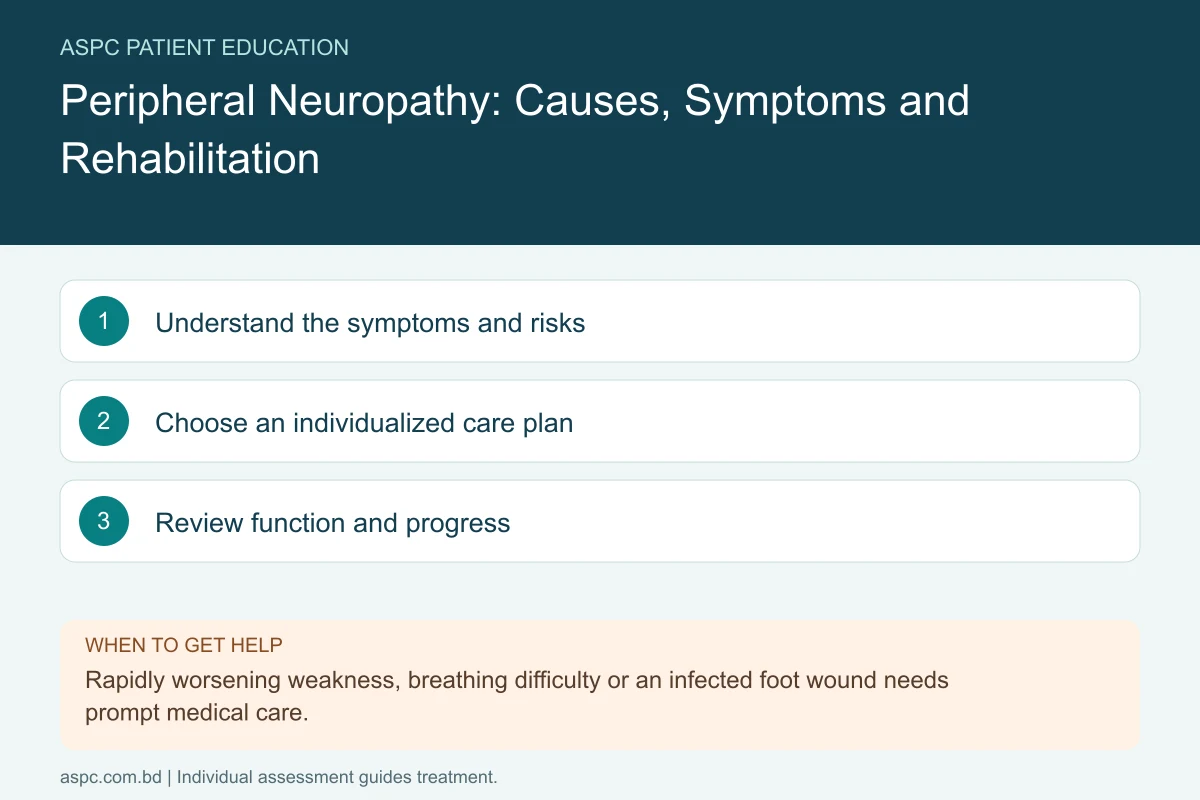
When to get help: Rapidly worsening weakness, breathing difficulty or an infected foot wound needs prompt medical care.
The featured image is AI-generated and does not depict an actual patient. General information; care should follow an individual assessment.
In this guide
- What Is Peripheral Neuropathy?
- How Common Is It? Prevalence and Epidemiology
- Causes and Risk Factors
- Symptoms and Pain Location
- The Course of Symptoms and Recovery Time
- Assessment and Treatment: Structural Diagnosis and Management (SDM) at ASPC Manipulation Therapy
- Nutrition and Daily Tips
- Other Conditions and When to Get Help
- Peripheral Neuropathy Treatment in Dhaka: Agrani Specialized Physiotherapy Centre (ASPC)
- Final Takeaway
- Common questions
- References
Peripheral neuropathy refers to damage or dysfunction of nerves outside the brain and spinal cord. It may affect sensory, motor or autonomic nerves and can cause burning pain, tingling, numbness, weakness, balance difficulty or changes in sweating and blood pressure. Symptoms often begin in the feet and may spread upward, although the pattern depends on the nerves and cause involved (Callaghan et al., 2012; Bragg et al., 2024).
Causes include diabetes, nutritional deficiencies, alcohol exposure, certain medicines, infections, inherited disorders and immune-mediated disease; in some people, the cause remains unknown. Assessment is important because some causes are treatable and loss of protective sensation can lead to unnoticed injuries. Rapidly progressive weakness, difficulty breathing or swallowing, or sudden major neurological changes require urgent medical assessment (ADA, 2026; NICE, 2024).
What Is Peripheral Neuropathy?
Peripheral nerves carry sensory information from the body to the brain and spinal cord, transmit signals to skeletal muscles and support autonomic functions such as sweating, digestion and blood-pressure regulation. Peripheral neuropathy occurs when one or more of these nerves are damaged or do not function normally. It may involve a single nerve (mononeuropathy), several separate nerves (mononeuropathy multiplex) or many nerves in a widespread pattern (polyneuropathy) (Callaghan et al., 2012; England et al., 2009).
Symptoms depend on the nerve fibres affected. Sensory involvement may cause burning pain, pins-and-needles, reduced sensation or loss of position sense; motor involvement may cause weakness, cramps or muscle wasting. Autonomic involvement can produce dizziness on standing, altered sweating, bowel or bladder symptoms, or sexual dysfunction. Distal symmetric polyneuropathy commonly affects both feet in a relatively length-dependent pattern, but asymmetry, rapid onset or prominent motor symptoms may suggest another cause and warrant further evaluation (ADA, 2026; England et al., 2009).
How Common Is It? Prevalence and Epidemiology
Peripheral neuropathy is a group of disorders rather than one disease, so prevalence varies according to the population, age, diagnostic criteria and underlying cause. It becomes more common with increasing age and is associated with diabetes, alcohol-related disease, nutritional deficiency, exposure to neurotoxic medicines and some inherited or inflammatory conditions. Diabetic peripheral neuropathy is a major clinical subtype; estimates vary across studies and depend on how neuropathy is assessed (Callaghan et al., 2012; Bragg et al., 2024).
Clinicians consider the distribution of symptoms, sensory and motor findings, duration and functional impact rather than assuming that all foot tingling is caused by diabetes. The table summarizes common clinical patterns; these clues guide assessment but do not establish a diagnosis on their own (England et al., 2009; ADA, 2026).
| Clinical pattern | Typical clues (not diagnostic on their own) |
|---|---|
| Distal symmetric polyneuropathy | Often both feet first; burning, numbness or reduced vibration; may progress toward hands. |
| Small-fibre neuropathy | Burning pain, altered temperature sensation or pain from light touch; routine nerve-conduction tests may be normal. |
| Large-fibre neuropathy | Reduced vibration or position sense, diminished reflexes and balance difficulty. |
| Focal mononeuropathy | Symptoms follow one named nerve, such as median-nerve symptoms in carpal tunnel syndrome. |
| Autonomic neuropathy | Possible dizziness on standing, altered sweating, gastrointestinal, bladder or sexual symptoms. |
Table 1. Common clinical patterns associated with peripheral neuropathy; symptoms overlap and require clinical assessment.
Causes and Risk Factors
Peripheral neuropathy may result from metabolic disease, nutritional deficiency, toxic exposure, infection, immune-mediated nerve injury, inherited conditions, trauma or compression. More than one factor can contribute, and a cause is not always identified despite appropriate assessment (England et al., 2009; England et al., 2009).
- Diabetes and metabolic disease: diabetes is a common cause of distal symmetric polyneuropathy. Risk may be influenced by duration of diabetes and associated metabolic factors; appropriate screening and management can reduce complications (ADA, 2026).
- Nutritional deficiency and systemic illness: vitamin B12 deficiency, other nutritional deficiencies, kidney disease and thyroid disorders can contribute to neuropathy. Identifying and treating a reversible cause is important; supplements should not be taken in high doses without appropriate advice (England et al., 2009; Bragg et al., 2024).
- Alcohol, medicines and toxins: excessive alcohol exposure and some chemotherapy or other medicines can injure peripheral nerves. A clinician should review exposure history and prescribed medicines; do not stop essential medication without discussing it with the prescriber (Callaghan et al., 2012).
- Infection, inflammation and immune-mediated disease: selected infections and disorders such as vasculitis or chronic inflammatory demyelinating polyneuropathy may affect peripheral nerves. Rapidly evolving weakness or marked asymmetry warrants prompt medical evaluation (England et al., 2009; England et al., 2009).
- Inherited conditions, injury and compression: genetic neuropathies may cause longstanding distal weakness or deformity, while injury or local compression may affect an individual nerve. Clinical pattern and family history help guide investigation (England et al., 2009).
Having a risk factor does not prove that it is the cause of symptoms, and people with diabetes can also develop a different, treatable neuropathy. Persistent, progressive or function-limiting symptoms deserve assessment rather than self-diagnosis.
Symptoms and Pain Location
The type, location and behaviour of symptoms provide useful clues. Consider professional assessment if you notice (Callaghan et al., 2012; ADA, 2026):
- Burning, electric-shock-like pain or pins-and-needles, often starting in the toes or feet
- Numbness or reduced ability to feel temperature, touch, vibration or the position of the feet
- Weakness, muscle wasting, foot drop, reduced grip or difficulty climbing stairs
- Unsteadiness, poor balance or increased risk of falls, especially in low light
- Reduced reflexes or abnormal sensory findings identified during examination
- Changes in sweating, dizziness on standing, bowel or bladder function, or difficulty with daily activities
Length-dependent neuropathy often affects both feet before the hands, sometimes described as a “stocking-glove” pattern. A single-nerve disorder may follow a more localized distribution, while autonomic neuropathy can affect involuntary body functions. Clinical examination helps distinguish neuropathy from spinal cord, nerve-root, vascular, joint or other neurological conditions (England et al., 2009; ADA, 2026).
Urgent warning signs include rapidly progressive or ascending weakness, new difficulty breathing or swallowing, sudden major weakness, or new bladder/bowel dysfunction with severe spinal symptoms. These may indicate a serious neurological or other medical condition and require urgent assessment; do not delay care while trying home treatment (England et al., 2009; NICE, 2024).
Does Peripheral Neuropathy Always Need Surgery?
No. Most generalized peripheral neuropathies are not treated with surgery. Management depends on the cause and may include treating an underlying condition, reviewing potentially neurotoxic medicines, managing neuropathic pain, protecting insensate skin and providing rehabilitation. Surgery may be considered for selected focal entrapment neuropathies or a structural lesion, but it is not a general treatment for widespread nerve damage (Callaghan et al., 2012; Bragg et al., 2024).
The Course of Symptoms and Recovery Time
- Acute or rapidly developing symptoms: new weakness, rapidly spreading sensory change or symptoms progressing over hours to days need prompt medical evaluation. Recovery depends on the cause and severity.
- Persistent or slowly progressive symptoms: neuropathy associated with chronic metabolic disease, toxic exposure or an ongoing systemic condition may continue unless the contributing factor is addressed. Management can reduce risk and support function.
- Nerve injury with weakness or sensory loss: recovery may take months and can be incomplete when nerve fibres are substantially damaged. Strength, sensation, skin integrity, balance and function should be monitored over time (Callaghan et al., 2012).
There is no single recovery timeline for peripheral neuropathy. Prognosis depends on the cause, the type and extent of nerve injury, symptom duration, general health and whether a reversible factor can be treated. Goals include reducing pain where possible, preventing injury, maintaining mobility and supporting participation in daily activities (Bragg et al., 2024).
Assessment and Treatment: Structural Diagnosis and Management (SDM) at ASPC Manipulation Therapy
Treatment should begin with assessment because numbness, pain or weakness may arise from generalized neuropathy, focal nerve compression, nerve-root disease or another condition. At ASPC Manipulation Therapy in Dhaka, assessment and management are described around Structural Diagnosis and Management (SDM), a clinician-developed musculoskeletal framework. This description reflects the center’s stated approach; it does not establish that SDM is an independently validated treatment for peripheral neuropathy (Haque et al., 2020; England et al., 2009).
How SDM assesses suspected peripheral neuropathy
A structured assessment may include medical history, symptom distribution, joint movement, muscle strength, gait and neurological examination. For suspected peripheral neuropathy, these elements should be combined with medical screening and appropriate investigation of possible causes; a musculoskeletal framework alone cannot establish the underlying neuropathy (England et al., 2009; ADA, 2026).
- History and symptom behaviour: establish onset, progression, distribution, pain quality, falls, medical conditions, alcohol exposure, diet, family history and current or previous medicines, including chemotherapy.
- Neurological and functional examination: assess strength, muscle bulk, reflexes, pinprick or temperature, vibration, position sense, gait and balance. In people with diabetes, protective sensation should be assessed using a 10-g monofilament as recommended in clinical guidance (ADA, 2026).
- Differential diagnosis and referral: consider metabolic, nutritional, toxic, inflammatory, inherited and compressive causes. Blood tests may identify treatable causes; nerve-conduction studies or electromyography may be useful when the presentation is atypical or the diagnosis remains unclear. Urgent warning signs take priority over manual treatment (England et al., 2009; Bragg et al., 2024).
How SDM may guide management
- Diagnosis-led plan: treatment should be based on the suspected cause, examination findings, symptom irritability, protective sensation and the person’s functional goals rather than applying one fixed protocol to everyone.
- Exercise and functional rehabilitation: individualized strengthening, balance, gait and functional exercises may help maintain mobility and reduce falls risk. Programme intensity should reflect weakness, fatigue, cardiovascular status and foot integrity.
- Manual therapy: hands-on techniques may be considered for coexisting musculoskeletal problems when appropriate, but they do not repair generalized nerve damage and should not replace medical evaluation, cause-specific treatment or active rehabilitation.
- Activity modification and self-management: encourage safe activity, suitable footwear, daily foot inspection and avoidance of burns, pressure injury or barefoot walking when protective sensation is reduced. Use supports or mobility aids when indicated.
- Regular reassessment: monitor pain, strength, sensation, balance, falls, skin integrity and participation. New or worsening weakness, rapid progression or failure to improve should prompt review of the diagnosis and referral plan.
- Medical treatment when needed: a physician may investigate and treat reversible causes and prescribe medication for painful neuropathy. Selected focal nerve entrapments may need specialist review; treatment should be individualized and monitored for benefits and adverse effects.
An honest note on the evidence: SDM is a clinician-developed framework, and the cited published description concerns mechanical dysfunction of the lower back. The sources cited here do not establish SDM as a specific, independently proven treatment for peripheral neuropathy. Care should therefore be guided by established neurological assessment, cause-specific management and rehabilitation evidence (Haque et al., 2020; ADA, 2026).
Nutrition and Daily Tips
No single food cures peripheral neuropathy. A balanced diet supports general health, while documented deficiencies such as vitamin B12 deficiency require appropriate clinical assessment and treatment. People with diabetes should follow individualized advice for glucose, blood pressure and lipid management. Avoid high-dose supplements unless advised by a qualified clinician because excess intake of some vitamins, including vitamin B6, can itself cause neuropathy (Bragg et al., 2024; ADA, 2026).
Inspect feet daily for blisters, cuts, redness or burns, wear well-fitting shoes and avoid heating pads or hot water when sensation is reduced. Keep physically active within safe limits, use adequate lighting and handrails if balance is impaired, and follow the care plan for the underlying cause. Seek prompt review for wounds, infection or worsening weakness.
Other Conditions and When to Get Help
Not every episode of tingling, pain or weakness is caused by peripheral neuropathy. Nerve-root disorders, spinal cord disease, circulation problems, musculoskeletal conditions and other neurological disorders can produce overlapping symptoms. Seek medical or physiotherapy assessment if (England et al., 2009; ADA, 2026):
- Burning, tingling or numbness persists, worsens or repeatedly returns
- Symptoms interfere with sleep, walking, work or normal daily activities
- New weakness, foot drop, frequent falls or loss of coordination develops
- Symptoms begin rapidly, spread upward or follow a significant injury
- There is a new wound, blister, infection or change in foot colour or temperature
- Rapidly progressive weakness, difficulty breathing or swallowing, or severe new neurological symptoms occur — urgent medical assessment
- Sudden weakness with facial droop, speech difficulty or visual changes occurs — emergency care
Peripheral Neuropathy Treatment in Dhaka: Agrani Specialized Physiotherapy Centre (ASPC)
Agrani Specialized Physiotherapy Centre (ASPC) describes its services as including physiotherapy and musculoskeletal assessment, with management organized around Structural Diagnosis and Management (SDM). This is institutional information and should not be interpreted as independent evidence of treatment outcomes for peripheral neuropathy.
For a person considering care for peripheral neuropathy, an appropriate initial assessment should include medical history, neurological screening, examination of gait and function, foot-risk assessment where relevant, an explanation of the working diagnosis and referral for medical investigation when indicated. Treatment may combine education, safe progressive rehabilitation, balance training, foot-protection advice and coordination with medical care (ADA, 2026; Bragg et al., 2024).
Final Takeaway
Peripheral neuropathy is damage or dysfunction of nerves outside the brain and spinal cord and may cause pain, tingling, numbness, weakness, balance problems or autonomic symptoms. Causes include diabetes, nutritional deficiencies, toxic exposure, medicines and other medical or inherited conditions. Assessment is important because some causes are treatable and reduced sensation increases injury risk. Management may include treating the underlying cause, pain management, foot protection and individualized rehabilitation. SDM is a clinician-developed framework, but evidence specific to peripheral neuropathy is not established. Seek urgent medical care for rapidly progressive weakness, breathing or swallowing difficulty, or sudden major neurological symptoms (England et al., 2009; ADA, 2026).
Common questions
Is all peripheral neuropathy caused by diabetes?
No. Diabetes is one cause, but nutritional, medicine-related, inherited and other medical causes need consideration. Some contributors are treatable.
Why check numb feet?
Reduced sensation can hide wounds and pressure damage. Foot checks, suitable footwear and professional risk assessment can help protect the feet.
Assessment and rehabilitation in Dhaka
ASPC Manipulation Therapy provides physiotherapy and rehabilitation in Dhaka. Contact the centre to discuss the service, clinician, appointment arrangements and current fees relevant to your needs. Medical emergencies and suspected infectious illness require the appropriate medical pathway.
Discuss an assessment with ASPC
Related patient guides
- Focal Neuropathy: Symptoms, Assessment and Rehabilitation
- Pinched Nerve: Symptoms, Causes and Rehabilitation
- Autonomic Neuropathy: Symptoms, Diagnosis and Safe Rehabilitation
Related assessment and rehabilitation guides
References and clinical guidance
Research findings apply to the populations and interventions studied. Editorial source checking is not independent clinical peer review.
- Primary condition-specific guidance
- Practice Parameter: Evaluation of distal symmetric polyneuropathy: Role of laboratory and genetic testing (an evidence-based review) (2009). Neurology
- 12. Retinopathy, Neuropathy, and Foot Care: Standards of Care in Diabetes—2026 (2026). Diabetes Care
- Bragg, S., Marrison, S. T., & Haley, S. (2024). Diabetic peripheral neuropathy: Prevention and treatment. American Family Physician, 109(3), 226–232. https://www.aafp.org/pubs/afp/issues/2024/0300/diabetic-peripheral-neuropathy.html
- Diabetic neuropathy: clinical manifestations and current treatments (2012). The Lancet Neurology
Editorial update: 29 October 2026. Medical information disclaimer.