
ASPC PATIENT EDUCATION · UPDATED 29 OCTOBER 2026
At a glance
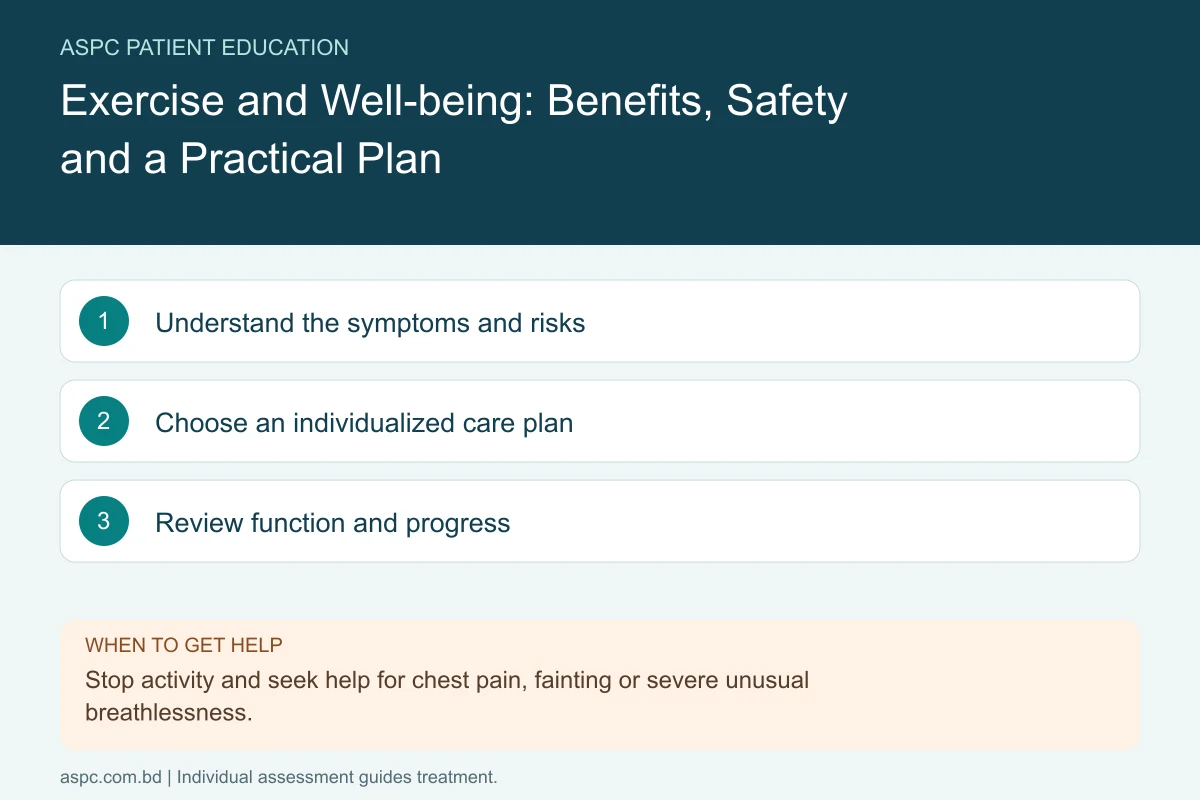
An exercise routine can support strength, mobility, general health and well-being. Start from current capacity, choose manageable activities and adapt the plan to symptoms, disability or medical needs.
When to get help: Stop activity and seek help for chest pain, fainting or severe unusual breathlessness.
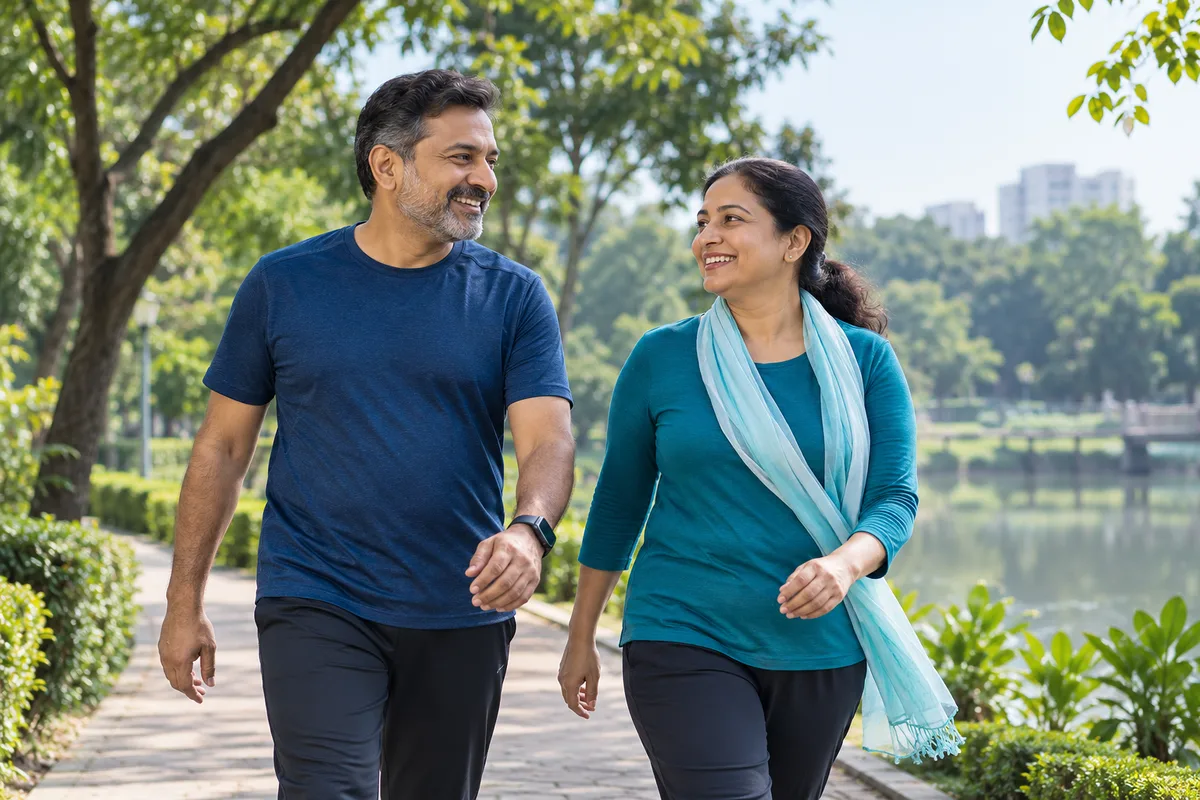
The featured image is AI-generated and does not depict an actual patient. General information; care should follow an individual assessment.
In this guide
- What Is Exercise and Well-being?
- How Common Is Physical Inactivity? Prevalence and Public Health
- Benefits and Factors That Influence Well-being
- Types of Exercise and Practical Examples
- Assessment and Management: An Individualized Exercise Plan
- Nutrition, Recovery and Daily Tips
- Other Conditions and When to Get Help
- Exercise and Well-being Support: A Physiotherapy Perspective Treatment in Dhaka: Agrani Specialized Physiotherapy Centre (ASPC)
- Final Takeaway
- Common questions
- References
| MOVEAerobic activityWalking, cycling | BUILDStrength and balanceResistance exercises | RESTORERecovery and moodSleep, stress management |
|---|
Exercise is planned physical activity that improves or maintains fitness, function and health. Well-being is broader than the absence of disease: it includes physical capability, emotional health, social participation and the ability to manage everyday life. Regular movement can support these dimensions by improving cardiovascular fitness, muscle strength, mobility, sleep and mood. The greatest benefits usually come from a routine that is appropriate to the person, enjoyable enough to continue and progressed gradually (World Health Organization [WHO], 2020; Bull et al., 2020).
Exercise does not need to be intense or performed in a gym to be useful. Brisk walking, cycling, swimming, dancing, active transport, home-based strengthening and adapted sport can all contribute. People with chronic conditions or disability can often exercise safely with suitable adjustments and clinical advice. The aim is sustainable participation rather than perfection or comparison with others (WHO, 2020).
What Is Exercise and Well-being?
Exercise is a subset of physical activity: it is usually planned, structured and repeated with the purpose of improving fitness or health. Physical activity also includes daily tasks such as walking to work, household chores, climbing stairs and active recreation. Well-being describes how people function and feel across physical, psychological and social domains. These concepts overlap because movement can improve physical capacity while also creating opportunities for confidence, routine, social connection and enjoyment (Caspersen et al., 1985; WHO, 2020).
A balanced programme commonly combines aerobic activity, muscle strengthening and, where relevant, balance and flexibility work. No single exercise is ideal for everyone. Age, current fitness, health conditions, preferences, access to facilities and cultural context all influence what is realistic. An achievable plan performed consistently is generally more useful than an ambitious plan that is quickly abandoned.
How Common Is Physical Inactivity? Prevalence and Public Health
Physical inactivity is a major public-health concern because it is associated with a higher risk of noncommunicable diseases and poorer health outcomes. WHO guidance recommends that adults accumulate regular moderate- or vigorous-intensity activity across the week and reduce sedentary time. Recommendations are population targets, not a pass-or-fail test; people who are inactive can benefit from starting with small amounts and building up gradually (WHO, 2020).
| Population | WHO recommendation |
|---|---|
| Adults (18–64 years) | 150–300 minutes of moderate aerobic activity, or 75–150 minutes vigorous activity, or an equivalent combination each week; muscle strengthening on 2 or more days. |
| Older adults (65+ years) | Same aerobic and strengthening targets where possible, plus varied multicomponent activity emphasizing functional balance and strength. |
| Children and adolescents (5–17 years) | Average at least 60 minutes per day of moderate-to-vigorous activity across the week; include vigorous and muscle- and bone-strengthening activities on at least 3 days. |
| People living with disability or chronic conditions | Be as active as abilities and health allow; adapt activity and seek professional guidance when needed. |
Table 1. Summary of WHO physical-activity recommendations. Individual advice may differ according to health status and ability (WHO, 2020).
Global estimates vary by age group, country, survey method and the definition of activity. Therefore, a single percentage should not be applied to every community. The practical public-health message is consistent: moving more, sitting less and making activity accessible can improve health across the life course (WHO, 2020; Guthold et al., 2018).
Benefits and Factors That Influence Well-being
Regular physical activity produces benefits across multiple body systems. It can improve cardiorespiratory fitness, blood pressure, insulin sensitivity, muscular strength, bone health and the ability to perform daily activities. It is also associated with lower risk of cardiovascular disease, type 2 diabetes and some cancers. These benefits depend on the dose, type and regularity of activity, but some benefit can occur even below the full recommended amount (Piercy et al., 2018; WHO, 2020).
Mood and stress: Exercise can reduce symptoms of anxiety and depression for many people and may support emotional regulation. It should complement, not replace, appropriate mental-health care when needed (WHO, 2020).
Sleep and energy: Regular daytime activity may improve sleep quality and daily energy. Intensity and timing should be adjusted if exercise causes excessive fatigue or disrupts sleep.
Social connection: Group walks, team sports, classes and community activities can reduce isolation and support motivation, particularly when the environment is welcoming and inclusive.
Function and independence: Strength, balance and mobility training can make daily tasks easier and help older adults maintain function. Programmes should be tailored to fall risk and physical capacity.
Confidence and self-efficacy: Setting achievable goals and noticing progress can strengthen confidence. Weight or appearance should not be the only measure of success; stamina, strength, mood and participation also matter.
Benefits are influenced by access to safe places, time, cost, disability inclusion, transport, social support, sleep, nutrition and pre-existing health conditions. Exercise advice should avoid blame and consider barriers in a person’s environment. Adapted activities, short sessions and home-based options can help people participate more consistently.
Types of Exercise and Practical Examples
A well-rounded routine can include several types of movement. The appropriate balance depends on the individual’s goals and health status.
Aerobic exercise: Brisk walking, cycling, swimming or dancing increases breathing and heart rate. Moderate intensity generally allows talking but not singing comfortably.
Strength training: Resistance bands, body-weight exercises, weights or suitable functional tasks help maintain muscle strength. Major muscle groups should be trained on at least two days each week for adults.
Balance and coordination: Supported single-leg stance, heel-to-toe walking, tai chi or supervised functional tasks may be useful, especially for older adults at risk of falls.
Mobility and flexibility: Gentle range-of-motion exercises and stretching can help maintain comfortable movement, although they do not replace aerobic or strengthening activity.
Mind–body activity: Yoga, tai chi and similar practices combine movement, breathing and attention. Adapt poses or movements to pain, balance, pregnancy, disability or other clinical needs.
Assessment and Management: An Individualized Exercise Plan
A safe exercise plan begins with an understanding of the person’s goals, baseline activity, medical history, symptoms, functional abilities and preferences. Most healthy adults can start light-to-moderate activity gradually. People with known cardiovascular, metabolic or renal disease, significant mobility limitations, recent surgery, pregnancy-related concerns or unexplained symptoms may need individualized advice from a qualified clinician before increasing intensity (WHO, 2020; Riebe et al., 2015).
How to assess exercise needs
History and goals: Ask about current activity, previous exercise experience, barriers, sleep, stress, pain, falls, medications and what the person wants to achieve.
Functional assessment: When appropriate, assess walking tolerance, strength, balance, mobility and ability to perform daily tasks. Use validated measures where suitable and repeat them to track progress.
Risk screening: Review relevant medical conditions and symptoms. Chest pressure, fainting, unexplained severe breathlessness or new neurological symptoms require medical assessment rather than pushing through exercise.
How to build a sustainable programme
Start low and progress slowly: Begin with manageable sessions, such as 5–10 minutes of walking, and increase duration or frequency as tolerated before adding substantial intensity.
Use a simple structure: Include a gradual warm-up, the main activity and a cool-down. Strength sessions should use controlled technique and appropriate rest.
Make it meaningful: Choose activities that fit daily life, culture, budget and personal interests. A written plan, activity partner or calendar reminder may improve consistency.
Review and adapt: Reassess symptoms, enjoyment, function and adherence. Modify the plan during illness, flare-ups, injury or major changes in health.
Physiotherapists can assess movement and functional limitations, prescribe individualized exercise, teach safe technique and adapt programmes for neurological, musculoskeletal, cardiopulmonary or long-term conditions. Exercise should not be presented as a cure for every disease, and clinical claims should match the evidence for the specific condition and intervention.
Nutrition, Recovery and Daily Tips
Exercise and well-being are supported by adequate nutrition, hydration and recovery. A balanced dietary pattern can include vegetables, fruit, whole grains, legumes, protein-rich foods and appropriate sources of unsaturated fats. Fluid needs increase with heat and sweating, although people with heart or kidney conditions may have prescribed fluid limits. Supplements are not routinely required for everyone and should be considered in the context of diet, deficiency risk and clinical advice.
Allow recovery between demanding sessions, aim for regular sleep and avoid abruptly increasing training volume. Wear suitable footwear, choose a safe environment and use assistive devices when recommended. In hot weather, exercise during cooler periods and take breaks. If pain, dizziness, unusual breathlessness or marked fatigue develops, stop and assess the cause rather than assuming it is a normal part of training.
Other Conditions and When to Get Help
Exercise may need modification in people with arthritis, osteoporosis, diabetes, heart or lung disease, neurological conditions, balance problems or chronic pain. These conditions do not automatically mean that exercise should be avoided; the programme should be adapted to safety, symptoms and functional goals.
Seek urgent medical care: for chest pain or pressure, fainting, severe or unusual shortness of breath, sudden weakness, facial droop or difficulty speaking during or after activity.
Arrange professional review: if exercise repeatedly causes worsening pain, persistent dizziness, falls, unusual palpitations or symptoms that do not settle with rest.
Ask for adaptation: if a disability, pregnancy, recent operation, medication effect or long-term condition makes usual exercise advice difficult to follow.
A qualified healthcare professional can help determine whether symptoms require medical investigation and how activity can be resumed safely. Avoid exercising through warning symptoms or following extreme programmes that promise rapid results.
Exercise and Well-being Support: A Physiotherapy Perspective Treatment in Dhaka: Agrani Specialized Physiotherapy Centre (ASPC)
Physiotherapy can support well-being by translating general activity guidance into a plan that fits a person’s abilities, risks and daily routine. Depending on assessment findings, care may include graded aerobic activity, strengthening, balance training, mobility exercises, education on pacing and strategies to overcome barriers. Progress should be judged through meaningful outcomes such as walking capacity, confidence, sleep, participation and quality of life—not solely body weight.
No single exercise programme is best for every person. When choosing a service, look for a qualified practitioner who takes a history, explains the rationale, agrees on goals, considers medical warning signs and reviews progress. Claims about a particular method or centre should be supported by independent evidence; general benefits of exercise do not prove that every branded treatment is effective.
Final Takeaway
Exercise is a practical, evidence-supported way to promote physical health and many aspects of well-being. A balanced routine may combine aerobic activity, strengthening, balance and mobility work, alongside adequate nutrition, sleep and recovery. The best plan is safe, enjoyable, accessible and adjusted to the person’s circumstances. Start with manageable activity, build gradually, reduce prolonged sitting and seek professional advice when symptoms or health conditions require it. Consistency matters more than perfection: every suitable increase in movement can be a meaningful step toward better function and quality of life (Bull et al., 2020; WHO, 2020).
Common questions
Must exercise be strenuous to help?
Appropriate light or moderate activity can be a useful starting point. Build gradually from current capacity, with adaptations for symptoms, disability or medical conditions.
Is wellbeing the same as weight loss?
Activity can support strength, mobility, sleep and general health even when weight changes little. Weight-management goals may need additional nutritional and medical support.
Assessment and rehabilitation in Dhaka
ASPC Manipulation Therapy provides physiotherapy and rehabilitation in Dhaka. Contact the centre to discuss the service, clinician, appointment arrangements and current fees relevant to your needs. Medical emergencies and suspected infectious illness require the appropriate medical pathway.
Discuss an assessment with ASPC
Related patient guides
- Sports Physiotherapy: Injury Rehabilitation and Return to Sport
- Exercise and Weight Loss: Physiotherapy, Strength and Nutrition
- How Physiotherapy Can Help: Recovery, Function and Independence
References and clinical guidance
Research findings apply to the populations and interventions studied. Editorial source checking is not independent clinical peer review.
- Primary condition-specific guidance
- World Health Organization 2020 guidelines on physical activity and sedentary behaviour (2020). British Journal of Sports Medicine
- Caspersen, C. J., Powell, K. E., & Christenson, G. M. (1985). Physical activity, exercise, and physical fitness: Definitions and distinctions for health-related research. Public Health Reports, 100(2), 126–131. https://www.ncbi.nlm.nih.gov/pmc/articles/PMC1424733/
- Worldwide trends in insufficient physical activity from 2001 to 2016: a pooled analysis of 358 population-based surveys with 1·9 million participants (2018). The Lancet Global Health
- The Physical Activity Guidelines for Americans (2018). JAMA
- Updating ACSM’s Recommendations for Exercise Preparticipation Health Screening (2015). Medicine & Science in Sports & Exercise
- World Health Organization. (2020). WHO guidelines on physical activity and sedentary behaviour. World Health Organization. https://www.who.int/publications/i/item/9789240015128
Editorial update: 29 October 2026. Medical information disclaimer.