

ASPC PATIENT EDUCATION · UPDATED 29 OCTOBER 2026
At a glance
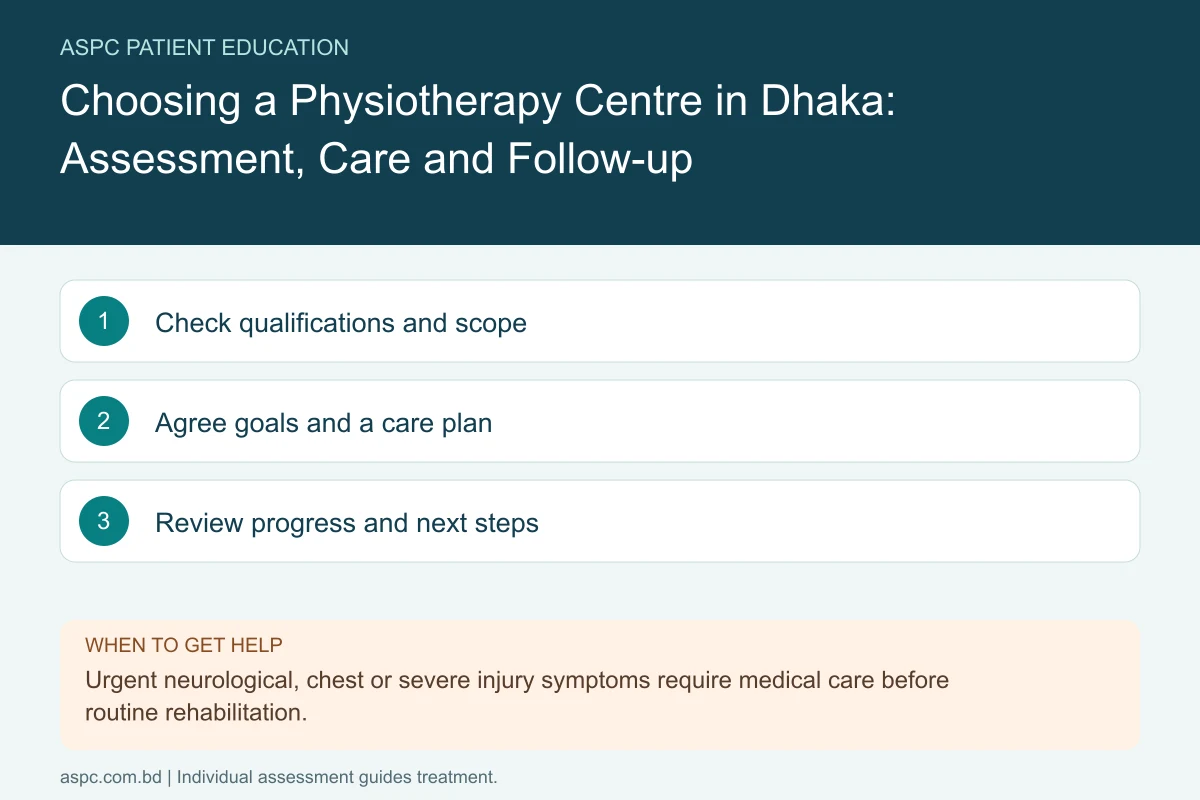
Choose physiotherapy care by the quality of assessment, clinical expertise, a clear individualized plan, informed consent, costs and progress review. The right service depends on the person’s condition and goals.
When to get help: Urgent neurological, chest or severe injury symptoms require medical care before routine rehabilitation.
The featured image is AI-generated and does not depict an actual patient. General information; care should follow an individual assessment.
In this guide
- About
- What to check when choosing a physiotherapy service
- Evidence-Driven Treatment Philosophy
- Check clinician qualifications and relevant experience
- Ask how assessment and referral work
- Personalized Treatment Programs
- Multidisciplinary Collaboration for Comprehensive Care
- Ask what equipment adds to the care plan
- Ask how outcomes and patient experience are measured
- Review hygiene, privacy and accessibility
- Clear and Supportive Communication with Patients
- Ethical Treatment and Transparent Billing
- Use of Standardized Outcome Measures
- Confirm expertise for your clinical needs
- Long-Term Follow-Up and Continued Support
- Conclusion
- Common questions
- References
About
Choosing a physiotherapy centre involves more than comparing advertising or online ratings. Consider the person’s diagnosis, goals, access needs and the service’s ability to assess, explain and review care. ASPC Manipulation Therapy provides physiotherapy and rehabilitation in Dhaka. This guide explains the questions patients can ask when considering ASPC or another provider; it does not rank clinics by independently measured outcomes.
What to check when choosing a physiotherapy service
Evidence-Driven Treatment Philosophy
Ask how the proposed treatment relates to your condition and current clinical evidence. A useful explanation covers likely benefits, uncertainties, alternatives and how progress will be measured. Exercise, education, symptom management and selected hands-on techniques may have different roles in different conditions. A branded framework or a particular machine is not, by itself, evidence of a superior outcome.
Check clinician qualifications and relevant experience
Check the treating clinician’s relevant qualifications and experience with your particular problem. Ask who will perform the assessment, supervise treatment and review changes. Complex neurological, postoperative, paediatric or pregnancy-related presentations may require specific expertise and coordination with other professionals. A clinician should explain the limits of their role and arrange referral when the presentation requires it.
Ask how assessment and referral work
A first assessment may include symptom history, medical and surgical history, movement, strength, sensation, walking or daily tasks, depending on the problem. Warning signs and relevant alternative diagnoses should be considered. Ask how the working diagnosis was reached, which findings matter and whether further investigation or medical review could change the plan. One test or scan finding rarely explains every symptom.
Personalized Treatment Programs
Agree goals that matter in everyday life, such as walking, reaching, stairs, sleep, work or sport. The programme should fit the assessment, current ability, symptoms, preferences and available support. Discuss a manageable home plan, how exercise will progress and what to do during a flare-up. Personalization should be visible in the goals and review process, rather than a promise of faster recovery.
Multidisciplinary Collaboration for Comprehensive Care
Ask whether and how the physiotherapist will communicate with your surgeon, physician, neurologist or maternity team when needed. Shared care can be important when medicines, healing precautions, swallowing, continence or neurological changes affect rehabilitation. The referral pathway should be clear. Coordination does not mean every patient needs every specialist; it should follow the clinical findings and the person’s priorities.
Ask what equipment adds to the care plan
Ask what purpose each assessment tool or piece of equipment serves. Technology may help measure or train a particular function, but novelty does not establish effectiveness. Discuss the expected benefit, alternatives and cost. Treatment should support a meaningful care plan and should not depend on buying an unproven package or assuming that one device treats all conditions.
Ask how outcomes and patient experience are measured
Ask what outcomes are tracked for people with a condition similar to yours and how the service handles limited progress. Individual testimonials can describe experience, but they cannot establish comparative effectiveness. No service can guarantee recovery for every patient. A transparent discussion should include uncertainty, possible adverse effects, reasons to change the plan and circumstances requiring another opinion.
Review hygiene, privacy and accessibility
Consider privacy, accessibility, cleanliness, comfortable transfers and safe handling of equipment. People with reduced mobility, sensory loss or medical complications may need additional arrangements. Ask about infection-prevention procedures and explain any access requirements before attending. Suspected infectious illness may require medical advice and a different visit arrangement to protect other patients.
Clear and Supportive Communication with Patients
You should understand the purpose of treatment, relevant risks and the home advice in language you can use. Ask questions and explain concerns, time constraints and goals. A useful service encourages informed choices and agrees how to communicate changes. If symptoms worsen or new warning signs appear, the plan should include clear instructions for medical review.
Ethical Treatment and Transparent Billing
Ask about consultation fees, session costs, expected review points and any additional charges before agreeing to treatment. Discuss alternatives and whether a proposed package is optional. Costs and attendance should fit a clinically justified plan. Avoid promises of a fixed number of sessions guaranteeing a cure, and ask how unused appointments or changes in the treatment plan are handled.
Use of Standardized Outcome Measures
Examples of useful measures include pain ratings, a person’s chosen functional tasks, walking tolerance, strength, balance and condition-specific questionnaires. The measure should fit the diagnosis and be repeated at appropriate review points. Changes should be interpreted alongside symptoms and daily function. Ask what meaningful improvement would look like and what happens if it is not occurring.
Confirm expertise for your clinical needs
Different clinical needs may call for different expertise. Ask the centre to confirm the availability and scope of the service you need before booking. The following areas describe common rehabilitation needs, rather than a guarantee that every clinician or appointment provides every specialty.
- Sports Rehabilitation: Ask about programmes designed to help athletes and physically active individuals recover from injuries, restore optimal performance, and prevent future complications.
- Neurological & Stroke Rehabilitation: Ask about therapy aimed at improving motor control, coordination, and functional independence for patients with neurological disorders or post-stroke limitations.
- Geriatric Physiotherapy: Ask about rehabilitation focused on enhancing mobility, balance, and safety for older adults, helping them maintain independence and reduce the risk of falls.
- Pediatric Physiotherapy: Ask about appropriately qualified developmental care for children experiencing functional, neurological, or movement-related challenges, supporting healthy growth and mobility.
- Women’s Health Physiotherapy: Ask about care addressing pelvic floor dysfunction, pain related conditions, and recovery needs associated with prenatal and postnatal stages.
Long-Term Follow-Up and Continued Support
Agree a practical plan for maintaining progress after supervised care. This may include a home programme, gradual activity progression, return-to-work or sport advice, review triggers and communication with other professionals. Follow-up should respond to individual needs. Persistent dependence on repeated passive treatment without measurable functional goals deserves discussion and reassessment.
Conclusion
Choose a service that can explain its assessment, recognize medical warning signs, agree meaningful goals and review outcomes openly. When considering ASPC, contact the centre to confirm the clinician, relevant service, appointment arrangements and current fees. Clinical quality should be judged through transparent care and the patient’s needs. Independent comparative evidence would be required to call any centre best for every condition.
Common questions
How do I choose a physiotherapy service?
Look for appropriate qualifications, a clear assessment, understandable goals, transparent costs and a plan to review progress and refer when needed.
Can one clinic be best for everyone?
Different patients need different expertise and services. Independent comparative outcome evidence would be needed to establish superiority for a particular condition.
Assessment and rehabilitation in Dhaka
ASPC Manipulation Therapy provides physiotherapy and rehabilitation in Dhaka. Contact the centre to discuss the service, clinician, appointment arrangements and current fees relevant to your needs. Medical emergencies and suspected infectious illness require the appropriate medical pathway.
Discuss an assessment with ASPC
Related patient guides
- Sports Physiotherapy: Injury Rehabilitation and Return to Sport
- Exercise and Well-being: Benefits, Safety and a Practical Plan
- Exercise and Weight Loss: Physiotherapy, Strength and Nutrition
References and clinical guidance
Research findings apply to the populations and interventions studied. Editorial source checking is not independent clinical peer review.
Editorial update: 29 October 2026. Medical information disclaimer.