
ASPC PATIENT EDUCATION · UPDATED 29 OCTOBER 2026
At a glance
A pinched nerve occurs when a nerve is compressed or irritated by surrounding tissues. Depending on its location, it may cause pain, tingling, numbness, altered sensation or muscle weakness. Symptoms can occur in the neck, back, arm, hand, buttock or leg and may radiate away from the site of compression. “Pinched nerve” is a general description rather than a single diagnosis; assessment is needed to identify the affected nerve and cause (Childress & Becker, 2016; AANS, n.d.).
When to get help: New bladder changes, saddle numbness or progressive major weakness requires urgent assessment.
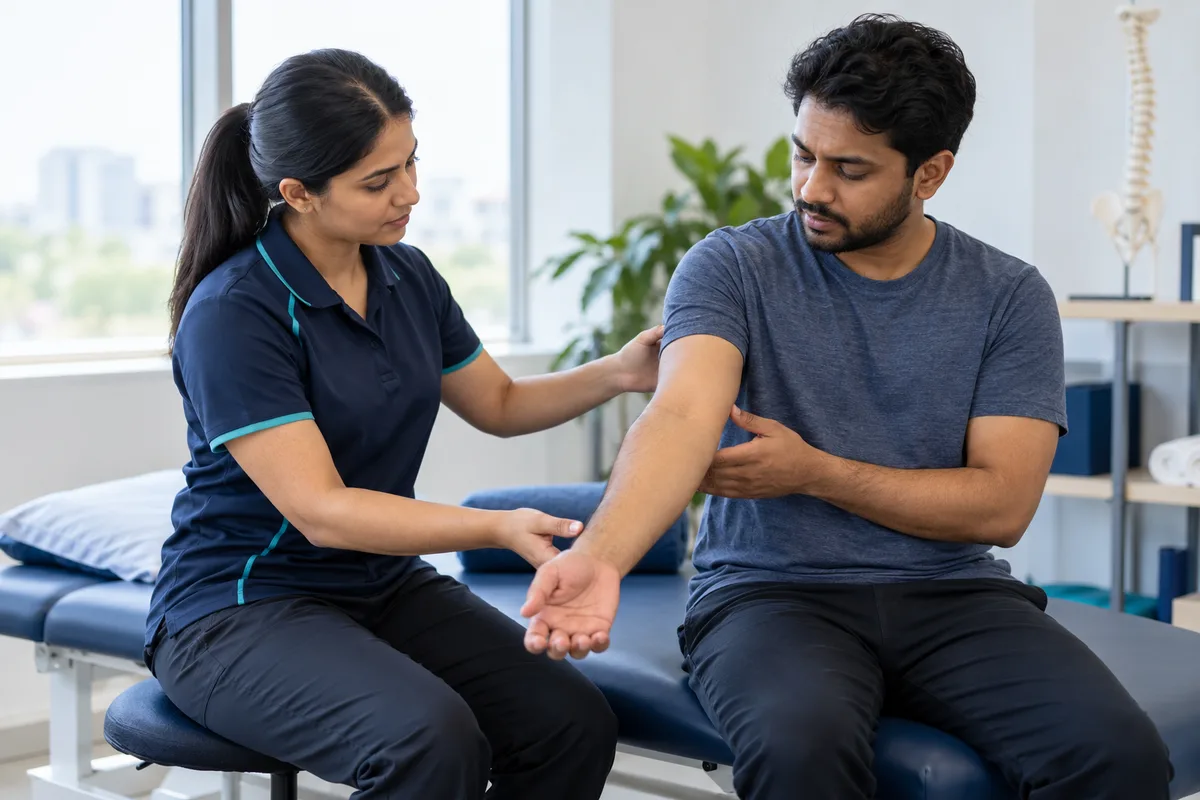
The featured image is AI-generated and does not depict an actual patient. General information; care should follow an individual assessment.
In this guide
- What Is a Pinched Nerve?
- How Common Is It? Prevalence and Epidemiology
- Causes and Risk Factors
- Symptoms and Pain Location
- The Course of Symptoms and Recovery Time
- Assessment and Treatment: Structural Diagnosis and Management (SDM) at ASPC Manipulation Therapy
- Nutrition and Daily Tips
- Other Conditions and When to Get Help
- Pinched Nerve Treatment in Dhaka: Agrani Specialized Physiotherapy Centre (ASPC)
- Final Takeaway
- Common questions
- References
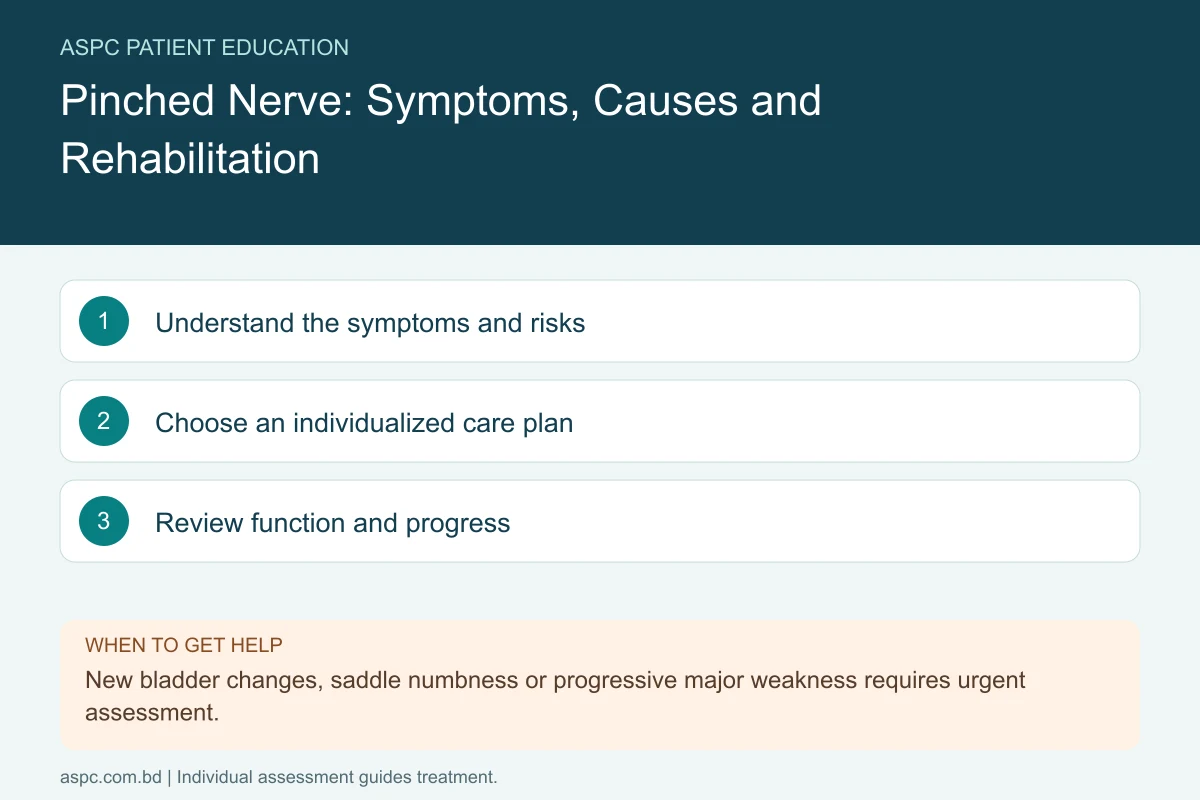
A pinched nerve occurs when a nerve is compressed or irritated by surrounding tissues. Depending on its location, it may cause pain, tingling, numbness, altered sensation or muscle weakness. Symptoms can occur in the neck, back, arm, hand, buttock or leg and may radiate away from the site of compression. “Pinched nerve” is a general description rather than a single diagnosis; assessment is needed to identify the affected nerve and cause (Childress & Becker, 2016; AANS, n.d.).
Some episodes improve with activity modification and conservative care, but symptoms vary with the cause and severity. Progressive weakness, new bladder or bowel dysfunction, numbness around the saddle region, or symptoms after major trauma require urgent medical assessment. Effective care begins with identifying the likely source and matching treatment to neurological findings and functional needs (NICE, 2020; AANS, n.d.).
What Is a Pinched Nerve?
Nerves carry sensory information to the brain and transmit signals that help control muscles. A nerve may become compressed where it passes through a narrow anatomical space, beneath a ligament, between surrounding tissues or near the spine. In the neck or lower back, a spinal nerve root may be irritated by a herniated disc, degenerative changes or narrowing around the nerve. At other sites, compression can affect a peripheral nerve, as in carpal tunnel syndrome or ulnar neuropathy (AANS, n.d.; Childress & Becker, 2016).
Symptoms depend on the nerve involved. Sensory irritation may cause pain, pins-and-needles or reduced sensation; motor involvement may cause weakness or reduced reflexes. Cervical radiculopathy can produce neck pain radiating into the shoulder or arm, while lumbar radiculopathy can cause back or buttock pain extending down the leg. Similar symptoms can arise from other conditions, so location alone does not confirm the diagnosis (Childress & Becker, 2016; NICE, 2020).
How Common Is It? Prevalence and Epidemiology
There is no single prevalence figure for “pinched nerve” because the term covers different conditions, including cervical and lumbar radiculopathy and peripheral nerve entrapments. Rates vary with age, occupation, physical demands, underlying spinal changes and the diagnostic definition used. Lumbar radicular pain and carpal tunnel syndrome are common clinical presentations, but their estimates should not be combined into one prevalence figure for all pinched nerves (Childress & Becker, 2016; AAFP, 2016).
Clinicians consider symptom distribution, duration, neurological findings and functional impact rather than assuming every episode of radiating pain is caused by nerve compression. The table summarizes common patterns; these clues are not diagnostic on their own (NICE, 2020).
| Clinical pattern | Typical clues (not diagnostic on their own) |
|---|---|
| Cervical radiculopathy | Neck pain with symptoms into shoulder or arm; possible sensory change, weakness or altered reflexes. |
| Lumbar radiculopathy | Back or buttock pain radiating into the leg; tingling, numbness or weakness may occur. |
| Carpal tunnel syndrome | Median-nerve symptoms often affecting thumb, index and middle fingers; may be worse at night. |
| Ulnar neuropathy | Tingling or numbness in the little finger and part of the ring finger; possible hand weakness. |
| Other peripheral nerve compression | Symptoms follow the territory of a specific nerve and may be affected by posture or pressure. |
Table 1. Common clinical patterns associated with nerve compression; symptoms overlap and require clinical assessment.
Causes and Risk Factors
A pinched nerve may result from a disc herniation, age-related changes, narrowing of a nerve passage, repetitive pressure, prolonged positioning, injury or swelling of surrounding tissues. More than one factor can contribute, and the exact cause cannot always be identified from symptoms alone (Childress & Becker, 2016; AAFP, 2016).
- Spinal disc herniation: a disc may protrude and irritate a nearby nerve root, causing radiating pain, tingling, sensory change or weakness. Imaging findings must be interpreted alongside the examination because disc changes can occur without symptoms (AANS, n.d.; NICE, 2020).
- Age-related changes and spinal narrowing: degenerative changes, bone spurs or narrowing of the spinal canal or foramina may reduce space around a nerve. These findings become more common with age but do not always cause symptoms (Childress & Becker, 2016).
- Repetitive activity and sustained posture: repeated wrist movements, prolonged elbow flexion, leaning on the elbow or positions that load the neck or back may aggravate some compression syndromes. Activity modification should reflect the suspected site and individual triggers (AAFP, 2016).
- Trauma and swelling: falls, fractures, dislocations or soft-tissue swelling may compress or injure a nerve. Significant injury, rapidly developing weakness or severe pain requires prompt assessment.
- Medical and individual factors: diabetes, inflammatory conditions, previous injury and anatomical variation may affect nerve vulnerability or recovery. Persistent or multiple-site symptoms may require assessment for broader neurological causes (NICE, 2020).
Having a risk factor does not mean a person will develop symptomatic nerve compression, and the same symptoms may have different causes. Persistent, worsening or function-limiting symptoms deserve assessment rather than self-diagnosis.
Symptoms and Pain Location
The type, location and behaviour of symptoms provide useful clues. Consider professional assessment if you notice (Childress & Becker, 2016; AAFP, 2016):
- Pain radiating from the neck into the shoulder, arm or hand, or from the lower back into the buttock or leg
- Tingling, pins-and-needles, burning or numbness in a particular area
- Muscle weakness, reduced grip, dropping objects or difficulty lifting the foot
- Symptoms aggravated by certain neck, back, wrist or elbow positions
- Reduced reflexes or coordination changes identified during examination
- Sleep disturbance or difficulty with walking, work or daily activities
Cervical nerve-root irritation may cause pain or altered sensation in an arm or hand, while lumbar nerve-root irritation may cause radiating symptoms in a leg. Peripheral nerve compression often follows the distribution of one named nerve. These patterns overlap, and examination may include the spine, joints, strength, sensation and reflexes (Childress & Becker, 2016).
Urgent warning signs: new urinary retention or incontinence, loss of bowel control, numbness around the groin or saddle region, or rapidly progressive leg weakness can indicate serious compression of spinal nerves and require emergency assessment. Sudden weakness with facial droop or speech difficulty may indicate stroke. Do not attempt self-manipulation for these symptoms (NICE, 2020).
Does a Pinched Nerve Always Need Surgery?
No. Many cases are initially managed without surgery, depending on the cause, severity and neurological findings. A clinician may recommend activity modification, appropriate exercise, medication advice or further testing. Surgery may be considered when there is significant or progressive neurological deficit, a structural cause requiring decompression, or persistent disabling symptoms despite suitable conservative care (Childress & Becker, 2016).
The Course of Symptoms and Recovery Time
- Acute symptoms: some episodes improve over days to weeks when the aggravating cause settles, but recovery depends on the condition and severity. Major trauma or new motor loss needs prompt evaluation.
- Persistent or recurrent symptoms: symptoms may continue if compression or irritation remains, or if activity repeatedly aggravates the tissues. A tailored plan may adjust loading and restore function.
- Nerve injury with weakness or sensory loss: recovery can take longer and may be incomplete when nerve fibres are significantly injured or compression persists. Objective weakness should be monitored and reassessed (NICE, 2020).
There is no single recovery timeline for a pinched nerve. Prognosis depends on the site and cause, symptom duration, severity of nerve dysfunction, general health and whether the source can be corrected. The aim is not only to reduce pain but also to preserve strength, sensation, confidence and participation in daily activities (Childress & Becker, 2016).
Assessment and Treatment: Structural Diagnosis and Management (SDM) at ASPC Manipulation Therapy
Treatment should begin with careful assessment because radiating pain and numbness may have spinal, peripheral nerve, joint or other neurological causes. At ASPC Manipulation Therapy in Dhaka, assessment and management are described around Structural Diagnosis and Management (SDM), a framework developed by the center’s founder, Dr. M. Shahadat Hossain, from his clinical experience in musculoskeletal medicine. This description reflects the center’s stated approach; it is not proof that SDM is superior to other evidence-based care (Haque et al., 2020; Childress & Becker, 2016).
How SDM assesses a suspected pinched nerve
Published descriptions of SDM describe a systematic musculoskeletal assessment including history, joint movement, muscle length and strength, regional biomechanics and neurological examination. For suspected nerve compression, these elements should be combined with established clinical reasoning and red-flag screening (Haque et al., 2020; NICE, 2020).
- History and symptom behaviour: establish onset, distribution, aggravating and easing positions, trauma, occupational or repetitive exposure, sleep effects, medical conditions and changes in bladder or bowel function.
- Neurological and structural examination: assess strength, sensation, reflexes, gait and relevant spinal or peripheral nerve tests. Compare sides and document deficits; no single provocative test should be used in isolation.
- Differential diagnosis and referral: consider radiculopathy, peripheral nerve entrapment, joint or tendon disorders and other neurological causes. Imaging or electrodiagnostic testing may be appropriate when symptoms are persistent, severe, progressive or unclear; urgent red flags take priority over manual treatment (NICE, 2020).
How SDM may guide management
- Diagnosis-led plan: treatment should be selected according to examination findings, likely diagnosis, symptom irritability and the person’s goals rather than applying one fixed protocol to every patient.
- Exercise and functional rehabilitation: individualized mobility, strengthening, motor-control and functional exercises may support recovery. Exercises should be adapted to symptoms and neurological findings, not forced through worsening pain or weakness.
- Manual therapy: selected hands-on techniques may be considered as an adjunct in appropriate cases, but should not replace education, active rehabilitation or medical assessment. Avoid manipulation when fracture, serious neurological compression or another contraindication is suspected.
- Activity modification and self-management: temporarily modify aggravating positions or tasks, then progressively rebuild tolerance. Ergonomic changes and suitable positioning may reduce recurrent pressure in some peripheral nerve compression conditions.
- Regular reassessment: monitor pain, sensation, strength, reflexes and function. Worsening neurological deficit or lack of expected progress should prompt review of the diagnosis and referral plan.
- Medical and surgical options when needed: a physician may consider medication, imaging, injections or specialist referral depending on the cause. Decompression surgery may be appropriate for selected patients with severe or progressive deficits or persistent disabling symptoms.
An honest note on the evidence: SDM is a clinician-developed framework, and the cited published description concerns lumbar mechanical dysfunction. No pinched-nerve-specific randomized trial of SDM is cited here; therefore, SDM-based care should be regarded as an institutional approach rather than an independently proven treatment for nerve compression (Haque et al., 2020).
Nutrition and Daily Tips
No specific food cures a pinched nerve. A balanced diet with adequate protein, vegetables, fruit, whole grains and fluids supports general health. If diabetes, vitamin deficiency or another medical condition may be contributing, seek individualized advice rather than relying on supplements alone (NICE, 2020).
Avoid prolonged pressure on the suspected nerve, vary positions, use ergonomic adjustments where relevant and follow a clinician-guided activity plan. Keep moving within a tolerable range, but do not force painful stretches or perform forceful self-manipulation. If sensation is reduced, protect the affected skin from burns or pressure injury and seek review if weakness or numbness progresses.
Other Conditions and When to Get Help
Not every episode of radiating pain is caused by a pinched nerve. Muscle or tendon disorders, joint disease, peripheral neuropathy, spinal cord conditions and other neurological disorders can produce overlapping symptoms. Seek medical or physiotherapy assessment if (Childress & Becker, 2016; NICE, 2020):
- Pain, tingling or numbness persists, worsens or repeatedly returns
- Symptoms interfere with sleep, walking, work or normal daily activities
- New weakness, dropping objects, foot drop or loss of coordination develops
- Symptoms began after a significant fall, collision or other injury
- Both legs become weak or numb, or walking becomes rapidly more difficult
- New bladder or bowel dysfunction or saddle-region numbness occurs — emergency care
- Sudden weakness with facial droop, speech difficulty or visual changes occurs — emergency care
Pinched Nerve Treatment in Dhaka: Agrani Specialized Physiotherapy Centre (ASPC)
Agrani Specialized Physiotherapy Centre (ASPC) describes its services as including physiotherapy and musculoskeletal assessment, with management organized around Structural Diagnosis and Management (SDM). The center’s published descriptions are institutional information and should not be treated as independent evidence of treatment outcomes.
For a person considering care for a suspected pinched nerve, an appropriate initial assessment should include history, neurological screening, examination of the spine and relevant peripheral regions, a clear explanation of the working diagnosis and an individualized plan. Treatment may combine education, activity modification, progressive rehabilitation and selected manual techniques when appropriate. Referral to a physician is necessary when symptoms suggest severe or progressive nerve dysfunction or another condition requiring medical investigation (Childress & Becker, 2016; NICE, 2020).
Final Takeaway
A pinched nerve is a general term for nerve compression or irritation that may cause radiating pain, tingling, numbness or weakness. Symptoms depend on the nerve and underlying cause, so careful assessment is essential. Many cases can initially be managed conservatively, but progressive weakness, saddle-region numbness, bladder or bowel changes, or other serious neurological signs require urgent medical care. A diagnosis-led plan may include activity modification, physiotherapy and medical or surgical care when indicated. SDM is one clinician-developed assessment framework, but pinched-nerve-specific evidence for its effectiveness is not established. Seek professional assessment when symptoms persist, worsen or interfere with normal life (Childress & Becker, 2016; NICE, 2020).
Common questions
Is every tingling symptom a pinched nerve?
No. Tingling and weakness can have several causes. Examination and, when needed, tests help distinguish nerve-root compression, peripheral nerve problems and other conditions.
Should I force a nerve stretch?
Forceful stretching may aggravate symptoms. Exercise should match the diagnosis and response; new or worsening weakness needs reassessment.
Assessment and rehabilitation in Dhaka
ASPC Manipulation Therapy provides physiotherapy and rehabilitation in Dhaka. Contact the centre to discuss the service, clinician, appointment arrangements and current fees relevant to your needs. Medical emergencies and suspected infectious illness require the appropriate medical pathway.
Discuss an assessment with ASPC
Related patient guides
- Focal Neuropathy: Symptoms, Assessment and Rehabilitation
- Autonomic Neuropathy: Symptoms, Diagnosis and Safe Rehabilitation
- Peripheral Neuropathy: Causes, Symptoms and Rehabilitation
Related assessment and rehabilitation guides
References and clinical guidance
Research findings apply to the populations and interventions studied. Editorial source checking is not independent clinical peer review.
- Primary condition-specific guidance
- American Academy of Family Physicians (AAFP). (2016). Nonoperative management of cervical radiculopathy. American Family Physician, 93(9), 746–754. https://www.aafp.org/pubs/afp/issues/2016/0501/p746.html
- American Association of Neurological Surgeons (AANS). (n.d.). Herniated disc. https://www.aans.org/patients/conditions-treatments/herniated-disc/
- Childress, M. A., & Becker, B. A. (2016). Nonoperative management of cervical radiculopathy. American Family Physician, 93(9), 746–754. https://www.aafp.org/pubs/afp/issues/2016/0501/p746.html
- Treating Mechanical Dysfunctions of Lower Back through Lumbar Spine Assessment of Structural Diagnosis and Management (SDM): A New Comprehensive Approach of Musculoskeletal Medicine (2020). American Journal of Biomedical Science & Research
- National Institute for Health and Care Excellence (NICE). (2020). Low back pain and sciatica in over 16s: Assessment and management (NG59). https://www.nice.org.uk/guidance/ng59
Editorial update: 29 October 2026. Medical information disclaimer.