

ASPC PATIENT EDUCATION · UPDATED 29 OCTOBER 2026
At a glance
Autonomic neuropathy is damage to the autonomic nerves that regulate involuntary functions such as heart rate, blood pressure, digestion, bladder emptying, sweating and sexual function. Symptoms depend on which autonomic pathways and organs are affected; some people experience dizziness on standing, digestive disturbance, altered sweating or urinary problems, while others may have few obvious symptoms. Early recognition matters because autonomic dysfunction can affect safety, daily activity and quality of life (Freeman, 2005; Lamotte & Sandroni, 2022).
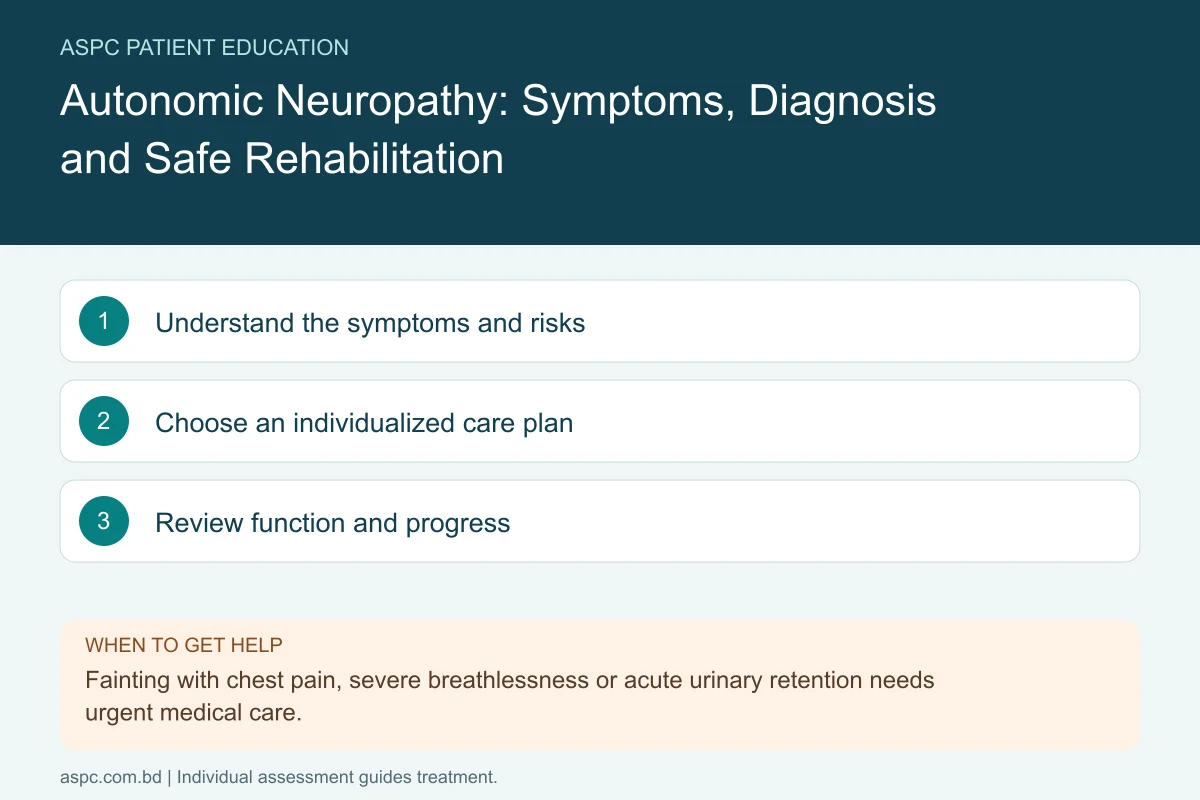
When to get help: Fainting with chest pain, severe breathlessness or acute urinary retention needs urgent medical care.
The featured image is AI-generated and does not depict an actual patient. General information; care should follow an individual assessment.
In this guide
- What Is Autonomic Neuropathy?
- How Common Is It? Prevalence and Epidemiology
- Causes and Risk Factors
- Symptoms and Functional Effects
- The Course of Symptoms and Recovery
- Assessment and Treatment: Structural Diagnosis and Management (SDM) at ASPC Manipulation Therapy
- Nutrition and Daily Tips
- Other Conditions and When to Get Help
- Autonomic Neuropathy Assessment in Dhaka: Agrani Specialized Physiotherapy Centre (ASPC)
- Final Takeaway
- Common questions
- References
Autonomic neuropathy is damage to the autonomic nerves that regulate involuntary functions such as heart rate, blood pressure, digestion, bladder emptying, sweating and sexual function. Symptoms depend on which autonomic pathways and organs are affected; some people experience dizziness on standing, digestive disturbance, altered sweating or urinary problems, while others may have few obvious symptoms. Early recognition matters because autonomic dysfunction can affect safety, daily activity and quality of life (Freeman, 2005; Lamotte & Sandroni, 2022).
Diabetes is an important cause, but autonomic neuropathy can also be associated with amyloidosis, autoimmune or inflammatory disorders, inherited conditions, infections, toxins, medication effects and other peripheral nerve diseases. Symptoms should not automatically be attributed to diabetes or ageing. Clinical assessment is needed to identify the pattern, consider treatable causes and select appropriate management (Lamotte & Sandroni, 2022; American Diabetes Association [ADA], 2026).
What Is Autonomic Neuropathy?
The autonomic nervous system helps regulate body functions that generally occur without conscious control. It includes sympathetic, parasympathetic and enteric pathways that contribute to cardiovascular regulation, gastrointestinal motility, bladder and sexual function, sweating, temperature regulation and pupil responses. Autonomic neuropathy occurs when the nerves or pathways supporting these functions are damaged, leading to impaired regulation in one or more organ systems (Freeman, 2005; Lamotte & Sandroni, 2022).
The presentation varies from isolated symptoms to multisystem involvement. For example, a person may have orthostatic hypotension due to impaired cardiovascular reflexes, delayed stomach emptying due to gastrointestinal dysfunction, or urinary retention due to bladder nerve impairment. Symptoms overlap with many other conditions and some medications, so diagnosis requires a clinical history, examination and targeted testing rather than symptoms alone (Hovaguimian, 2023; Lamotte & Sandroni, 2022).
How Common Is It? Prevalence and Epidemiology
A single prevalence estimate for autonomic neuropathy is difficult to apply across populations because studies use different definitions, tests and patient groups. Autonomic involvement is recognized in diabetes and may coexist with somatic peripheral neuropathy, but it can also occur in isolation. In diabetes, risk increases with longer disease duration and may be associated with other microvascular complications; cardiovascular autonomic neuropathy can be present before prominent symptoms appear (ADA, 2026; Lamotte & Sandroni, 2022).
The table below summarizes common clinical patterns and typical clues. These features help guide assessment but are not diagnostic on their own.
| Clinical pattern | Typical clues (not diagnostic on their own) |
|---|---|
| Cardiovascular autonomic dysfunction | Light-headedness or fainting on standing, orthostatic blood-pressure fall, resting tachycardia or reduced exercise tolerance. |
| Gastrointestinal autonomic dysfunction | Early fullness, bloating, nausea, delayed stomach emptying, constipation, diarrhoea or bowel-control difficulty. |
| Urogenital dysfunction | Urinary urgency, retention or incontinence; sexual dysfunction such as erectile or ejaculatory difficulties. |
| Sudomotor / temperature dysfunction | Reduced or excessive sweating, dry or cracked skin, or difficulty tolerating heat. |
| Pupillary or other autonomic features | Altered pupil response or visual adaptation; symptoms may occur with other autonomic abnormalities. |
| Possible secondary cause | Symptoms in a person with diabetes, amyloidosis, autoimmune disease, inherited neuropathy, toxin exposure or a relevant medication history. |
Causes and Risk Factors
Autonomic neuropathy is a syndrome rather than one single disease. The likely mechanism and course depend on the cause, the nerve fibres involved and the organs affected. Diabetes is a major cause, but a careful assessment should also consider other metabolic, immune, inherited, toxic and neurological explanations. Finding a risk factor does not by itself prove causation (Freeman, 2005; Lamotte & Sandroni, 2022).
- Diabetes and metabolic factors: prolonged hyperglycaemia and related metabolic abnormalities can damage autonomic nerves and the small vessels that support them. Risk assessment should include diabetes duration, glycaemic control and associated vascular or kidney disease (ADA, 2026; NIDDK, n.d.).
- Amyloidosis and other systemic disorders: abnormal protein deposition, autoimmune disease, inflammatory neuropathies and some systemic illnesses can affect autonomic nerve function. Additional symptoms or family history may guide targeted investigation (Freeman, 2005; Lamotte & Sandroni, 2022).
- Medication, toxin and infection-related causes: some prescribed drugs, chemotherapy agents, alcohol or other toxins, and certain infections can contribute to autonomic dysfunction. Medication review should include recent starts, dose changes and non-prescription products; prescribed medicines should not be stopped without clinical advice (Freeman, 2005; Hovaguimian, 2023).
- Inherited or primary autonomic disorders: some hereditary neuropathies and neurodegenerative or primary autonomic disorders may present with autonomic symptoms. A family history, progressive pattern or involvement of several systems may prompt specialist assessment (Lamotte & Sandroni, 2022).
- Coexisting peripheral neuropathy: autonomic symptoms may occur alongside sensory or motor nerve changes, but autonomic neuropathy can also occur without prominent limb weakness or sensory loss. Examination should therefore assess both autonomic and somatic nerve features (Freeman, 2005; Lamotte & Sandroni, 2022).
Risk factors help organize the assessment but do not establish the diagnosis. New, rapidly progressive, severe or multisystem symptoms deserve medical review, particularly when accompanied by fainting, marked blood-pressure changes, unexplained weight loss or significant bladder or gastrointestinal dysfunction.
Symptoms and Functional Effects
The pattern of symptoms depends on the affected autonomic pathways. A person may notice one symptom or a combination of symptoms. Consider clinical assessment if you notice (ADA, 2026; NIDDK, n.d.):
- Dizziness, light-headedness, weakness or fainting after standing up
- Unusually fast resting heart rate or reduced tolerance for physical activity
- Early satiety, nausea, vomiting, bloating, constipation or recurrent diarrhoea
- Difficulty emptying the bladder, urinary urgency or incontinence
- Sexual dysfunction or changes in sweating
- Unusual heat intolerance, dry or cracked skin, or altered pupil responses
- Symptoms alongside diabetes or another condition associated with neuropathy
Symptoms can be subtle, intermittent or absent despite abnormalities on autonomic testing. Their impact may include falls, dehydration, nutritional difficulties, impaired glucose management, sleep disruption and reduced participation in work or exercise. The presence and severity of complications depend on the individual and the underlying cause (ADA, 2026; Lamotte & Sandroni, 2022).
Urgent warning signs: seek urgent medical assessment for fainting with chest pain, severe breathlessness, new confusion, persistent vomiting with inability to keep fluids down, acute urinary retention, or severe weakness or rapidly worsening neurological symptoms. These may indicate a serious condition requiring prompt evaluation.
Can Autonomic Neuropathy Be Reversed?
Recovery depends on the cause and extent of nerve injury. Some causes may be treatable, and addressing them can improve symptoms or prevent further damage. In diabetes, optimized glucose, blood pressure, lipid and weight management may prevent or slow progression, but established nerve loss is not reliably reversed by glucose control alone. Symptom-directed treatment and functional adaptation are often needed, and management should be individualized (ADA, 2026; Lamotte & Sandroni, 2022).
The Course of Symptoms and Recovery
- Early or mild dysfunction: symptoms may be intermittent or not readily noticed. Screening and review of relevant medical conditions can help identify autonomic involvement before major functional consequences develop (ADA, 2026).
- Persistent or multisystem symptoms: symptoms may continue when the underlying cause remains active or when nerve damage is established. Targeted investigations can clarify which systems are involved and guide treatment (Lamotte & Sandroni, 2022).
- After treatment or lifestyle changes: progress depends on the cause, severity, associated conditions and response to treatment. Monitoring symptoms, blood pressure, activity tolerance, bowel and bladder function and safety can help assess whether the plan is effective (Hovaguimian, 2023).
There is no single recovery timeline for all autonomic neuropathies. Prognosis depends on the underlying diagnosis, the degree of nerve injury and whether a treatable cause is identified. The main aims are to treat the cause where possible, reduce symptoms and complications, maintain safe activity and support daily function.
Assessment and Treatment: Structural Diagnosis and Management (SDM) at ASPC Manipulation Therapy
Autonomic neuropathy requires medical assessment because it can involve several organ systems and may reflect a treatable systemic or neurological disorder. At ASPC Manipulation Therapy in Dhaka, assessment and management are described around Structural Diagnosis and Management (SDM), a framework developed by the centre’s founder, Dr. M. Shahadat Hossain, from clinical experience in musculoskeletal medicine. This section describes the centre’s stated approach; it should not be interpreted as evidence that SDM is a validated or superior treatment for autonomic neuropathy.
How SDM-informed assessment may approach autonomic symptoms
A structured assessment can document symptom behaviour, posture-related changes, activity tolerance, mobility and relevant musculoskeletal limitations. However, autonomic neuropathy cannot be confirmed or excluded through musculoskeletal examination alone. Medical history, medication review, vital signs, autonomic testing and targeted investigations may be needed; referral to a physician or neurologist is appropriate when autonomic dysfunction is suspected (Lamotte & Sandroni, 2022; Hovaguimian, 2023).
- History and symptom behaviour: record onset, progression, triggers, standing-related dizziness, fainting, bowel and bladder symptoms, sweating changes, exercise tolerance, diabetes history, family history and all prescribed or non-prescribed medicines.
- Clinical and functional examination: measure heart rate and blood pressure, including lying and standing readings when safe; assess balance, gait, falls risk, mobility and functional capacity. Neurological examination and cardiovascular assessment should be selected according to the presentation.
- Differential diagnosis and referral: consider dehydration, anaemia, medication effects, cardiac disease, endocrine or metabolic disorders and other neurological conditions. Specialist testing may include autonomic reflex testing, heart-rate variability, tilt-table testing, sweat testing, urodynamic studies or gastric-emptying studies depending on symptoms (Lamotte & Sandroni, 2022; NIDDK, n.d.).
How SDM-informed care may guide management
- Diagnosis-led plan: management should be based on the identified cause, affected organ systems, risk level and the person’s goals. Physiotherapy is supportive and does not replace medical investigation or treatment.
- Postural safety and mobility: for people with orthostatic symptoms, clinicians may advise slow transitions, supervised balance work and falls-prevention strategies. Compression garments, fluid or salt changes and medication require individualized medical advice, especially in people with heart or kidney disease (NIDDK, n.d.; Hovaguimian, 2023).
- Graded exercise and functional rehabilitation: when medically safe, individualized aerobic, resistance, balance and mobility exercise may support conditioning and daily function. Exercise intensity and position should be adjusted for orthostatic symptoms, heart-rate abnormalities, heat intolerance and fatigue; stop and seek advice if symptoms worsen.
- Education and self-management: encourage symptom monitoring, safe transitions between positions, appropriate hydration according to the treating clinician’s advice, skin care where sweating is reduced, and adherence to the plan for the underlying condition.
- Medical and symptom-directed treatment: treatment may include management of diabetes or another underlying cause and specific medicines for orthostatic hypotension, gastrointestinal dysfunction or bladder symptoms. These treatments require clinician oversight because options and risks vary by condition (Lamotte & Sandroni, 2022; Hovaguimian, 2023).
- Regular reassessment and referral: monitor falls, dizziness, standing blood pressure, exercise tolerance, nutrition, bowel and bladder function and participation in daily activities. Worsening or unexplained multisystem symptoms warrant medical review.
An honest note on the evidence: SDM is a clinician-developed framework. The sources cited here support structured history-taking, appropriate autonomic testing, treatment of the underlying cause and individualized symptom management; they do not establish SDM as a specifically validated treatment for autonomic neuropathy.
Nutrition and Daily Tips
There is no single diet or supplement that cures autonomic neuropathy. People with diabetes should follow an individualized plan for glucose management, nutrition, blood pressure and other cardiovascular risk factors. Fluid and salt recommendations must be tailored to the person’s blood pressure, kidney function, heart health and medicines; increasing either without advice may be unsafe (ADA, 2026; NIDDK, n.d.).
Practical measures may include rising slowly from bed or a chair, sitting down promptly if light-headed, maintaining a safe home environment, checking skin regularly when sweating or sensation is altered, and discussing persistent digestive or urinary symptoms with a clinician. People with reduced exercise tolerance should build activity gradually under appropriate supervision and avoid overheating. Do not start supplements or stop prescribed medicines solely because autonomic symptoms occur.
Other Conditions and When to Get Help
Autonomic symptoms can arise from conditions other than neuropathy, including medication effects, dehydration, cardiovascular disorders, endocrine disease and gastrointestinal or urological conditions. Seek medical assessment if (ADA, 2026; NIDDK, n.d.):
- Dizziness on standing is frequent, worsening or associated with falls or fainting
- Resting heart rate is persistently unusual or exercise tolerance declines without explanation
- Vomiting, early satiety, constipation or diarrhoea is persistent or affects nutrition and hydration
- You have difficulty emptying the bladder, recurrent urinary infections or new incontinence
- Symptoms began after a medication change or occur with a known systemic disease
- Symptoms progress rapidly or involve several organ systems
Urgent assessment is needed for fainting with chest pain or breathing difficulty, inability to retain fluids, acute urinary retention, severe dehydration or rapidly progressive neurological symptoms. The appropriate clinician may arrange specialist evaluation according to the suspected cause and organ involvement.
Autonomic Neuropathy Assessment in Dhaka: Agrani Specialized Physiotherapy Centre (ASPC)
Agrani Specialized Physiotherapy Centre (ASPC) describes its services as including physiotherapy and musculoskeletal assessment, with management organized around Structural Diagnosis and Management (SDM). This is institutional information and should not be treated as independent evidence of outcomes for autonomic neuropathy.
For a person with suspected autonomic neuropathy, an appropriate pathway should include medical evaluation of symptoms, review of medicines and relevant health conditions, assessment of functional safety and a clear explanation of whether specialist referral or testing is required. Physiotherapy may support mobility, balance, conditioning and daily function when appropriate, but it cannot independently diagnose the underlying autonomic disorder.
Dr. Mohammad Shahadat Hossain, PT, founder and chief consultant, leads clinical care with experience in physiotherapy, pain management and musculoskeletal rehabilitation; Dr. Sapia Akter, PT, co-founder and consultant, contributes to clinical care with a focus on therapeutic exercise and rehabilitation. For autonomic neuropathy, physiotherapy input may support individualized mobility, balance and activity management alongside appropriate medical assessment.
Final Takeaway
Autonomic neuropathy is damage to nerves that regulate involuntary functions, including heart rate, blood pressure, digestion, bladder function and sweating. Its symptoms vary widely, and diabetes is an important but not the only cause. Diagnosis depends on careful history-taking, examination and targeted testing to identify affected systems and exclude treatable alternatives. Management focuses on the underlying cause, symptom relief, prevention of complications and safe participation in daily activity. Physiotherapy can support function when appropriate, but SDM has not been established as a specific evidence-based treatment for autonomic neuropathy. Fainting, rapidly worsening symptoms or serious cardiovascular, gastrointestinal or urinary problems require prompt medical assessment (Freeman, 2005; Lamotte & Sandroni, 2022; ADA, 2026).
Common questions
Can autonomic neuropathy affect blood pressure?
Yes. It can disturb automatic functions including blood pressure, heart rate, digestion and bladder function. Symptoms need cause-specific medical assessment.
Can manual therapy cure it?
Manual therapy is not an established cure for autonomic nerve damage. Rehabilitation, if appropriate, should fit the medical diagnosis and safety risks.
Assessment and rehabilitation in Dhaka
ASPC Manipulation Therapy provides physiotherapy and rehabilitation in Dhaka. Contact the centre to discuss the service, clinician, appointment arrangements and current fees relevant to your needs. Medical emergencies and suspected infectious illness require the appropriate medical pathway.
Discuss an assessment with ASPC
Related patient guides
- Focal Neuropathy: Symptoms, Assessment and Rehabilitation
- Pinched Nerve: Symptoms, Causes and Rehabilitation
- Peripheral Neuropathy: Causes, Symptoms and Rehabilitation
Related assessment and rehabilitation guides
References and clinical guidance
Research findings apply to the populations and interventions studied. Editorial source checking is not independent clinical peer review.
- Primary condition-specific guidance
- 12. Retinopathy, Neuropathy, and Foot Care: Standards of Care in Diabetes—2026 (2026). Diabetes Care
- Autonomic peripheral neuropathy (2005). The Lancet
- Dysautonomia (2023). Neurologic Clinics
- Updates on the Diagnosis and Treatment of Peripheral Autonomic Neuropathies (2022). Current Neurology and Neuroscience Reports
- National Institute of Diabetes and Digestive and Kidney Diseases (NIDDK). (n.d.). Autonomic neuropathy. https://www.niddk.nih.gov/health-information/diabetes/overview/preventing-problems/nerve-damage-diabetic-neuropathies/autonomic-neuropathy
Editorial update: 29 October 2026. Medical information disclaimer.