

ASPC PATIENT EDUCATION · UPDATED 29 OCTOBER 2026
At a glance
Mpox, previously called monkeypox, is a viral illness caused by monkeypox virus (MPXV). It may cause a characteristic rash or sores, fever, swollen lymph nodes, headache, muscle aches and marked tiredness. Lesions can be painful, particularly when they affect the mouth, genitals or rectum, and symptoms can interfere with eating, urination, sleep and daily activity. Clinical appearance alone cannot reliably confirm mpox, because several infections and skin conditions can look similar (WHO, 2024; CDC, 2025).
When to get help: Eye involvement, breathing difficulty, confusion or inability to drink or urinate needs urgent medical care.
The featured image is AI-generated and does not depict an actual patient. General information; care should follow an individual assessment.
In this guide
- What Is Monkeypox (Mpox)?
- How Common Is It? Prevalence and Epidemiology
- Causes and Risk Factors
- Symptoms and Clinical Pattern
- Does Everyone Recover? The Course of Symptoms and Recovery Time
- Medical care and the limited role of rehabilitation
- Nutrition and Daily Tips
- Other Conditions and When to Get Help
- Mpox Care in Dhaka: Agrani Specialized Physiotherapy Centre (ASPC)
- Final Takeaway
- Common questions
- References
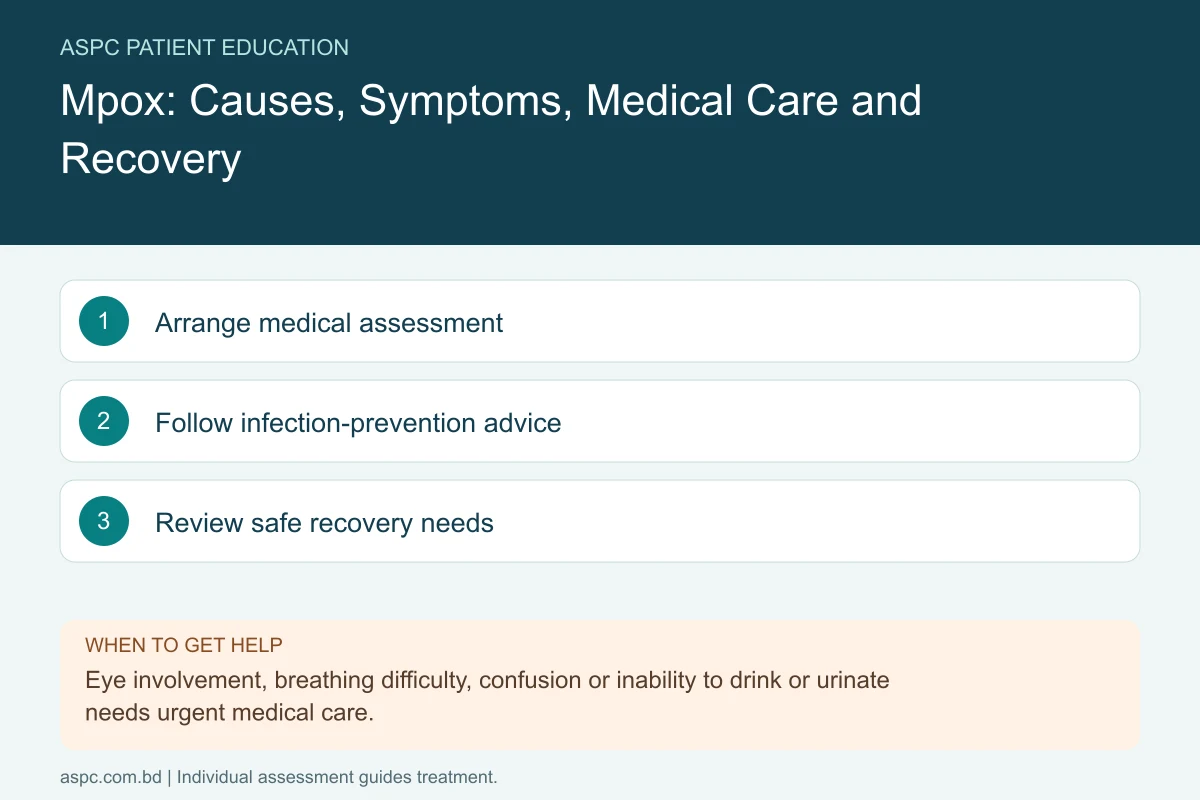
Mpox, previously called monkeypox, is a viral illness caused by monkeypox virus (MPXV). It may cause a characteristic rash or sores, fever, swollen lymph nodes, headache, muscle aches and marked tiredness. Lesions can be painful, particularly when they affect the mouth, genitals or rectum, and symptoms can interfere with eating, urination, sleep and daily activity. Clinical appearance alone cannot reliably confirm mpox, because several infections and skin conditions can look similar (WHO, 2024; CDC, 2025).
Mpox spreads mainly through close contact with lesions, body fluids or contaminated materials, and can also be acquired from infected animals. Many people recover within two to four weeks, but severe disease is possible, especially in children, pregnant people and immunocompromised people. Early assessment, infection prevention, pain relief and hydration are central to care (WHO, 2024, 2025).
What Is Monkeypox (Mpox)?
Mpox is caused by monkeypox virus, an enveloped double-stranded DNA virus in the Orthopoxvirus genus of the Poxviridae family. It has two major clades, I and II, with recognized subclades. The first recognized human case was reported in 1970 in what is now the Democratic Republic of the Congo; the animal reservoir remains uncertain (WHO, 2024).
Transmission occurs through close physical contact with an infected person, including contact with rash lesions, scabs, bodily fluids or prolonged face-to-face exposure. Bedding, clothing and other contaminated objects can also transmit infection. Animal-to-human spread can follow bites, scratches or handling infected animals. During pregnancy, infection may pass to the fetus or newborn. Mpox is not caused by poor hygiene or by any particular identity or community; stigma can discourage people from seeking care and should be avoided (WHO, 2024, 2025).
How Common Is It? Prevalence and Epidemiology
Mpox has historically occurred mainly in Central and West Africa. A global outbreak associated with clade IIb spread internationally from 2022, while outbreaks involving clade I, including subclades Ia and Ib, have also raised major public-health concern. Reported case numbers change with transmission, testing access and surveillance (WHO, 2024; WHO, 2024a).
Risk depends on exposure rather than nationality or identity. Close household or intimate contact, caregiving without suitable protection, and handling contaminated linen can increase exposure. The following table summarizes routes and clues, not relative probability (WHO, 2024, 2025).
| Exposure route | Typical context / clinical clue |
|---|---|
| Direct skin or mucosal contact | Touching rash lesions, scabs, sores or mucosal lesions during close contact. |
| Intimate or sexual contact | Close skin-to-skin or mouth-to-skin contact; lesions may be localized to genital or anal areas. |
| Contaminated materials | Handling infected bedding, towels, clothing or other items without appropriate precautions. |
| Face-to-face contact | Prolonged close contact may expose a person to infectious respiratory particles. |
| Animal exposure | Bites, scratches or handling infected animals or carcasses. |
| Pregnancy / birth | Transmission to the fetus or newborn can occur and requires specialist care. |
Causes and Risk Factors
Mpox develops when monkeypox virus enters the body, usually through broken skin, mucosal surfaces or the respiratory tract during close exposure. Risk factors indicate opportunities for exposure or a greater chance of severe illness; they do not mean infection is inevitable (WHO, 2024; CDC, 2025).
- Close contact with an infected person: contact with lesions, scabs, body fluids or prolonged close face-to-face interaction can transmit the virus.
- Shared contaminated materials: clothing, towels, bedding and surfaces contaminated by infectious material may contribute to spread if handled without precautions.
- Animal exposure: bites, scratches or direct handling of infected animals can transmit the virus; the natural reservoir remains uncertain.
- Healthcare and caregiving exposure: risk can increase when a person provides care or handles specimens without appropriate personal protective equipment and infection-control procedures.
- Immune suppression: people with severe immune compromise, including advanced or poorly controlled HIV, are at increased risk of severe or prolonged disease.
- Pregnancy and childhood: pregnant people, newborns and children may face increased risk of complications and should receive prompt clinical assessment.
Vaccination can reduce the risk of mpox for eligible people, but availability and recommendations differ by country and outbreak setting. It does not replace precautions after exposure or clinical assessment of symptoms (WHO, 2024; CDC, 2025).
Symptoms and Clinical Pattern
Symptoms commonly begin within 1–21 days after exposure, often around one week. The illness may start with fever, headache, muscle aches, back pain, fatigue or swollen lymph nodes, but some people develop a rash first. Lesions can progress from flat spots to raised lesions, fluid-filled blisters and crusts. They may occur on the face, hands, feet, mouth, genitals or around the anus, and their number varies widely (WHO, 2024).
- Fever, chills, headache, muscle aches or back pain
- Swollen lymph nodes and marked tiredness
- Rash, blisters, ulcers or sores that may be painful or itchy
- Mouth or throat lesions causing difficulty swallowing
- Rectal pain, painful bowel movements or pain when urinating
- Reduced intake, dehydration or difficulty carrying out normal activities
The rash can resemble chickenpox, herpes, syphilis, other sexually transmitted infections or non-infectious skin conditions. Testing is therefore important. Lesion material tested by polymerase chain reaction (PCR) is commonly used to confirm infection; clinicians may also consider testing for HIV and other infections according to the person’s history and presentation (WHO, 2024; CDC, 2025).
Urgent warning signs: seek prompt medical care for severe or worsening pain, inability to drink or urinate, confusion, breathing difficulty, eye involvement or vision changes, extensive or rapidly worsening lesions, or signs of secondary infection. People who are pregnant, immunocompromised, or caring for an affected child should seek early professional advice.
Does Everyone Recover? The Course of Symptoms and Recovery Time
- Uncomplicated illness: many people recover in two to four weeks with supportive care, although fatigue or pain may affect function during recovery (WHO, 2024).
- Painful mucosal lesions: mouth, throat, genital or rectal lesions can make eating, swallowing, urination or bowel movements difficult and may require targeted pain management and hydration support.
- Severe or complicated illness: bacterial skin infection, pneumonia, eye complications, dehydration, sepsis or neurological complications may require hospital assessment and specialist treatment.
There is no single recovery timeline for every patient. Severity, immune status, lesion location, access to care and complications influence the course. People are generally considered potentially infectious until all lesions have healed, scabs have fallen off and new skin has formed; follow current local public-health instructions on isolation and return to routine activities (WHO, 2024, 2025).
Medical care and the limited role of rehabilitation
Mpox is a viral infection, not a musculoskeletal disorder. At ASPC Manipulation Therapy, Structural Diagnosis and Management (SDM) may help organize functional observations after medical assessment, but it does not diagnose or treat the virus. Suspected or confirmed mpox requires infection-control measures and medical care (WHO, 2025).
How SDM-informed assessment may support safe care
Any physiotherapy or rehabilitation involvement should be secondary to infection assessment and must follow current isolation and infection-prevention guidance. Hands-on contact with lesions or potentially contaminated materials should be avoided, and routine outpatient attendance should not occur while the person may be infectious unless a service is specifically arranged with appropriate precautions.
- History and symptom behaviour: document symptom onset, exposure history, rash distribution, pain, fatigue, oral intake, urination, bowel symptoms and effects on daily activities.
- Medical screening and referral: confirm that the person has been assessed by an appropriate clinician; arrange urgent referral for warning signs, severe disease or diagnostic uncertainty.
- Functional assessment when appropriate: after medical clearance and when infection-control requirements permit, consider safe mobility, activity tolerance, fatigue and limitations in daily tasks.
How SDM-informed care may guide recovery
- Diagnosis-led care: medical diagnosis, severity and infection-control advice take priority over a musculoskeletal treatment plan.
- Supportive management: care focuses on pain and fever relief as advised by clinicians, skin care, hydration, nutrition, rest and management of complications (WHO, 2025).
- Rehabilitation after acute illness: once medically appropriate, gradual return to activity may address deconditioning, fatigue and functional limitations; progression should be individualized.
- Manual therapy and exercise: these do not treat mpox itself and should not be provided during infectious illness in a way that exposes staff or other patients. Any later use must be based on a separate clinical indication.
- Reassessment: monitor pain, hydration, lesion healing, activity tolerance and signs of complications; revise the plan or refer if recovery is delayed.
Evidence note: no evidence cited here establishes SDM as a treatment for mpox. It should be described only as a possible framework for selected functional rehabilitation needs after appropriate medical care, not as an antiviral therapy or substitute for infection prevention.
Nutrition and Daily Tips
No specific food cures mpox. Adequate fluids and a balanced diet support recovery. Choose soft foods if mouth or throat lesions make eating painful. Follow clinician advice for pain relief and wound care; do not squeeze blisters, scratch lesions or share towels, clothing or bedding. Keep lesions clean and follow local guidance for handling laundry (WHO, 2024, 2025).
People with suspected or confirmed mpox should contact a healthcare provider, avoid close physical and sexual contact, wash hands regularly and clean commonly touched surfaces. Household members should avoid lesions and contaminated items. Healthcare workers should follow current protective-equipment guidance. Eligible close contacts should ask public-health services promptly about vaccination (WHO, 2024; CDC, 2025).
Other Conditions and When to Get Help
Several conditions resemble mpox, so a rash should not be self-diagnosed. Contact a healthcare professional for an unexplained rash or sores, particularly after possible exposure. Seek urgent care if you have:
- Severe pain, rapidly worsening rash or pus and spreading redness around lesions
- Eye pain, lesions near the eye or any change in vision
- Difficulty breathing, confusion or severe weakness
- Inability to drink, signs of dehydration or inability to urinate
- Severe rectal pain, difficulty swallowing or other symptoms preventing normal intake
- Pregnancy, significant immune suppression or illness in a young child with suspected mpox
Call ahead before attending a clinic so staff can arrange precautions. Do not delay emergency care for severe symptoms.
Mpox Care in Dhaka: Agrani Specialized Physiotherapy Centre (ASPC)
Agrani Specialized Physiotherapy Centre (ASPC) provides physiotherapy and musculoskeletal assessment. It should not be presented as a specialist mpox diagnostic or infectious-disease service unless such services are independently verified. A person with suspected mpox should first contact an appropriate medical facility or public-health service for assessment, testing, isolation advice and treatment.After medical clearance and once infection-control requirements permit, physiotherapy may be considered for a separate functional problem such as deconditioning or reduced mobility. Care should be individualized and should not involve unprotected contact with infectious lesions or contaminated materials. The appropriateness of a provider depends on qualifications, infection-control capacity, transparent referral pathways and coordination with the treating medical team (WHO, 2025).
Final Takeaway
Mpox is a viral infection transmitted mainly through close contact with an infected person, contaminated materials or infected animals. It can cause fever, swollen lymph nodes, painful lesions and substantial disruption to daily activities. Many people recover within two to four weeks, but complications are possible, particularly for children, pregnant people and people with significant immune suppression. Early medical assessment, testing when indicated, supportive care, infection prevention and vaccination for eligible people are central to control and recovery. SDM is not an established treatment for mpox; any rehabilitation role should occur only when medically appropriate and with infection-control requirements observed (WHO, 2024, 2025; CDC, 2025).
Common questions
Is SDM a treatment for mpox?
No. Mpox is an infection requiring appropriate medical care and infection-control measures. Any rehabilitation role is limited to selected recovery needs when medically appropriate.
Should I attend a routine clinic with a suspected rash?
Contact an appropriate health service for advice and follow infection-prevention guidance. Avoid exposing other patients while assessment and care are arranged.
Assessment and rehabilitation in Dhaka
ASPC Manipulation Therapy provides physiotherapy and rehabilitation in Dhaka. Contact the centre to discuss the service, clinician, appointment arrangements and current fees relevant to your needs. Medical emergencies and suspected infectious illness require the appropriate medical pathway.
Discuss an assessment with ASPC
Related patient guides
- Sports Physiotherapy: Injury Rehabilitation and Return to Sport
- Exercise and Well-being: Benefits, Safety and a Practical Plan
- Exercise and Weight Loss: Physiotherapy, Strength and Nutrition
References and clinical guidance
Research findings apply to the populations and interventions studied. Editorial source checking is not independent clinical peer review.
- Primary condition-specific guidance
- Centers for Disease Control and Prevention. (2025, December 11). Clinical overview of clade I and clade II monkeypox. https://www.cdc.gov/mpox/hcp/clinical-overview/index.html
- World Health Organization. (2024, August 26). Mpox. https://www.who.int/news-room/fact-sheets/detail/mpox
- World Health Organization. (2024a). Strategic framework for enhancing prevention and control of mpox: 2024–2027. https://www.who.int/publications/i/item/9789240092907
- Clinical management and infection prevention control for mpox (2025).
Editorial update: 29 October 2026. Medical information disclaimer.