ASPC PATIENT EDUCATION · UPDATED 29 OCTOBER 2026
At a glance
Parkinson disease (PD) is a progressive neurological disorder that affects movement and can also influence sleep, mood, thinking, bowel function and other aspects of health. Symptoms often develop gradually, so changes such as reduced arm swing, smaller handwriting, stiffness or a resting tremor may initially be mistaken for normal ageing. The condition affects each person differently, and symptoms and support needs change over time (Bloem et al., 2021; National Institute for Health and Care Excellence [NICE], 2017).
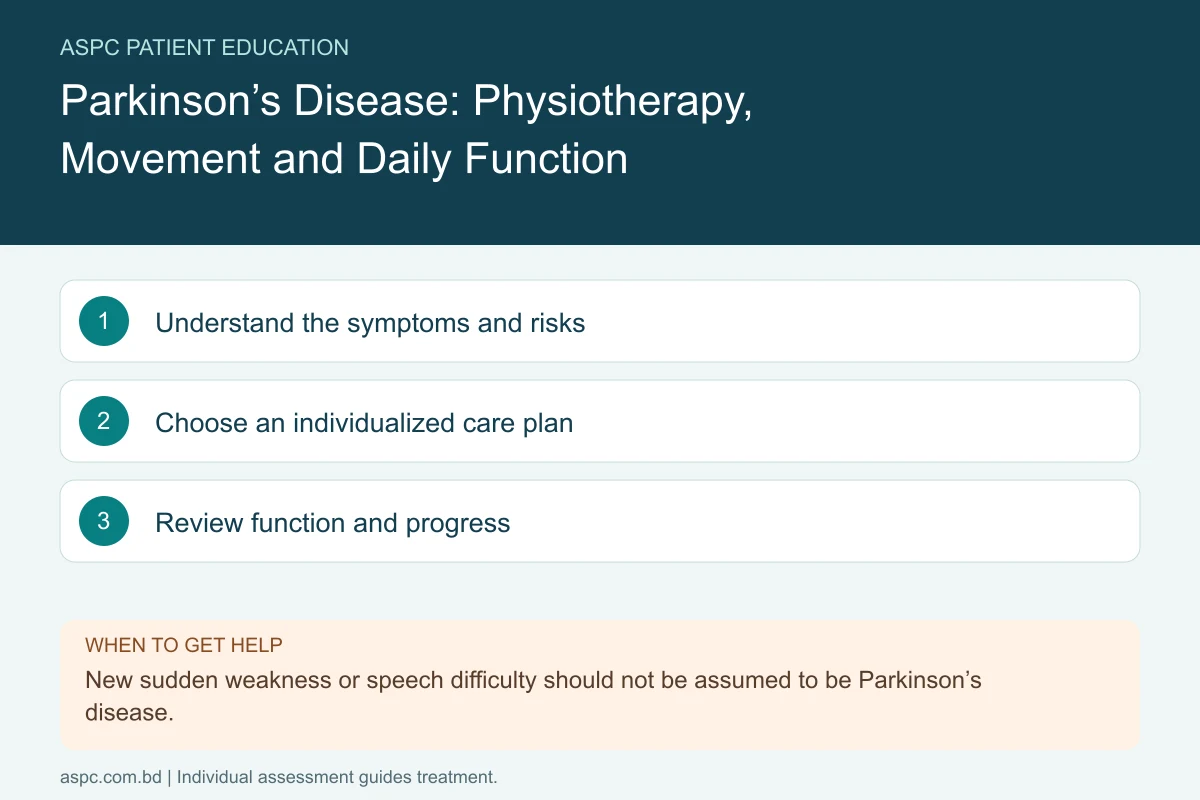
When to get help: New sudden weakness or speech difficulty should not be assumed to be Parkinson’s disease.
The featured image is AI-generated and does not depict an actual patient. General information; care should follow an individual assessment.
In this guide
- What Is Parkinson Disease?
- How Common Is It? Prevalence and Epidemiology
- Causes and Risk Factors
- Symptoms and Functional Changes
- Progression and Recovery Expectations
- Assessment and Treatment: Physiotherapy and Individualized Management
- Nutrition and Daily Tips
- Other Conditions and When to Get Help
- Parkinson Disease Treatment in Dhaka: Agrani Specialized Physiotherapy Centre (ASPC)
- Final Takeaway
- Common questions
- References
Parkinson disease (PD) is a progressive neurological disorder that affects movement and can also influence sleep, mood, thinking, bowel function and other aspects of health. Symptoms often develop gradually, so changes such as reduced arm swing, smaller handwriting, stiffness or a resting tremor may initially be mistaken for normal ageing. The condition affects each person differently, and symptoms and support needs change over time (Bloem et al., 2021; National Institute for Health and Care Excellence [NICE], 2017).
There is currently no cure that stops Parkinson disease from progressing, but medication, physiotherapy, exercise and coordinated healthcare can reduce disability and help people remain active and independent. Early assessment and an individualized plan are important, especially when walking, balance or everyday activities begin to change (Osborne et al., 2022; NICE, 2017).
What Is Parkinson Disease?
Parkinson disease is a neurodegenerative condition involving the loss or dysfunction of dopamine-producing neurons, particularly in the substantia nigra, and changes in connected brain networks that help regulate movement. Dopamine supports the smooth initiation and scaling of movement; reduced dopamine contributes to slowness, stiffness and other motor symptoms. The disease is biologically complex and is not explained by dopamine loss alone (Bloem et al., 2021).
Clinically, parkinsonism is characterized by bradykinesia (slowness of movement) together with rest tremor or rigidity. A neurologist considers the history, examination, response to treatment and possible alternative diagnoses. No single routine blood test or brain scan confirms typical Parkinson disease; imaging may be used selectively when another diagnosis is suspected (NICE, 2017; NHS, n.d.).
How Common Is It? Prevalence and Epidemiology
Parkinson disease is one of the most common neurodegenerative disorders, and its frequency rises strongly with age. Global estimates vary with study methods, population age structure and access to diagnosis. A major epidemiological review reported that the number of people living with Parkinson disease has increased substantially over recent decades, reflecting population ageing and other factors; the burden is expected to grow as populations age (Ben-Shlomo et al., 2024).
| Group or factor | What is known |
|---|---|
| Older adults | Risk increases markedly with age; younger-onset disease also occurs. |
| Sex | Many studies report higher prevalence in men than women. |
| Global burden | Case estimates vary by region, age structure and diagnostic methods. |
| Family history / genetics | Some cases involve inherited variants; most are not explained by one inherited cause. |
These patterns describe population-level associations, not an individual prediction. Age is the strongest established risk factor, while environmental exposures and genetic susceptibility may contribute in different combinations. A person can develop Parkinson disease without a known family history or identifiable cause (Bloem et al., 2021; Ben-Shlomo et al., 2024).
Causes and Risk Factors
The precise cause is not known for most people. Researchers describe Parkinson disease as multifactorial: ageing, genetic susceptibility, cellular processes and environmental exposures may interact. The presence of a risk factor does not mean a person will inevitably develop the condition (Bloem et al., 2021).
- Age and biology: risk rises with age, partly reflecting vulnerability of neurons and changes in cellular maintenance systems.
- Genetic factors: variants in genes such as LRRK2, GBA1, PRKN and SNCA can increase susceptibility in some families or populations; genetic counselling may be useful in selected cases.
- Environmental exposure: some pesticide exposures and other environmental factors have been associated with risk in observational studies, but individual causation is often difficult to establish.
- Other influences: research continues into inflammation, mitochondrial dysfunction and abnormal handling of alpha-synuclein protein. These mechanisms are active areas of study rather than a simple explanation for every case (Bloem et al., 2021).
Parkinson disease is not contagious and should not be regarded as an inevitable consequence of ageing. Risk reduction research is ongoing, but no supplement or diet has been proven to prevent the disease reliably.
Symptoms and Functional Changes
Symptoms differ widely and may be asymmetric at onset. Motor symptoms are often the most visible, but non-motor problems can precede movement changes and may have a substantial effect on quality of life (Bloem et al., 2021).
- Bradykinesia: slowness, reduced movement amplitude, difficulty starting a movement and reduced facial expression; handwriting may become smaller.
- Resting tremor: shaking, often beginning in one hand when relaxed, although not everyone with Parkinson disease develops tremor.
- Rigidity and posture: muscle stiffness, reduced trunk rotation, stooped posture and reduced arm swing may occur.
- Gait and balance: short steps, shuffling, difficulty turning, freezing of gait and increased fall risk can develop, particularly as the condition progresses.
- Non-motor symptoms: constipation, loss of smell, sleep disturbance, anxiety, depression, fatigue, pain, urinary symptoms and cognitive changes may occur. Swallowing or speech problems require specific assessment (NICE, 2017).
Seek medical assessment for persistent new tremor, slowness, stiffness, unexplained falls or changes in walking. Sudden weakness, facial droop, acute confusion or abrupt speech difficulty are not typical gradual Parkinson symptoms and require urgent emergency evaluation.
Progression and Recovery Expectations
Parkinson disease is usually long-term and progressive, but the rate and pattern of change vary greatly. It is not accurate to promise a fixed recovery timeline. Treatment aims to control symptoms, preserve mobility, reduce complications and support participation in meaningful activities. Some people remain independent for many years; others need increasing assistance as symptoms or associated health problems develop (Bloem et al., 2021; NICE, 2017).
Medication response, general fitness, cognition, mood, sleep, coexisting illness, home environment and access to rehabilitation can all affect function. Regular review allows the care team to adapt medication and exercise as needs change. Physiotherapy does not cure the underlying neurodegeneration, but structured exercise and task practice can improve movement and functional outcomes (Osborne et al., 2022).
Assessment and Treatment: Physiotherapy and Individualized Management
Care should begin with a timely specialist assessment and continue through a coordinated, person-centred plan. A neurologist or other clinician experienced in movement disorders evaluates symptoms and considers alternative causes. Physiotherapists assess mobility and activity limitations, while occupational therapists and speech and language therapists address daily tasks, communication and swallowing when indicated (NICE, 2017; Osborne et al., 2022).
How physiotherapy assesses Parkinson disease
A physiotherapy assessment establishes a functional baseline and identifies priorities meaningful to the person. It commonly includes symptom and fall history, medication timing, gait, balance, transfers, posture, flexibility, strength, endurance, dual-task ability and confidence with daily activities. Standardized measures may be used to monitor change over time (Osborne et al., 2022).
- History and goals: ask about freezing, falls, fatigue, pain, home barriers, exercise habits and activities the person wants to maintain.
- Movement examination: observe gait speed, step length, turning, arm swing, sit-to-stand, balance reactions and movement amplitude; assess safely with appropriate guarding.
- Safety and differential concerns: review dizziness on standing, cognition, vision, footwear, assistive-device use and other conditions that may increase fall risk; refer concerns to the medical team.
How physiotherapy guides management
- Aerobic and strengthening exercise: individualized walking, cycling or other aerobic activity and progressive resistance work can improve fitness, strength and functional outcomes. Intensity should match medical status and ability (Osborne et al., 2022).
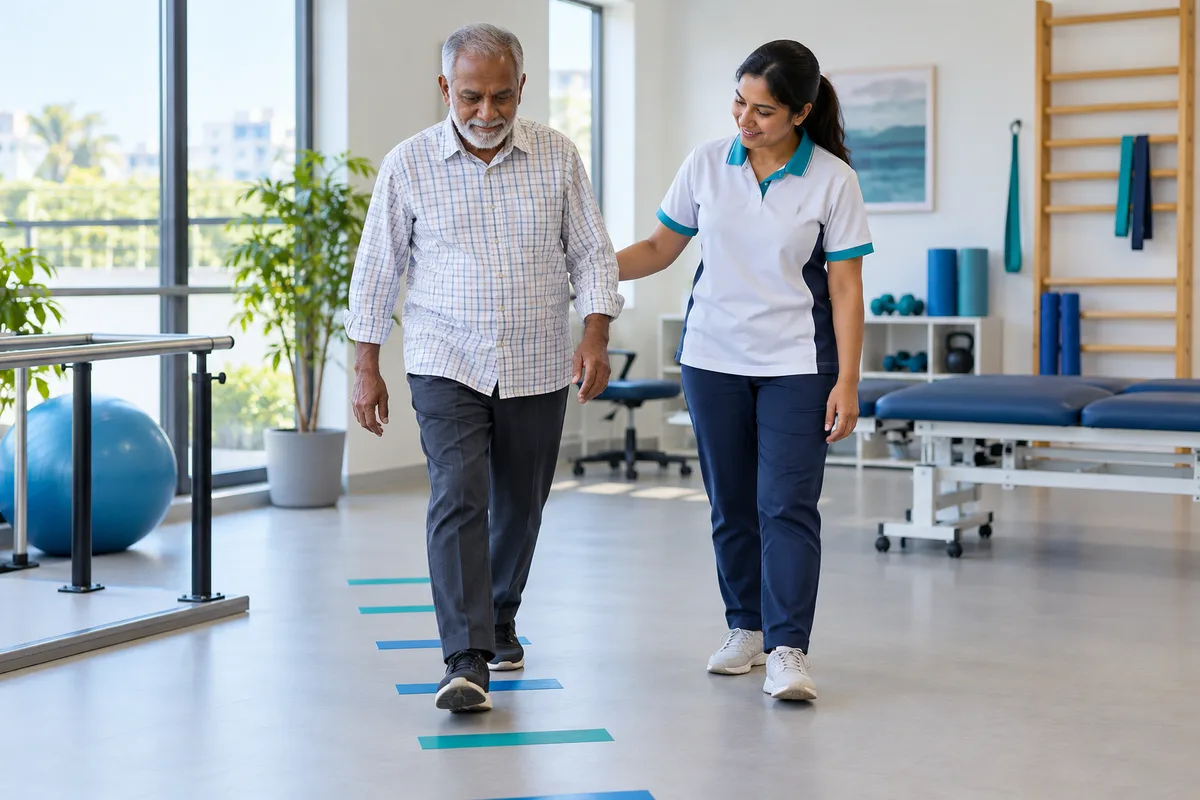
- Gait training and cueing: practice larger steps, turning strategies and obstacle negotiation. Visual floor markers or rhythmic auditory cues may help some people manage freezing or short steps.
- Balance and task practice: train weight shifting, transfers, reaching and functional tasks in a safe environment. Home fall hazards and caregiver support should be considered.
- Flexibility and posture: stretching, trunk mobility and postural exercise may help maintain range and comfort, although programs should be tailored rather than used as a stand-alone treatment.
- Education and reassessment: teach safe exercise, pacing, strategies for freezing and the importance of consistent activity. Review progress and adapt the plan as symptoms change.
Evidence-based physiotherapy guidelines support aerobic exercise, resistance training, balance training, gait training, external cueing and task-specific practice for appropriate people with Parkinson disease. The best program depends on stage, goals, safety and personal preference (Osborne et al., 2022).
Medication must be managed by the prescribing clinician; people should not change or stop Parkinson medication independently. Exercise scheduling may be coordinated with medication “on” periods when movement is easier. Speech and language therapy is important for communication or swallowing difficulties, and occupational therapy can help with dressing, home safety and other daily tasks (NICE, 2017).
Evidence note: the recommendations above are based on published clinical guidelines and reviews. No claim is made that one branded manual-therapy framework or a single clinic-specific method can reverse Parkinson disease or halt its progression. Hands-on treatment may be considered for a defined symptom when appropriate, but it should not replace neurological care, prescribed medication, evidence-based exercise or multidisciplinary rehabilitation.
Nutrition and Daily Tips
No specific food cures Parkinson disease. A balanced diet with vegetables, fruit, whole grains, protein sources and adequate fluids can support general health and bowel function. Constipation is common, so dietary fibre, fluids and physical activity may help when medically appropriate. Weight loss, dehydration or swallowing difficulty should prompt professional review (NICE, 2017).
Some people taking levodopa are advised to consider how high-protein meals affect medication response; advice should be individualized by the prescribing clinician or pharmacist rather than making major dietary changes alone. Check before using supplements, as products may interact with medicines. Maintain a safe regular activity routine, use prescribed walking aids, keep pathways clear and seek support if falls or freezing increase.
Other Conditions and When to Get Help
Several disorders can cause tremor, slowness or gait changes, including essential tremor, medication-induced parkinsonism, vascular disease and atypical parkinsonian syndromes. A specialist review is important if symptoms progress unusually quickly, severe falls occur early, or there are prominent early autonomic, eye-movement or cognitive problems (NICE, 2017).
- New or worsening falls, freezing or difficulty getting up
- Repeated choking, coughing with meals or unexplained weight loss
- Hallucinations, marked confusion, severe mood changes or medication side effects
- Fainting, severe dizziness or inability to manage daily activities safely
Sudden stroke-like symptoms, severe breathing difficulty, a serious fall with injury or an acute inability to swallow require urgent medical care.
Parkinson Disease Treatment in Dhaka: Agrani Specialized Physiotherapy Centre (ASPC)
The most useful care plan is individualized, coordinated and reviewed over time. People may benefit from a movement-disorders specialist, physiotherapist, occupational therapist, speech and language therapist, nurse, dietitian, mental-health professional and primary-care clinician according to their needs. Family members and carers can help reinforce strategies, but goals should respect the person’s preferences and independence (NICE, 2017; Osborne et al., 2022).
When choosing a rehabilitation service, look for a qualified team, a clear assessment, goals that matter to the patient, evidence-informed exercise, fall-risk management, medication awareness and regular reassessment. No single clinic can be identified as best for everyone without independent comparative evidence.
Final Takeaway
Parkinson disease is a progressive neurological condition that affects movement and may also cause important non-motor symptoms. Although there is no cure at present, appropriate medication, regular specialist review, individualized physiotherapy, exercise and multidisciplinary support can help maintain function and quality of life. Early attention to walking changes, balance, swallowing, mood and daily activities can reduce avoidable complications. The goal is not simply to reduce tremor, but to preserve safe movement, confidence, participation and independence for as long as possible (Bloem et al., 2021; NICE, 2017; Osborne et al., 2022).
Common questions
Can physiotherapy cure Parkinson’s disease?
Physiotherapy can support movement, balance, exercise and everyday function. It does not cure Parkinson’s disease or replace neurological care.
When should rehabilitation start?
Early assessment and education can be useful. Parkinson-specific physiotherapy is recommended for balance or motor-function problems, with the plan reviewed as needs change.
Assessment and rehabilitation in Dhaka
ASPC Manipulation Therapy provides physiotherapy and rehabilitation in Dhaka. Contact the centre to discuss the service, clinician, appointment arrangements and current fees relevant to your needs. Medical emergencies and suspected infectious illness require the appropriate medical pathway.
Discuss an assessment with ASPC
Related patient guides
- Geriatric Physiotherapy: Mobility, Balance and Independence
- How Physiotherapy Can Help: Recovery, Function and Independence
- Stroke Risk Factors: Prevention and Emergency Warning Signs
References and clinical guidance
Research findings apply to the populations and interventions studied. Editorial source checking is not independent clinical peer review.
- Primary condition-specific guidance
- The epidemiology of Parkinson's disease (2024). The Lancet
- Parkinson's disease (2021). The Lancet
- National Institute for Health and Care Excellence. (2017). Parkinson’s disease in adults (NICE Guideline NG71; updated 2024). https://www.nice.org.uk/guidance/ng71
- NHS. (n.d.). Parkinson’s disease: Diagnosis. Retrieved October 26, 2026, from https://www.nhs.uk/conditions/parkinsons-disease/diagnosis/
- Physical Therapist Management of Parkinson Disease: A Clinical Practice Guideline From the American Physical Therapy Association (2021). Physical Therapy
- Parkinson’s UK. (2025, September 5). European physiotherapy guideline for Parkinson’s disease. https://www.parkinsons.org.uk/professionals/resources/european-physiotherapy-guideline-parkinsons-disease
Editorial update: 29 October 2026. Medical information disclaimer.