
ASPC PATIENT EDUCATION · UPDATED 29 OCTOBER 2026
At a glance
Physiotherapy can help people move with greater ease, manage symptoms, rebuild physical capacity and take part in activities that matter to them. It is not limited to treating sports injuries or reducing pain. Physiotherapy may support a child learning movement skills, an adult returning to work after surgery, a person recovering after stroke, or an older adult working to maintain balance and independence. Its central purpose is to improve function and participation in everyday life through assessment, education, exercise, rehabilitation and other appropriate interventions (World Health Organization [WHO], 2024; World Physiotherapy, 2023).
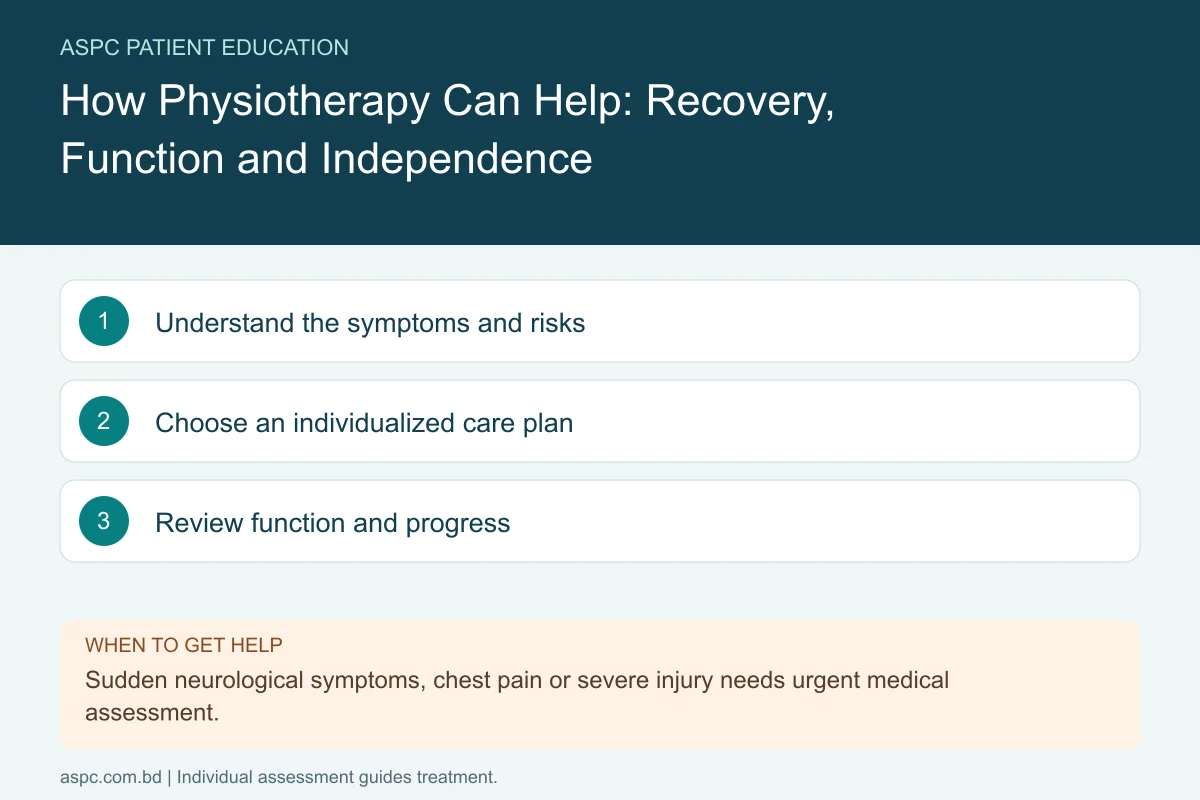
When to get help: Sudden neurological symptoms, chest pain or severe injury needs urgent medical assessment.
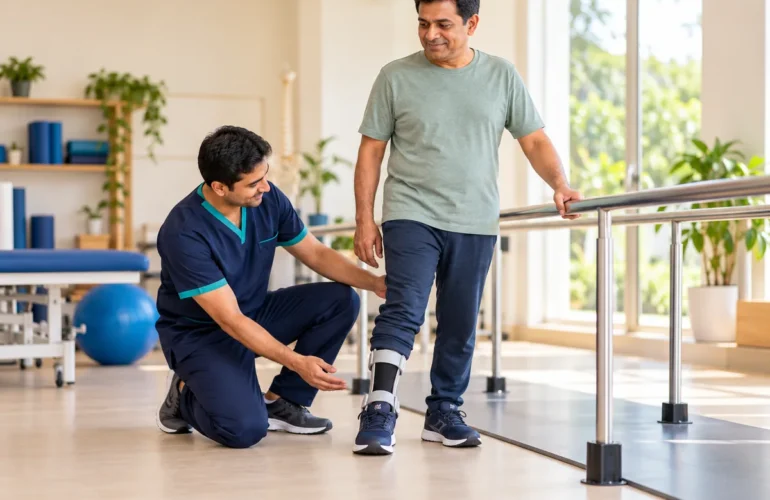
The featured image is AI-generated and does not depict an actual patient. General information; care should follow an individual assessment.
In this guide
- What Is Physiotherapy?
- How Common Is the Need for Rehabilitation?
- Ways Physiotherapy Can Change Everyday Life
- Who May Benefit from Physiotherapy?
- How Physiotherapy Works: Assessment to Meaningful Goals
- Recovery Time: What Should People Expect?
- Physical Activity and Daily Habits
- When to Seek Medical Advice
- Choosing a Physiotherapy Service
- Final Takeaway
- Common questions
- References
Physiotherapy can help people move with greater ease, manage symptoms, rebuild physical capacity and take part in activities that matter to them. It is not limited to treating sports injuries or reducing pain. Physiotherapy may support a child learning movement skills, an adult returning to work after surgery, a person recovering after stroke, or an older adult working to maintain balance and independence. Its central purpose is to improve function and participation in everyday life through assessment, education, exercise, rehabilitation and other appropriate interventions (World Health Organization [WHO], 2024; World Physiotherapy, 2023).
The changes achieved are individual. Physiotherapy does not guarantee a cure, and outcomes depend on the health condition, severity, timing of care, wider medical needs, personal goals and access to appropriate services. When treatment is based on assessment, shared goals and the best available evidence, it can help people understand their condition, build confidence and develop skills for long-term self-management (World Physiotherapy, 2023a).
What Is Physiotherapy?
Physiotherapy is a health profession concerned with human movement, physical function and the factors that limit a person's ability to participate in daily life. Physiotherapists assess movement, strength, balance, endurance, pain, coordination and functional tasks. They work with patients and, where appropriate, families and other health professionals to set goals and plan treatment. Rehabilitation may include therapeutic exercise, task practice, education, activity modification, assistive devices and selected manual or physical modalities when indicated (World Physiotherapy, 2023b; WHO, 2024).
A useful way to understand physiotherapy is to look beyond a body part. A painful knee may affect stair climbing, commuting and work. Weakness after a stroke may affect dressing, eating and communication with the community. Breathlessness may limit walking or household tasks. Effective rehabilitation connects physical findings to the activities and roles the person wants or needs to regain.
How Common Is the Need for Rehabilitation?
The WHO estimates that about 2.4 billion people worldwide live with a health condition that may benefit from rehabilitation. Needs occur across the lifespan and arise from injury, surgery, neurological conditions, musculoskeletal disorders, chronic disease, developmental conditions and age-related changes. Rehabilitation needs are increasing as populations age and more people live with chronic conditions; access remains unequal, particularly in many low- and middle-income settings (WHO, 2024).
Ways Physiotherapy Can Change Everyday Life
- Pain and symptom management: Education, graded activity, exercise and selected hands-on approaches may help manage some musculoskeletal symptoms. Treatment should address the likely cause and context of symptoms rather than promise that one technique will remove all pain.
- Strength, flexibility and mobility: A progressive exercise programme can target reduced strength, joint movement, muscle endurance and movement confidence, helping people perform daily tasks more comfortably.
- Walking, balance and fall prevention: Gait practice, strength and balance training, safe transfer practice and appropriate assistive devices may help selected people move more safely and maintain independence.
- Recovery after injury or surgery: Rehabilitation can support a staged return to mobility, daily activity, work and sport while respecting tissue healing, medical restrictions and individual progress.
- Neurological rehabilitation: After conditions such as stroke, spinal cord injury or Parkinson's disease, task-specific practice, strengthening, balance work, mobility training and equipment may help improve or maintain functional abilities.
- Breathing and physical endurance: In appropriate respiratory or cardiac conditions, supervised exercise, breathing strategies and activity pacing may support exercise tolerance and daily function as part of the wider medical plan.
- Healthy ageing: Strength, balance, walking practice and strategies to make the home safer may help older adults preserve independence and participate in valued activities.
- Confidence and self-management: Understanding symptoms, learning a home programme and seeing measurable progress can help people feel more prepared to manage their condition and make informed activity choices.
Who May Benefit from Physiotherapy?
Physiotherapy may be useful for people of different ages and with varied health needs. Examples include:
- Musculoskeletal conditions: back and neck pain, osteoarthritis, shoulder problems, tendinopathy, fractures and sports injuries.
- Neurological conditions: stroke, spinal cord injury, multiple sclerosis, Parkinson's disease and other conditions affecting movement or balance.
- Cardiorespiratory conditions: selected people with chronic lung disease, reduced exercise tolerance or recovery needs after serious illness or surgery.
- Post-operative and post-injury recovery: regaining movement, strength, confidence and function after orthopaedic or other procedures, according to the surgeon's guidance.
- Paediatric and developmental needs: supporting movement, posture, mobility and participation in children with developmental or congenital conditions.
- Older-adult and community needs: falls risk, reduced mobility, frailty, mobility-aid use and difficulties with daily activities.
The appropriate service and treatment depend on the diagnosis and assessment. Some symptoms require medical investigation first or parallel medical care; physiotherapy should complement, not replace, indicated medical treatment.
How Physiotherapy Works: Assessment to Meaningful Goals
Initial assessment
The physiotherapist asks about the main concern, onset and pattern of symptoms, medical history, medicines, previous treatment, daily activities and personal goals. Physical assessment may include movement, strength, balance, walking, endurance, neurological screening and performance of relevant tasks. The assessment should also identify warning signs that require referral or urgent medical attention.
Goals should be specific and meaningful to the person—for example, walking to a nearby shop, returning to a job, lifting a child, climbing stairs or getting dressed independently. A treatment plan may combine supervised sessions, a home exercise programme, education, pacing, equipment or environmental changes. Progress is reviewed and the plan is adjusted according to response.
Evidence-based and ethical care
Evidence-based practice combines the best available research, the clinician's expertise and the person's preferences and circumstances. A treatment should have a clear rationale, expected benefits and risks, and a way to evaluate progress. No single method is suitable for everyone, and techniques shown to be ineffective or unsafe should not be used (World Physiotherapy, 2023a).
Recovery Time: What Should People Expect?
There is no universal recovery timeline. Some people notice changes over a few sessions, while recovery after major surgery, neurological injury or a long-standing condition may take months or require ongoing rehabilitation. The speed and extent of progress depend on the condition, baseline function, complications, consistency of practice, sleep and general health, environmental support and access to treatment.
- Short-term goals may include understanding the condition, reducing fear of movement, learning safe techniques and starting manageable activity.
- Medium-term goals may focus on improved movement, strength, balance, walking distance, task performance or reduced activity limitation.
- Long-term goals may include returning to valued roles, maintaining gains, preventing avoidable decline and continuing independent self-management.
Progress is not always linear. A temporary increase in symptoms or a plateau does not automatically mean treatment has failed, but significant deterioration, new symptoms or lack of expected progress should prompt reassessment. The clinician and patient should review the plan together.
Physical Activity and Daily Habits
Physiotherapy is often most effective when supported by practical habits that can be sustained beyond the clinic. The WHO recommends that adults aim for 150–300 minutes of moderate-intensity aerobic activity per week, or an equivalent combination of moderate and vigorous activity, alongside muscle-strengthening activities on at least two days each week. These are general public-health targets, not a prescription for every patient; people with medical conditions or significant limitations may need a tailored starting point and gradual progression (WHO, 2020).
- Start at a manageable level and increase duration, frequency or intensity gradually as advised.
- Break up long periods of sitting with brief movement when safe and practical.
- Follow the prescribed home programme and ask for clarification if an exercise causes unexpected symptoms.
- Use suitable footwear, walking aids or home adaptations when recommended.
- Prioritise sleep, balanced nutrition and adequate recovery; these support general health but do not replace condition-specific treatment.
- Keep track of meaningful outcomes, such as walking distance, ability to climb stairs, sleep disruption or confidence with daily tasks.
Do not begin strenuous exercise or manipulate an injured area when a serious condition may be present. Seek professional advice for exercise planning when symptoms are severe, unexplained or rapidly worsening.
When to Seek Medical Advice
Physiotherapy can be part of care for many conditions, but urgent medical assessment is needed for warning signs such as:
- Chest pain, severe or sudden breathlessness, fainting or symptoms suggestive of a heart attack or stroke.
- Major trauma, suspected fracture, rapidly increasing swelling or inability to bear weight after an injury.
- New or progressive limb weakness, significant numbness, loss of coordination or difficulty walking that develops suddenly.
- Back pain with new loss of bladder or bowel control, numbness around the groin/saddle region, or rapidly progressive leg weakness.
- Fever with severe pain, a hot swollen joint, unexplained weight loss or other symptoms that raise concern for serious illness.
These examples are not a complete list. If symptoms feel life-threatening or are progressing rapidly, seek emergency services rather than waiting for a routine physiotherapy appointment.
Choosing a Physiotherapy Service
When choosing a physiotherapist or rehabilitation service, consider professional registration and qualifications, experience with the relevant condition, clear explanations, informed consent, an individualised plan and regular measurement of progress.
Final Takeaway
Physiotherapy can change lives by helping people move better, manage symptoms, rebuild physical capacity and participate more fully in everyday activities. Its value is measured not only by changes in pain or strength, but also by whether a person can return to work, care for family, move around the community, enjoy recreation or maintain independence. Good rehabilitation begins with careful assessment, uses shared and realistic goals, applies the best available evidence and reviews progress over time. Outcomes vary, and physiotherapy is not a guaranteed cure, but a personalised programme can be an important part of recovery, adaptation and long-term wellbeing (WHO, 2024; World Physiotherapy, 2023a, 2023b).
Common questions
What should a rehabilitation plan include?
An assessment, goals meaningful to the person, suitable exercises or other interventions, self-management advice and regular progress review.
Is improvement guaranteed?
Outcomes vary with the condition and individual circumstances. Care should explain uncertainties, monitor progress and change the plan or arrange referral when needed.
Assessment and rehabilitation in Dhaka
ASPC Manipulation Therapy provides physiotherapy and rehabilitation in Dhaka. Contact the centre to discuss the service, clinician, appointment arrangements and current fees relevant to your needs. Medical emergencies and suspected infectious illness require the appropriate medical pathway.
Discuss an assessment with ASPC
Related patient guides
- Geriatric Physiotherapy: Mobility, Balance and Independence
- Parkinson’s Disease: Physiotherapy, Movement and Daily Function
- Stroke Risk Factors: Prevention and Emergency Warning Signs
References and clinical guidance
Research findings apply to the populations and interventions studied. Editorial source checking is not independent clinical peer review.
- Primary condition-specific guidance
- World Health Organization. (2024, April 22). Rehabilitation. https://www.who.int/news-room/fact-sheets/detail/rehabilitation
- World Health Organization. (2020). WHO guidelines on physical activity and sedentary behaviour. https://www.who.int/publications/i/item/9789240015128
- World Health Organization. (2023). Rehabilitation 2030 initiative. https://www.who.int/initiatives/rehabilitation-2030/
- World Physiotherapy. (2023a, June). Policy statement: Evidence-based practice. https://world.physio/policy/ps-ebp
- World Physiotherapy. (2023b, June). Policy statement: Rehabilitation. https://world.physio/policy/ps-rehabilitation
- World Physiotherapy. (2025, January). Guideline: Standards of physiotherapist practice. https://world.physio/index.php/guideline/standards
- World Physiotherapy. (n.d.). Physiotherapy and rehabilitation. https://world.physio/advocacy/rehabilitation
- Centers for Disease Control and Prevention. (2026, March 10). Health benefits of physical activity for adults. https://www.cdc.gov/physical-activity-basics/health-benefits/adults.html
Editorial update: 29 October 2026. Medical information disclaimer.