

ACL – Structure and Biomechanical Properties
The Anterior Cruciate Ligament (ACL) is a complex structure that plays a…

An ACL injury affects a major stabilising ligament inside the knee. Rehabilitation restores swelling control, movement, strength and sport-specific function. Surgery decisions depend on instability, associated injuries and the person’s activity goals.

Sciatica describes leg pain associated with irritated or compressed nerve roots in the lower back. It may include tingling, numbness or weakness. Care combines neurological screening, tolerable activity and a progressive rehabilitation plan.

Physiotherapy can help people move with greater ease, manage symptoms, rebuild physical capacity and take part in activities that matter to them. It is not limited to treating sports injuries or reducing pain. Physiotherapy may support a child learning movement skills, an adult returning to work after surgery, a person recovering after stroke, or an older adult working to maintain balance and independence. Its central purpose is to improve function and participation in everyday life through assessment, education, exercise, rehabilitation and other appropriate interventions (World Health Organization [WHO], 2024; World Physiotherapy, 2023).
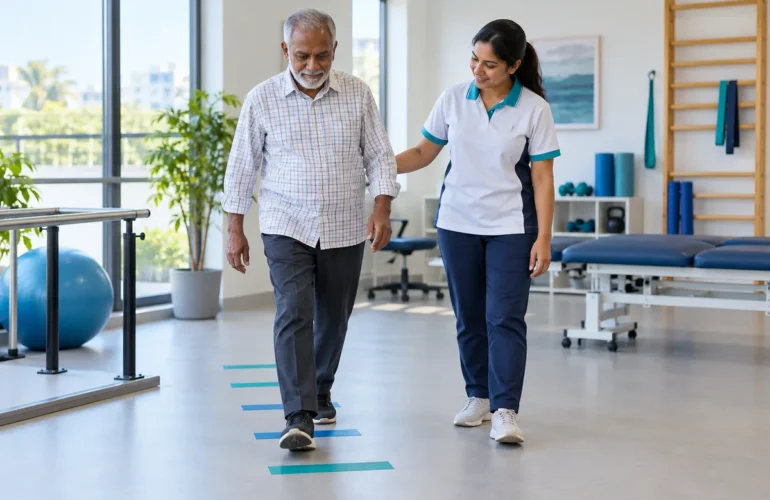
Parkinson disease (PD) is a progressive neurological disorder that affects movement and can also influence sleep, mood, thinking, bowel function and other aspects of health. Symptoms often develop gradually, so changes such as reduced arm swing, smaller handwriting, stiffness or a resting tremor may initially be mistaken for normal ageing. The condition affects each person differently, and symptoms and support needs change over time (Bloem et al., 2021; National Institute for Health and Care Excellence [NICE], 2017).

PLID means prolapsed lumbar intervertebral disc. Disc prolapse and herniated disc are related terms for displaced disc material. Symptoms depend on whether nerves are affected; a scan finding alone does not establish the cause of pain.

Geriatric physiotherapy supports mobility, strength, balance and everyday independence in older adults. An individualized plan considers health conditions, falls, current function, personal goals and the home environment.
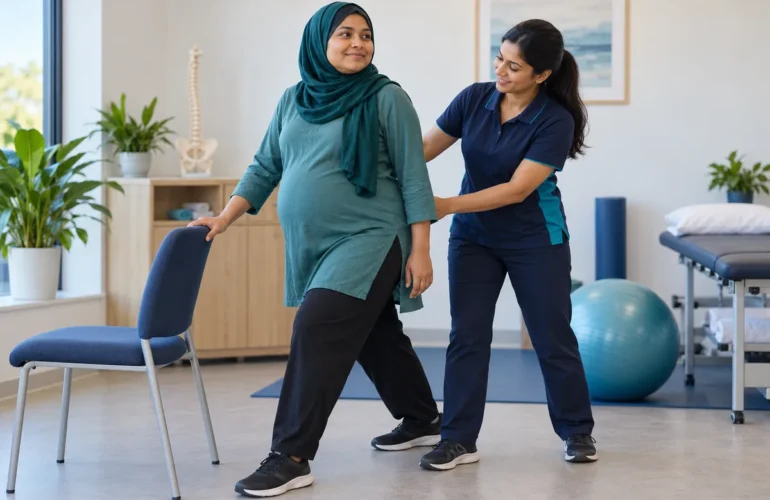
Pregnancy is a period of major physiological, hormonal, cardiovascular, respiratory, and musculoskeletal change. Physiotherapy during pregnancy—often called antenatal physiotherapy—uses individualized exercise, education, movement strategies, and symptom-management techniques to support physical function and wellbeing throughout pregnancy. It does not replace routine antenatal care; rather, it complements obstetric care when the pregnant person and fetus have been appropriately assessed (American College of Obstetricians and Gynecologists [ACOG], 2020; World Health Organization [WHO], 2020).