

ASPC PATIENT EDUCATION · UPDATED 29 OCTOBER 2026
At a glance
A stroke is a medical emergency that occurs when blood flow to part of the brain is blocked or when a blood vessel in or around the brain ruptures. Brain cells can be injured within minutes, so rapid recognition and treatment are essential. Stroke can affect people of any age, although the likelihood rises with age and certain health conditions. Risk is shaped by a combination of medical history, blood-vessel health, lifestyle, family history and social circumstances. Understanding these factors helps people take practical steps to reduce risk without assuming that a stroke is inevitable (World Health Organization [WHO], 2025; Centers for Disease Control and Prevention [CDC], 2024).
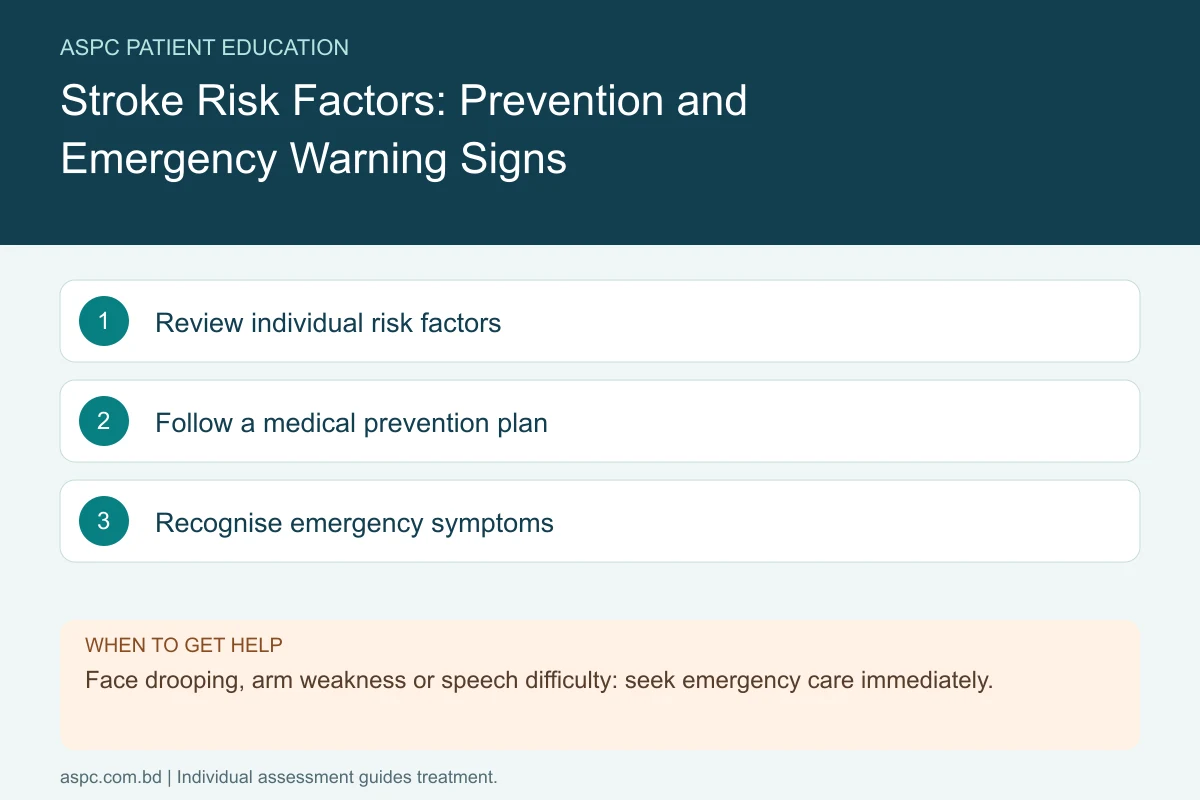
When to get help: Face drooping, arm weakness or speech difficulty: seek emergency care immediately.
The featured image is AI-generated and does not depict an actual patient. General information; care should follow an individual assessment.
In this guide
A stroke is a medical emergency that occurs when blood flow to part of the brain is blocked or when a blood vessel in or around the brain ruptures. Brain cells can be injured within minutes, so rapid recognition and treatment are essential. Stroke can affect people of any age, although the likelihood rises with age and certain health conditions. Risk is shaped by a combination of medical history, blood-vessel health, lifestyle, family history and social circumstances. Understanding these factors helps people take practical steps to reduce risk without assuming that a stroke is inevitable (World Health Organization [WHO], 2025; Centers for Disease Control and Prevention [CDC], 2024).
The WHO reported that stroke was the third leading cause of death and disability globally in 2021, with an estimated 11.9 million new cases that year. Many strokes are associated with modifiable risk factors, including high blood pressure, smoking, high cholesterol, high blood glucose, excess body weight, physical inactivity and unhealthy diet. This means prevention and regular health care can make a meaningful difference, though no strategy can remove all risk (WHO, 2025).
What Is Stroke?
The two main types are ischaemic and haemorrhagic stroke. An ischaemic stroke occurs when a clot or narrowed artery blocks blood flow to part of the brain. A haemorrhagic stroke occurs when a blood vessel ruptures and blood damages nearby brain tissue. A transient ischaemic attack (TIA) causes temporary stroke-like symptoms because blood flow is briefly interrupted; even when symptoms disappear, a TIA requires urgent medical assessment because it can signal a risk of a future stroke (WHO, 2025).
How Common Is Stroke, and Who Can Be Affected?
Stroke is not limited to older adults. The risk generally increases with age, but children, adolescents and younger adults can also experience stroke. The CDC notes that the chance of stroke rises with age, while its risk-factor guidance also highlights high blood pressure, diabetes, smoking, heart disease, high cholesterol and lifestyle factors as important contributors (CDC, 2024). Global estimates differ by year, population and methods used, so statistics should be interpreted in context. The practical message is that age influences risk but does not determine an individual's future on its own.
Major Medical Risk Factors
High blood pressure (hypertension): High blood pressure is one of the most important modifiable stroke risk factors. Over time, excessive pressure can damage artery walls and increase the chance of vessel blockage or rupture. Hypertension often causes no obvious symptoms, so a person may feel well while risk remains elevated. Regular measurement, lifestyle changes and medication when prescribed can lower risk. Do not stop or alter blood-pressure medication without advice from a qualified clinician (WHO, 2025; CDC, 2024).
Diabetes and high blood glucose: Diabetes can damage blood vessels and commonly coexists with hypertension and abnormal cholesterol. Keeping blood glucose within an individualised target, attending follow-up appointments and managing related cardiovascular risks can help reduce complications. A person with diabetes should not focus on glucose alone; blood pressure, cholesterol, kidney health, diet and physical activity also matter (CDC, 2024; WHO, 2025).
High cholesterol and atherosclerosis: Excess low-density lipoprotein (LDL) cholesterol can contribute to plaque formation in arteries. Plaque can narrow vessels and may contribute to clot formation, including in arteries supplying the brain. A clinician may recommend cholesterol testing, dietary changes and lipid-lowering medication depending on the person's overall cardiovascular risk. Cholesterol levels cannot reliably be judged by symptoms alone (CDC, 2024; American Stroke Association, n.d.).
Heart disease and atrial fibrillation: Atrial fibrillation is an irregular heart rhythm that can allow blood to pool and form clots. A clot may travel to the brain and block an artery. Other heart conditions can also raise risk. People with palpitations, unexplained faintness or known heart disease should discuss appropriate evaluation with a health professional. Some people with atrial fibrillation need anticoagulant medication, but this decision depends on clinical assessment and must not be self-started (American Heart Association, 2025; WHO, 2025).
Previous stroke or TIA: A person who has already had a stroke or TIA has a higher risk of another event. Follow-up should identify the likely cause and address relevant factors, which may include blood pressure, cholesterol, diabetes, heart rhythm, smoking and medication adherence. Secondary prevention is individualised; aspirin, anticoagulants or other medicines are appropriate only for particular indications and should be guided by a clinician (CDC, 2024; WHO, 2025).
Other conditions: Chronic kidney disease, some blood disorders and certain vascular conditions may increase risk. Obstructive sleep apnoea is also associated with cardiovascular risk. The significance of each condition varies, so people should discuss their own medical history and treatment with a healthcare professional rather than rely on a general list to estimate personal risk.
Lifestyle and Environmental Risk Factors
- Tobacco use and second-hand smoke: Smoking damages blood vessels and contributes to vascular disease. Quitting smoking and avoiding second-hand smoke are important prevention steps. Support from a health professional can improve the chance of successful quitting (CDC, 2024).
- Physical inactivity: Low activity levels can contribute to hypertension, diabetes, excess weight and unhealthy cholesterol. Regular movement suited to a person's ability and medical status can improve cardiovascular health. People who are inactive or have chronic conditions should begin gradually and seek tailored advice when needed (WHO, 2025).
- Unhealthy diet and excess salt: Diets high in sodium and low in fruit, vegetables and other nutritious foods can contribute to high blood pressure and poor cardiovascular health. A balanced eating pattern that emphasises vegetables, fruit, whole grains and appropriate protein sources, while limiting excess salt and highly processed foods, can support risk reduction (WHO, 2025).
- Overweight and obesity: Excess body weight is associated with higher rates of hypertension, diabetes and other vascular risk factors. Weight management should be approached realistically and without stigma, using sustainable food, movement and clinical support when appropriate.
- Harmful alcohol use and recreational drugs: Heavy alcohol intake can increase blood pressure and other risks. Stimulant drugs such as cocaine and amphetamines are associated with serious cardiovascular complications, including stroke. Avoiding illicit drugs and discussing alcohol use honestly with a clinician can be important prevention steps (WHO, 2025; CDC, 2024).
- Air pollution and wider living conditions: Exposure to air pollution is recognised as a stroke risk contributor. Access to healthy food, safe places to be active, preventive health services and affordable medicines also affects a person's ability to reduce risk. These factors are not solely under individual control, which is why community and health-system action matter (WHO, 2025).
Risk Factors That Cannot Be Changed
Age: Stroke risk increases as people get older, but stroke can occur at any age. Age should prompt appropriate prevention, not fatalism.
Family history and genetics: A close relative with stroke may indicate inherited susceptibility or shared environmental and lifestyle factors. Family history is useful information for a clinician, but it does not mean a person will necessarily have a stroke.
Sex and pregnancy-related factors: Stroke risk differs across the lifespan. Pregnancy and the period after childbirth can involve specific risks, particularly when complications such as severe high blood pressure occur. Some hormonal medicines may be unsuitable for people with particular risk profiles, especially when combined with smoking or migraine with aura. Decisions about contraception or hormone treatment should be made with a qualified clinician rather than by stopping prescribed treatment independently (CDC, 2024; American Stroke Association, n.d.).
Previous vascular events and some chronic conditions: A history of stroke, TIA or certain heart and kidney conditions cannot simply be erased, but the associated risks may often be reduced with appropriate treatment and follow-up. Risk is cumulative: several moderate risk factors together may be more concerning than one factor alone.
Can Stroke Risk Be Reduced?
Many important risk factors can be treated or improved. Prevention is most effective when it is practical, consistent and tailored to the person. The steps below are general measures, not a substitute for individual medical advice.
- Know your numbers: Arrange appropriate checks of blood pressure, blood glucose and cholesterol, especially if you have risk factors or a family history.
- Follow prescribed treatment: Take medication as directed and attend follow-up appointments. Ask the prescriber about side effects or concerns instead of stopping treatment yourself.
- Move regularly: Build activity gradually toward public-health recommendations when medically appropriate. Walking, cycling, household activity or adapted exercise may count; the best option is one that is safe and sustainable.
- Choose a balanced diet: Emphasise vegetables, fruit, whole grains and minimally processed foods, and reduce excess salt and unhealthy fats.
- Avoid tobacco and recreational drugs: Seek support if quitting is difficult, and avoid exposure to second-hand smoke where possible.
- Address heart rhythm and other medical conditions: Ask about evaluation and treatment for atrial fibrillation, sleep apnoea, kidney disease or other conditions when relevant.
- Plan follow-up after a TIA or stroke: Attend specialist review and understand the purpose of each prescribed medicine and lifestyle recommendation.
No single diet, supplement, exercise or physiotherapy technique can guarantee stroke prevention. Do not begin aspirin or anticoagulants for prevention unless a qualified clinician recommends them; these medicines can cause serious bleeding in some circumstances.
Recognising a Stroke: Act Immediately
Knowing risk factors is useful, but recognising symptoms can save brain function and life. Sudden facial drooping, weakness or numbness of an arm or leg—especially on one side—speech difficulty, confusion, vision loss, severe dizziness, loss of balance or an unusually severe sudden headache can indicate stroke. Use the FAST approach: Face drooping, Arm weakness, Speech difficulty, Time to call emergency services. Symptoms that disappear may still be a TIA and require urgent evaluation. Record the time symptoms began if possible, do not wait for symptoms to resolve, and do not drive the person yourself if emergency services are available (WHO, 2025; CDC, 2024).
Final Takeaway
People at higher risk of stroke include those with high blood pressure, diabetes, high cholesterol, atrial fibrillation or other heart disease, tobacco use, physical inactivity, harmful alcohol use, obesity, a previous stroke or TIA, and certain kidney or vascular conditions. Older age, family history and some pregnancy-related factors also matter. However, a risk factor is not a prediction that stroke will happen. Regular health checks, effective treatment, sustainable lifestyle changes and prompt action when symptoms appear can make a meaningful difference. Anyone with concerns about personal risk should discuss their medical history and prevention plan with a qualified healthcare professional.
Common questions
Should I start aspirin to prevent stroke?
Do not start aspirin or anticoagulants without clinical advice. These medicines suit particular indications and can cause serious bleeding.
What if stroke symptoms disappear?
Symptoms that resolve may still be a TIA. Seek urgent medical assessment rather than waiting for a routine physiotherapy appointment.
Assessment and rehabilitation in Dhaka
ASPC Manipulation Therapy provides physiotherapy and rehabilitation in Dhaka. Contact the centre to discuss the service, clinician, appointment arrangements and current fees relevant to your needs. Medical emergencies and suspected infectious illness require the appropriate medical pathway.
Discuss an assessment with ASPC
Related patient guides
- Geriatric Physiotherapy: Mobility, Balance and Independence
- Parkinson’s Disease: Physiotherapy, Movement and Daily Function
- How Physiotherapy Can Help: Recovery, Function and Independence
References and clinical guidance
Research findings apply to the populations and interventions studied. Editorial source checking is not independent clinical peer review.
- Primary condition-specific guidance
- American Heart Association. (2025, March 27). High blood pressure, atrial fibrillation and your risk of stroke. https://www.heart.org/en/health-topics/atrial-fibrillation/why-atrial-fibrillation-af-or-afib-matters/high-blood-pressure-afib-and-your-risk-of-stroke
- American Stroke Association. (n.d.). Stroke risk factors. Retrieved October 27, 2026, from https://www.stroke.org/en/about-stroke/stroke-risk-factor
- Centers for Disease Control and Prevention. (2024, May 15). Risk factors for stroke. https://www.cdc.gov/stroke/risk-factors/index.html
- World Health Organization. (2025, December 19). Stroke. https://www.who.int/news-room/fact-sheets/detail/stroke
Editorial update: 29 October 2026. Medical information disclaimer.